

Hydroponic technologies have been used since ancient times in the Amazon, Babylon, Egypt, China and India, where man applied dissolved fertilizers to grow cucumbers, melons and other vegetable crops in sandy riverbeds. In fact, the “Hanging Gardens” of “Semiramis” in Babylon and the floating farms of the Aztecs are prototypes of hydroponic systems.
In 1666 Boyle cultivated in a glass vessel with water a type of mint that survived for nine months. The beginning of the systematic study of plant nutrition started in the 19th century (around 1853) with Liebig, Knop and Sachs.
The first person who, in 1929, after conducting a series of experiments, recognized the great commercial potential of soilless plant cultivation was Dr. William Gericke. He proposed the name “water culture”, but later Sechél imposed the term “hydroponics” (from the Greek “hydro” – water and “ponos” – work), which over the years has gained the widest popularity.
In Bulgaria, plant cultivation using hydroponic technologies began in 1963–1969 at the Maritsa Vegetable Crops Research Institute in Plovdiv and at the Agricultural University in Plovdiv. After 1976, soilless plant cultivation in our country has been characterized by the introduction of technical achievements and technological solutions that were the most advanced for their time.
Advantages of hydroponic technologies
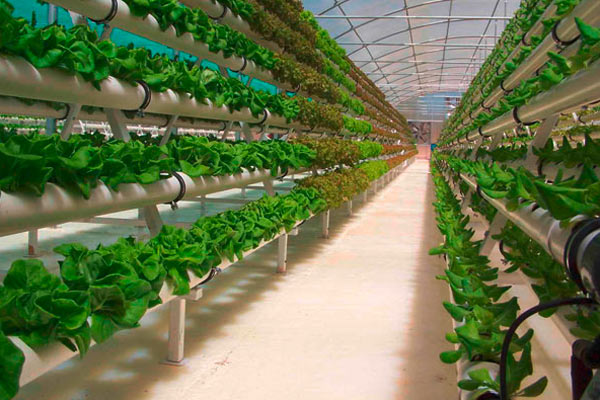
Hydroponic technologies are extremely widespread in greenhouse vegetable production, especially for tomatoes and cucumbers. The advantage of this method of plant cultivation is that it makes it possible to manage the nutrition process and therefore the growth and development of the plants. An earlier and higher yield per unit area is obtained. The better quality of the produce is due to the more favourable dynamics of mineral nutrient uptake in accordance with the requirements of the cultivated crop during the different periods of its life cycle. Control of plant diseases and pests is facilitated.
With hydroponic technologies a number of labour-intensive processes are eliminated – soil preparation and its replacement in the greenhouse, soil tillage during the vegetation period, irrigation and fertilization of the plants, preparation and application of organic and mineral fertilizers; many processes are easily subject to automation.
In greenhouse production, vegetables are grown under artificially created conditions corresponding to the requirements of the crop. In greenhouses, all factors influencing plant growth – light, heat, moisture and nutrition – can be controlled, with nutrition management being the most complex. The primary role in determining nutrient levels belongs to agrochemical analysis. Differential application of fertilizers, in accordance with the results of the analysis of the substrate in which the plants are grown, is the only possible way to ensure the efficient use of fertilizers in greenhouse vegetable production.
The large quantities of organic and mineral fertilizers that are applied to the soil in this type of production, the relatively low coefficients of their utilization by plants, and the not always favourable ratios of nutrient elements in the soil for the plants reduce the economic effect of fertilization and in some cases pose a risk of deterioration in the quality of the harvested produce.
To obtain high yields of vegetables grown using hydroponic technology, it is above all necessary to achieve an optimal salt concentration in the nutrient solution. At very low concentration, plants are poorly supplied with nutrients and suffer from their deficiency. Excessively high salt concentration of the nutrient solution strongly suppresses the growth of vegetables and sharply reduces yield, stresses the plants and may even lead to their death.
Main hydroponic systems and how they work
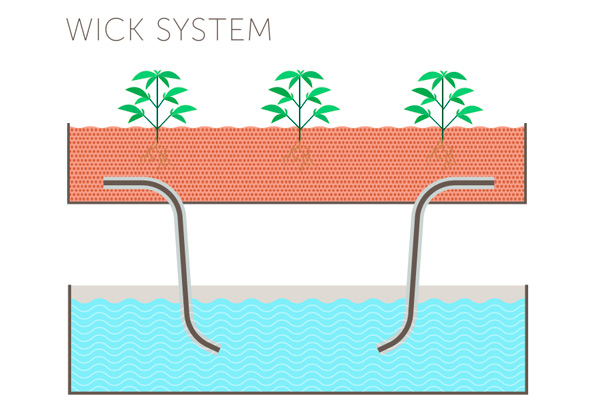
Six main types of hydroponic systems are known: Wick System, Water Culture, EBB & FLOW, Drip System (open or closed), N.F.T. (Nutrient Film Technique) and Aeroponics. There are hundreds of additional variants of these basic types of systems, but all hydroponic methods are a variation (or combination) of these six.
You can read about all types of hydroponic systems, their mode of operation and efficiency in issue 7/2018 of the journal “Plant Protection”.