

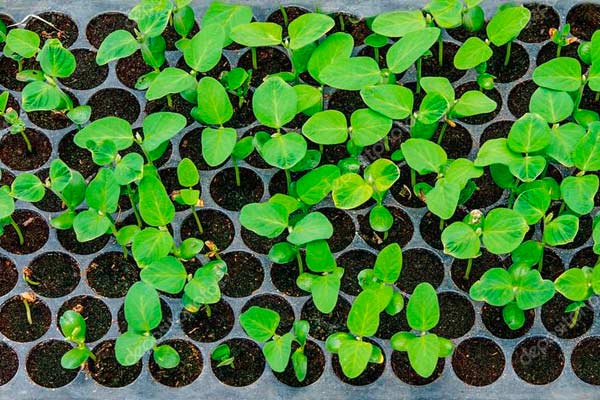
The management of diseases in vegetable crops from the initial stages – seeds, seedling production, transplanting – is a very important element of the overall production technology. These first stages ensure a good start for the plants and guarantee the obtaining of quality produce and high yields. The first element of any technology is the sowing of certified, disinfected seeds, which will ensure the production of healthy, high-quality seedlings.
A large part of the diseases in vegetable crops, caused by viruses, bacteria, mycoplasmas and fungi, are transmitted by seeds. This is the reason that necessitates the observance of preventive measures. Seed treatment before sowing is an important measure for obtaining healthy and vigorous planting material. Sowing infected seeds may cause the spread of a given disease and lead to significant production losses. In this respect, seed disinfection at harvest or before sowing can acquire very great importance, on the one hand due to the reduction of seed-borne pathogens, and on the other hand due to the increase in seed vigour, enabling them to overcome unfavourable climatic conditions after sowing.
In the recent past, a significant share in seed disinfection was held by treatments with organomercury and other plant protection products (PPPs). Today, a large part of these products has been withdrawn from use and seed disinfection has been enriched with some safer methods and means. New systemic fungicides have replaced inorganic compounds and can be extremely effective. Moreover, they do not pose a risk to plants, animals and the environment, since they are easily degraded by soil microorganisms, which prevents their accumulation in the soil. Fungicides used for seed disinfection may have a broad spectrum, i.e. be toxic to all or many fungal species, or a narrow spectrum of activity, i.e. be effective only against a few species. Contact fungicides are effective only against surface infections. Other fungicides are characterised by systemic activity and are effective against fungal infections deep inside the seeds. They can also provide protection against early infection by diseases transmitted by air currents and irrigation.
Seed disinfection is carried out by various means and in different ways – thermal, chemical, semi-wet, dry, wet and others.
Teams of experts in the field of research and development are actively developing new conventional and organic treatments and processes for vegetable seed disinfection, which provide solutions to the field challenges that may arise. Although the application of fungicides is almost always effective, their negative impact on the environment and the development of resistance in pathogens have led to the search for alternative methods, especially in the last few years.
There is an increasing demand for new methods that exclude the use of fungicides, especially in organic farming, where seeds or other propagating material are required to be produced also under conditions of minimised chemical inputs (in accordance with EU Regulation 2092/91). For some vegetable crops it is very difficult to produce organic seeds, particularly for biennial species. Physical treatment, which has already been used in the past, and treatments with biopesticides such as plant extracts, natural compounds and biocontrol agents, have proved effective in controlling seed-borne infections. They are applied alone or in combination and are widely used due to their broad spectrum in terms of disease control and production yields.
Plant extracts occupy an important place among the biopesticides used for seed treatment. They contain natural antimicrobial compounds and can be used for seed disinfection as an alternative to fungicide treatment. These extracts include essential oils, among which there are several types with antifungal activity, including tea tree, garlic, mint, rosemary, bay plants, oregano and thyme. There is evidence that such oils are active against pathogens such as Ascochyta spp., responsible for ascochyta blight in legumes, and Alternaria spp., which affect carrot seeds.
Among essential oils, thyme oil most often shows the best effectiveness in in vitro and in vivo tests as an antifungal compound providing antimicrobial activity against the spores of bacteria and fungi. Other effective natural compounds have been extracted from plants belonging to the genus Allium. These plants produce sulphur-containing compounds and some of them have a positive effect on pathogens. Chitosan, obtained from chitin from shells, is a biopolymer with antifungal properties. It acts by chelating nutrients and minerals, thus preventing pathogen access to them, and by inducing resistance reactions in the host. The resistance induced by this abiotic agent is broad-spectrum and long-lasting, although it rarely provides complete control of the infection.
Biological control of fungal and bacterial plant pathogens colonising seeds is an attractive and realistic approach, and numerous microorganisms have been identified as biological control agents (BCAs). For effective protection against plant pathogens, the antagonist must successfully colonise the plant rhizosphere and compete with other microorganisms in its root system in order to prevent pathogen attack. Inoculation of seeds with BCAs does not lead to changes in the ecophysiological structure and physiological profiles of the rhizosphere bacterial community. It does not resemble fungicide preparations, which can alter the metabolic profiles of bacterial colonies. The survival and establishment of beneficial microorganisms in the seed rhizosphere is particularly important for the continuation of plant growth and disease control.
Details on the thermal and chemical methods for seed disinfection can be found in issue 7/2018 of “Plant Protection” journal.