

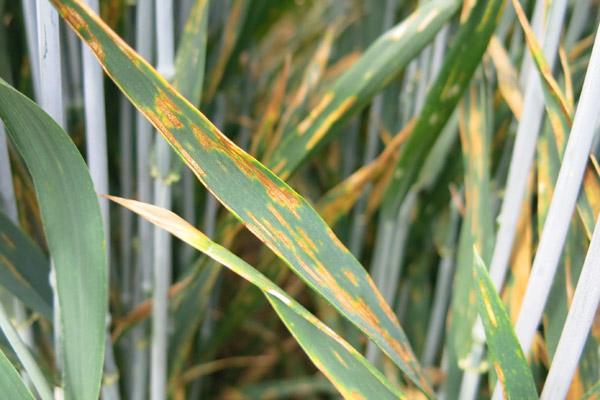
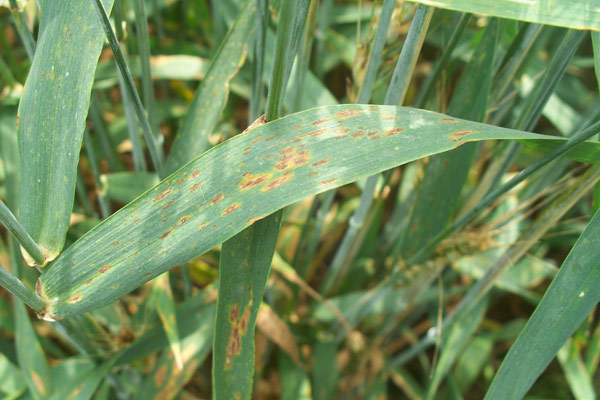
Early leaf blotch in wheat
Early leaf blotch in wheat (ELB), also known as spring leaf blotch or septoria (Septoria leaf blotch), is a key disease in a number of regions of the world with cool and humid conditions during the period from emergence to flowering. The disease is observed both in common bread wheat and in durum wheat. Under epiphytotic development of the disease, yield losses can reach up to 50%. In recent years ELB has ranked among the leading diseases in terms of harmfulness in Bulgaria, along with yellow rust, brown rust and powdery mildew. The reasons for this are the conditions favourable for its development, the susceptibility of cultivars, disruptions in crop rotation and cultivation technology, as well as untimely fungicide treatments.
A wet and relatively warm autumn, followed by a mild and almost snowless winter and a cool and humid spring, favour the development of the disease. Such conditions were observed in the 2015/2016 harvest year, which led to epiphytotic development of ELB in many regions of the country. The inclusion of wheat in a two-field crop rotation, as well as insufficient ploughing under of plant residues after their shredding, creates conditions for accumulation and preservation of the inoculum and thereby increases the risk of disease development under conditions favourable for its progress.
Yellow leaf spot
Yellow leaf spot (YLS), also known as tan spot (Tan spot), is a disease whose spread and development are associated with disruption of crop rotation and the application of minimum tillage. The disease occurs in common bread and durum wheat, barley, triticale and rye. Under conditions favourable for its development, yield reduction in wheat can reach from 20 to 70%.
Disease control must comply with the principles of Good Plant Protection Practice, i.e. the combination of chemical methods with agronomic and organisational–economic measures and approaches.
- Observance of a 3–4-year crop rotation with crops that are not attacked by the pathogens.
- Deep ploughing under of plant residues within the shortest possible time after harvest.
- Use of resistant cultivars. Unfortunately, most of the wheat cultivars of local breeding have low resistance to the pathogen.
- Observance of the recommended sowing rate for the cultivar. Higher plant density leads to longer retention of moisture in the crop, which creates favourable conditions for the development of the pathogens.
- Balanced fertilisation.