

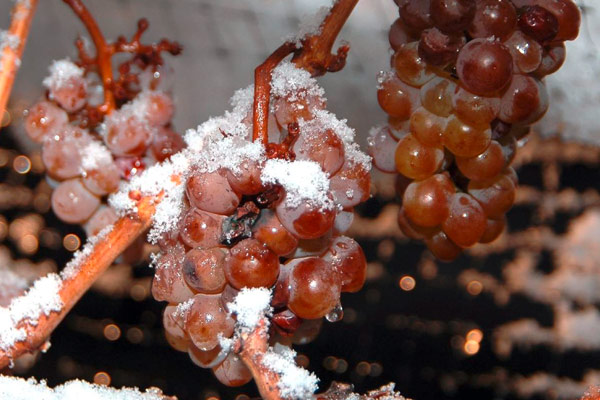
Post-harvest diseases in grapes develop intensively under unsuitable storage conditions – positive temperature and high atmospheric humidity, and their external symptoms vary depending on the type of pathogen.
Penicillium expansum
The berries turn brown and show signs of rot, but retain their shape. On the affected tissues, gray-green tufts of the fungal spores develop.
Trichothecium roseum
Initially, the colonized berries wilt and shrivel. Later they turn brown and gradually merge into a common mass. An intensive light pink coating develops on it.
Rhizopus spp.
It causes browning and wet rot of the grape clusters, which become covered with a dark, coarse and rough growth.
Alternaria alternata
Initially it colonizes the stems, on which it forms an abundant white coating. Later it spreads to the berries, which become water-soaked, are covered with mycelium and decay.
Strategy for disease control during grape storage
In order to achieve maximum resistance to the discussed diseases and to increase the storage duration of grapes – from 56 to 180 days, the following conditions must be observed:
1. Grapes for storage are harvested at optimal maturity.
2. The quality and storage duration of grapes are improved if, immediately after harvest, they are cooled and placed in the fruit storage facility without delay.
3. In storage facilities for grapes, a temperature of 0–1°C, 85% relative humidity and good ventilation conditions must be maintained in order to avoid condensation.
4. Frequent inspections of the stored grapes and timely removal and destruction of rotten berries before the appearance of pathogen sporulation.