

The term “organic agriculture” was introduced at the international level through the basic standards for organic production formulated by the International Federation of Organic Agriculture Movements (IFOAM). They serve as a basis for the development of standards used by various organizations certifying this type of agricultural production in many countries. The term “organic agriculture” has been established in the English-speaking world as a method in which ecological principles of production are observed. In many other countries, due to the specifics of the national language, the term “ecological” agriculture is used (Germany, Sweden, Denmark, Norway), and consumers in these countries recognize organic products under this designation. Other countries use the term “biological” agriculture (Switzerland, Austria, Italy, France). Based on these traditions, the European Commission includes in Regulation No. 22 of 04.07.2001 all three terms (organic, ecological, biological), including the abbreviations “bio” or “eco” in the official European languages (Blad, 2008).
Soil is considered fertile when it has a good physical structure, a balanced reserve of nutrients and satisfactory biotic activity (Mader et al., 2002). The absence or unbalanced ratio of some of the nutrients acts as a limiting factor and affects plant growth and their productivity. Fertile soil consists of 50 to 70% mineral particles, 30 to 50% pores (containing water and air) and 5 to 15% organic matter (Prasad and Power, 1997). With prolonged use of the soil without fertilization, the quantities of nutrients decrease, with the mineral elements N, P, K and Ca being depleted particularly rapidly. The application of nutrients to the soil, along with the increased requirements for environmental protection and improving the nutritional value of production, requires the modernization of certain technological elements related to fertilization. Alternative, environmentally friendly solutions for maintaining the nutrient regime are being actively sought, which meet one of the main requirements of modern agriculture – biological control of soil fertility (Tringovska, 2005). Biofertilizers, which improve soil microflora and influence plant nutrition, meet this requirement (Villegas and Fortin, 2001). Biofertilizers are an alternative to mineral fertilizers used in conventional agriculture. In our country, the most commonly used biofertilizers are various vermicomposts, bacterial fertilizers and mycorrhizal products.
Vermicomposts
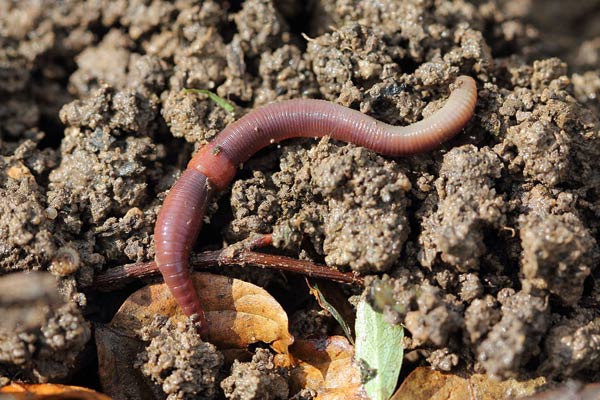
The composting of organic waste with the help of various species of earthworms (vermicomposting) is of great interest from both a scientific and a practical point of view (Sallaku et al. 2009). Two species of worms have acquired practical application: red Californian worm (Lumbricus rubellus) and red tiger worm (Eisenia foetida). They feed on various types of organic manure and other organic waste, which undergo physical and chemical changes during the digestion process. The final product of the worms’ vital activity is “biofertilizer”, which provides everything necessary for plant growth and development. The biofertilizer is characterized by good storability. It does not undergo putrefactive processes and retains the properties of a “living” product for a period of 3 to 5 years. In Bulgaria the species Lumbricus rubellus is cultivated. The great interest in the production of this biofertilizer is dictated by the fact that, by influencing soil fertility, it is also an environmentally sound solution to the problem of protecting the environment and plant production from pollution. Depending on the form, the final product is known under various trade names: Lumbricompost, Lumbrical, Lumbrex, etc.
Bacterial fertilizers
Bacterial fertilizers containing nitrogen-fixing bacteria of the genus Rhizobium are recommended for legume crops (peas, lentils, soybeans, chickpeas, etc.). To restore the population of effective Rhizobium strains in the vicinity of the rhizosphere, artificial inoculation of seeds with such preparations is often recommended. Bacteria of the genus Azospirillum (A. lipoferum and A. brasilense) form symbiotic associations with many plants, but are particularly important for those that use the C-4 pathway of carbon fixation (Mohammadi et al., 2012). Therefore, preparations containing Azospirillum are recommended for maize, sugarcane, sorghum, etc. Nitrogen fixers of the genus Azotobacter (A. chroococcum) mainly inhabit neutral or alkaline soils. The bacteria produce antifungal agents (antibiotics) that inhibit the growth of pathogenic fungi (Fusarium, Alternaria, etc.) in the root zone of plants. They also synthesize biologically active substances – B-group vitamins, indoleacetic acid, gibberellins. Preparations of this type give good results in rice, maize, sugarcane, a number of vegetable crops, etc. (Arun, 2007).
Mycorrhizal preparations
Mycorrhizal preparations are commercial products that transfer mycorrhizal fungi in a usable form. They are a combination of spores, hyphae, colonized root fragments and inactive components (for example, residues of the substrate that was used for the growth of the host plants). They also contain various beneficial bacteria that fix nitrogen and mobilize phosphorus. Humic acids and amino acids, as components of mycorrhizal inoculants, increase their activity and stimulate the growth of the plant root system.
The application of mycorrhizal preparations accelerates growth and increases productivity in a number of agricultural crops, and enhances plant resistance to various types of abiotic and biotic stress (Lovelock et al., 2004).