

Plant biostimulants, which are widely entering modern agriculture, are products that respond to the new challenges. According to the European Biostimulants Industry Council (2016), these are materials containing substances and/or microorganisms, applied to plants or in the rhizosphere in order to stimulate processes leading to (1) better uptake and/or efficiency of mineral nutrients in plants, (2) increased tolerance to abiotic stress factors, and (3) improved quality of crop production“ (Vernieri et al., 2005, Maciejewski et al., 2007). With regard to raw materials and active substances, plant biostimulants fall into different groups (humic and fulvic acids, protein hydrolysates, seaweed extracts, microbial products, etc.), but all exert a similarly positive effect on a number of agricultural crops.
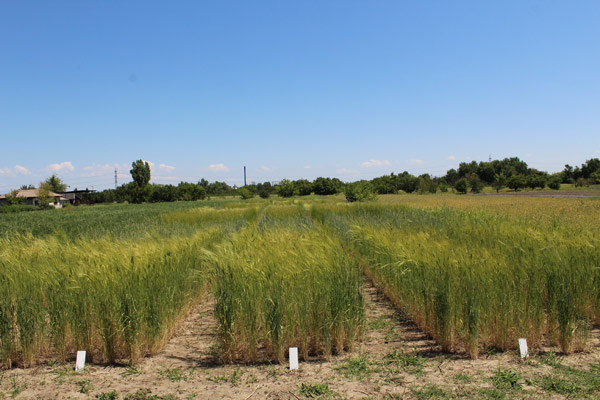
At the Agricultural University of Plovdiv, field trials have been carried out with two types of einkorn (Triticum monococcum L., Triticum dicoccum Sch.) and spelt (Triticum spelta L.). The plants were treated with products authorized for organic production: Amalgerol and Baikal EM-1U. Amalgerol is a liquid biostimulant rich in hydrocarbons and natural plant growth hormones. It contains seaweed extracts, distilled paraffin oil, vegetable oils, distilled herbal extracts. Baikal EM-1U is a probiotic biostimulant containing beneficial microorganisms (lactic acid bacteria, yeasts, bifidobacteria, enzymes and spore-forming bacteria), which are antagonists of pathogenic and opportunistic pathogenic microflora.
A three-year field trial has also been carried out with durum wheat cultivar Predel. The plants were treated with the products Megafol (a complex product containing amino acids, growth regulators and microelements) and Megafol-protein (a product of amino acids, peptides, growth regulators and microelements), both at a rate of 300 ml da-1 during the tillering, stem elongation and heading growth stages.
Biostimulants are gradually becoming part of the standard agronomic practices in the cultivation of agricultural crops. Their application in agricultural practice is increasingly perceived by farmers as an effective method for improving tolerance to stress factors, increasing yield and the quality of the obtained crop production.