

Diseases and pests attack roots, root crops and tuber crops
Part II
In this issue:
- Soil-borne pathogens in potatoes
- Soil pests in vegetable crops
- Soil pests in fruit crops
Pests of the underground parts of cultivated plants are a group that poses a serious threat to cultivated plants. The damage caused can result in significant losses for producers of plant products.
Among the actinomycetes, Srteptomyces scabies is widespread in the potato-growing regions in our country and causes common scab in potatoes. Corky scab lesions are formed on the surface of the tubers, which are either sunken or raised. The damaged tubers are of reduced quality and have lower market value. In addition, they cannot be stored well and are unsuitable for seed material.
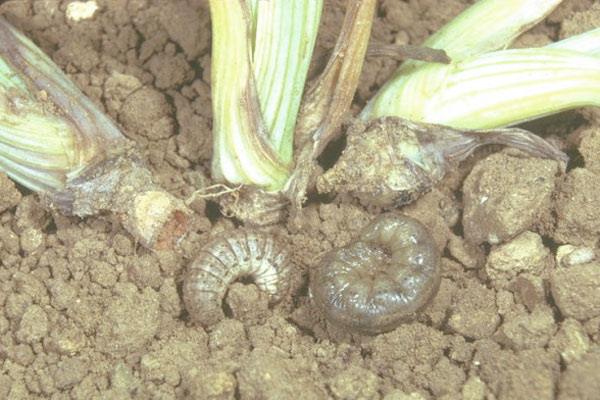
The roots, root crops and tuber crops of plants are also attacked by a number of insects, among which the polyphagous species are highly harmful, considering that they attack a large number of cultivated and wild plants, reproduce massively and lead a subterranean way of life. All this makes the control against them very difficult.
The larvae of beetles from the family Elateridae, called wireworms, attack vegetable and field crops, as well as young trees in fruit and forest nurseries. When they multiply massively, wireworms cause the death of plants.
Significant damage to the underground parts of a number of vegetable, cereal and fruit plants is caused by the larvae of the May beetle and the common June beetle from the family Scarabaeidae.
The alfalfa root weevil Othiorrhynchus ligustici damages not only the roots of alfalfa, but also those of clover, sainfoin, grapevine, rose, fruit crops and others.
Among the order Diptera, significant damage is caused by the garlic fly, the onion fly and the cabbage fly, which at high population density can completely destroy the crops of garlic, bulb onion and cabbage.
The mole rat gnaws through the roots of fruit trees and, in cases of severe damage, may cause their death.
Control of pests of the underground parts of cultivated plants is specific for each pest. Chemical control is very difficult, but when it is carried out in a timely manner with effective fungicides and insecticides for the respective species, it can yield good results.
Priority should be given to agrotechnical measures:
- Proper crop rotation.
- Cultivation of resistant varieties.
- Healthy planting material.