

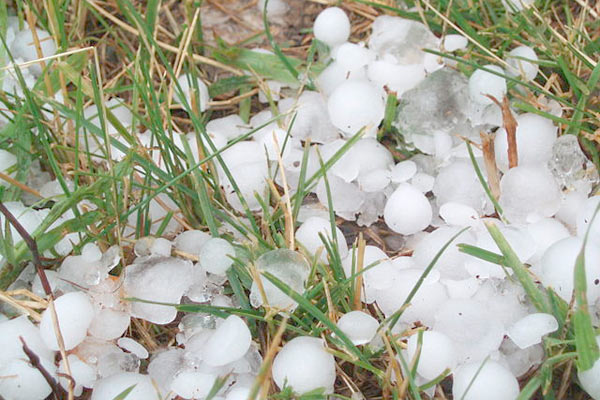
During hailstorms, leaves are torn, and shoots, twigs, and branches are injured. Damage is particularly dangerous during the period of fruit enlargement and ripening. The extent of damage depends on the intensity and duration of the hail, and of course on the affected crop.
The first measure after a hailstorm is to immediately clear the branches of the ice mass and, at the earliest opportunity, to treat them with suitable copper-containing fungicides. All trees must be treated, regardless of whether they are fruit-bearing or young. The wounds caused by hail are a major precondition for infection by fungal and bacterial diseases.
It is advisable that the fruits knocked down by hail be collected quickly and utilized according to their suitability, but under no circumstances should they be left to rot on the soil surface. Wounds on the trees are very dangerous because, if they affect the deeper layers, they heal with difficulty. In the case of larger hail, bark lacerations occur, which are sometimes very extensive, and severely affected trees die. Therefore, after a hailstorm, wounds should be smoothed, heavily damaged parts removed, and the surfaces coated with oil-based paint. Fruit trees have the capacity to recover quickly; therefore, after mechanical damage, branches with minor injuries are left, and if they do not recover, they are cut out during winter pruning.
It is necessary to continue plant protection against diseases and pests in fruit trees after a hailstorm, in order to prevent additional damage from scab, codling moths, aphids, and others.