

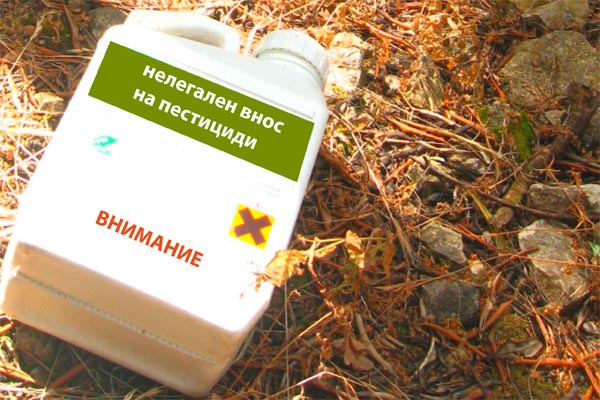
On our pesticide market, the ugly, misshapen shadow of illegal pesticide imports continues to creep in stealthily, without much noise. Ultimately, multinational companies offer opportunities to Bulgarian agricultural producers: innovative pesticides, technologies, consultancy for good plant protection practices. What does the black market offer? Pure poison, garnished with unjustified risk. The risk of ruining your labor, of squandering your chance to profit. And this is a paradox of disloyal competition. The black market steals from multinational companies, from plant protection product (PPP) distributor traders, from agricultural producers, from the entire Bulgarian society. And the plant protection administration, within the structure of the Bulgarian Food Safety Agency (BFSA), is melting away before our eyes.
From time to time, the toxic topic of illegal pesticide imports appears in the public space, as if to refresh the consciousness of the emotionally unprepared Bulgarian food consumer about the dangerous consequences of using chemicals of unknown origin in the production of agricultural products – grain, fruits, vegetables, as well as the nation's financial losses from this dishonest, harmful, and shadowy "business".
Recently, all this was reminded to us on the air of the Bulgarian National Radio by Petar Nikolov, chairman of the Bulgarian Association for Plant Protection (BAPP). According to his observations and his unnamed sources of information, illegal pesticide imports are carried out mainly across the Turkish border. The financial expression of this practice is estimated at no less than 30 million euros (20% of the commercial turnover of PPPs in Bulgaria). The efforts of customs authorities, phytosanitary control, the State Agency for National Security (SANS), and the Ministry of Interior to curb this scourge are hitting a wall.
The illegal goods sneak across the border in small shipments with minibuses, light vehicles, and even on foot, hiding packets and bottles in double bottoms of bags and backpacks, secret pockets... The diverse and varied caliber deliveries are stored in secret depots not far from the border, from where they are taken over by black-market traders.
This entire, obviously well-organized spectacle is performed "by the notes" under the nose of numerous control services. And why do the responsible institutions turn a blind eye?
Because their hands are tied, is the explanation of the head of BAPP. Illegal pesticide import is not a criminalized act and no sanctions are foreseen (except confiscation of seized shipments). The black "businessmen" not without reason live with the feeling that they have become strong enough to become permanently strong. Unregulated pesticide products, banned for use here under European rules for registration, trade, and use, enter agricultural production, and from there the food chain. They genuinely threaten consumer health and the purity of the natural environment. Many conclusions can be drawn from the analysis of these facts, but alas, not one of them is positive.
It is truly hard to believe that our national security system lacks the strength, capacity, and competence to impede this black import. We are witnesses that both BAPP and ARIB (Association of the Plant Protection Industry Bulgaria), whose members are the subsidiaries of multinational companies from the agrochemical industry, have initiated numerous attempts to interest and win over various agencies related to the problem of illegal pesticide imports for the cause. We are witnesses to the outcry from representatives of these agencies that they are of one mind in their desire to take action, with assurances that they have the toolkit for lasting solutions... Unfortunately, so far everything has remained where these conversations were held. And it is visible to the naked eye that there is no managerial will to categorically cut off the path of illegal PPP imports.
Part of the problem of illegal pesticide imports is the control over the use of PPPs in production, carried out by the inspectors in the Plant Protection (PP) sector of the regional divisions of the BFSA. What are the rules? Every agricultural producer is obliged to keep a Logbook of conducted chemical treatments, where they record the characteristics of the respective chemical interventions against pests for each of their crops – product, dose, quarantine period, spraying date, etc. The logbook is signed by an agronomist and certified by an inspector from the PP sector of the BFSA. This control technology is by no means the only one; legislation provides for corresponding targeted planned and extraordinary inspections of the entire technological cycle of plant protection practices on the respective farms, holdings, cooperatives – which includes documentary tracking of the purchase of PPPs, storage conditions of the products, preparation of working solutions, condition of PP equipment, disposal of empty packaging, personal protective equipment, hygiene of the work process, etc.
Suspicions are not unfounded that the control bodies are able to monitor "under a magnifying glass" what is happening regarding the quality of plant protection in every production unit. And the reason for this impossibility is very serious. After the National Plant Protection Service was positioned within the structure of the mega-agency BFSA, it was organizationally, professionally, and morally demobilized and practically disbanded. The staff of the then National Plant Protection Service of 520 specialists was cut in half! In each regional structure of the BFSA, there are now only 2-3 inspectors, plant protection specialists. It would not be an exaggeration to say that these are true slaves of capitalist labor. They are torn apart – obliged to perform countless tasks – control of trade and use of PPPs, monitoring pest development, compiling a bulletin for forecasting their appearance and signaling for control, checks related to the Paying Agency... Can you imagine under what powerful pressure the few employees in the PP sector of the regional BFSA work, especially in areas with intensive agricultural production and large-scale PPP trade?
No wonder then that these specialists simply have no physical and time resources to fulfill their obligations by all the rules, and formalism takes precedence on the daily agenda. Besides everything else, these specialists are miserably poorly paid, they have no prospect for professional development – programs for training and improving competencies simply no longer exist. The trend towards reducing the number of PP inspectors in the regional structures of the BFSA has steady parameters.
The agency's management draws new dividing lines between itself and the people working in the PP sector. Discrimination against the plant protection administration within the BFSA system continues successfully. No wonder one day we might wake up without it!
... And all this continues to happen under the indifferent gaze of the State!
Read the full publication in issue No. 2/2017 of the magazine "Plant Protection".