

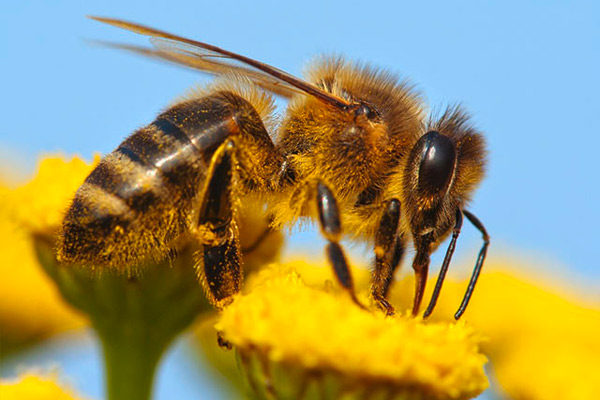
Interview with our leading plant protection expert Plamen Lazarov on the highly sensitive topic for and against the production, trade, and use of insecticidal products from the neonicotinoid group. The case attracts significant public interest here as well because it undoubtedly relates both to the life and health status of bees and to the cultivation and preservation of agricultural crops of great economic importance. However, this problematic situation has proven to be fertile ground for inflaming fears, speculation, and incompetent commentary. Part II
And yet, is there a clear answer to the question "Should drastic measures be taken for a complete ban on neonicotinoids without applying the right of derogation for permitting limited and controlled use?"
"Questions are never indiscreet. Answers sometimes are."
Oscar Wilde
If I attempt to give a categorical answer to this question, it will certainly be a bad one. It seems to me the answer is like the effect of a short blanket – if you pull it up to your shoulders, your feet will be uncovered; if you cover your feet, your shoulders will be cold.
In other words, if we take the side of the beekeepers, we will harm the interests of the farmers, and vice versa. I want to state categorically again that the issue of the effect of neonicotinoids on bees is so complex that it cannot be discussed emotionally or unprofessionally. My personal opinion is that we do not possess the professional, scientific, or even administrative resources to make decisions independently. It is obvious that this will happen at the European Union level. And that means the decision will be political-expert, because on one side stand the scientific evidence, but with the possibility for different interpretations of the data within it, and on the other side stand interests with enormous financial implications.
When solving the problem in our country, we cannot ignore the fact that Bulgaria has three borders with countries that are not in the EU. Given the increasing smuggling of unauthorized plant protection products, especially from Turkey, the lack of effective customs control, the complete absence of the Bulgarian Food Safety Agency (BABH) at risky locations – there is no control by plant protection inspectors at our borders – as well as the ineffective control over their use within our country, any ban is doomed to failure.
And both with the continuation of the ban or even more drastic measures, and with the theoretical complete lifting of restrictions and bans on the use of neonicotinoids, our state must react adequately in a purely administrative plan.
How can it be arranged so that both beekeepers and farmers are satisfied with the actions of the competent authorities?
"There are only two tragedies in life: one is not getting
what one wants, and the other is getting it."
Oscar Wilde
Unfortunately, both sides cannot be satisfied. Especially under the conditions in Bulgaria. In practice, there are no effective solutions to solve the problem. Neither the scientific institutes nor the universities are working to solve the problem. It is evident that there is no solution at the EU level either. On one side are the environmental organizations, which present data on the harms of neonicotinoids; on the other side are the manufacturers of such plant protection products, who present fundamentally different data. As long as there is no unambiguous solution at the EU level, the problem cannot be solved.
Perhaps, as a competent authority, the Risk Assessment Center should have studied the situation that has arisen and given its position – whether it would be more acceptable to apply products based on carbofuran for limited and controlled use, which is sufficiently effective but not approved in the EU, or to accept the application of neonicotinoids, with all their negatives and positives. Everything is a matter of in-depth risk assessment to choose the lesser evil. But it cannot be ignored that the specific pests on corn and sunflowers in Bulgaria can seriously compromise these two crops. It would be good if all those involved in the extremely complex problem of applying clothianidin, thiamethoxam, and imidacloprid did not express amateurish or emotional attitudes towards the problem. I cannot say whose side is right. What I see is that neither the environmentalists nor the agricultural producers are speaking professionally and convincingly. Everyone is pulling the blanket to their side, and obviously, no one intends to compromise.
And a solution, in my opinion, existed and exists. While the European Food Safety Authority was coming out with its final position before the European Commission and it was adopting a new decision, our administration could also have taken actions – not ones related to banning or permitting the three neonicotinoids at a local level, but rather in seeking alternatives through an administrative path. As strange as it may seem to some, the alternative is again a neonicotinoid – thiacloprid. A product on this basis is already approved in EU countries, but unfortunately only for corn. The problem is that Bulgaria belongs to the southern climatic zone, where sunflower is weakly represented, and the product in question has not been tested for biological effect in this zone. But with more foresight and professionalism, the Bulgarian Food Safety Agency (BABH) could have taken the necessary actions by now to get out of the deadlock.
Solving problems does not happen with talk, but with effective actions.
See Part I of the interview with Plamen Lazarov
Additional information:
1. Risk assessment related to plant protection products and bee health, taking into account interactions between individual factors. Official position on the topic by BABH. See the document HERE
2. Letter from "Greenpeace – Bulgaria" to the Ministry of Agriculture and Food regarding the ban on the use of neonicotinoid pesticides on the territory of the Republic of Bulgaria. See HERE
3. On July 27, 2016, the German office of Greenpeace published an updated version of the "Blacklist of Pesticides in the EU". The report was developed by an independent expert and classifies all pesticides approved for use in the European Union (EU) according to the potential danger they pose to human health and the environment. See HERE