

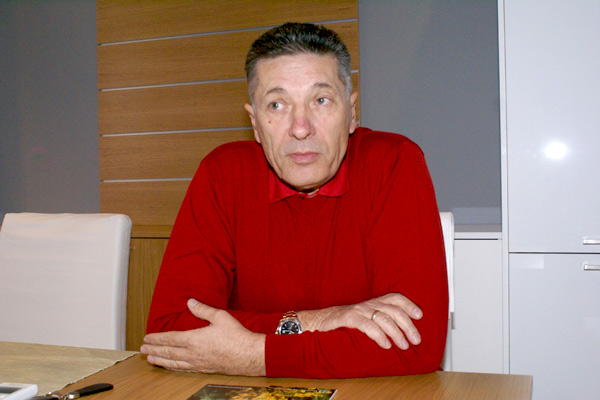
Interview with the leading plant protection expert Plamen Lazarov on the highly sensitive topic of pros and cons of the production, trade and use of insecticidal products from the neonicotinoid group. The case attracts great public interest in our country as well, because it undoubtedly concerns both the life and health status of bees and the cultivation and protection of agricultural crops of high economic importance. However, this problematic situation turned out to be a good environment for fanning fears, speculation and incompetent comments. Part I
Mr. Lazarov, recently there has been renewed discussion about the ban on plant protection products containing the active substances imidacloprid, thiamethoxam and clothianidin. Are their harmful effects really that significant?
“The truth is rarely pure and never simple.”
Oscar Wilde
The ban on the use of plant protection products (PPP) containing one of the three active substances – clothianidin, thiamethoxam and imidacloprid – is dictated by a number of objective and subjective factors. When the ban on seed and soil treatment was introduced, and the foliar use of neonicotinoids* was restricted, there was no solid, indisputable and categorical evidence of the harmful effects of neonicotinoids on pollinators. There is none now either. This in no way means that these products are not harmful. There is simply no conclusive scientific proof. If we go back about 4 years, when the regulation for the two‑year ban on the application of neonicotinoid products was adopted, we will recall that the ban was not unanimously accepted by the 27 EU Member States (then 28 EU Member States). Moreover, a second vote had to be held in order to reach the correct decision. Thus, for example, at the first vote Bulgaria abstained, while at the second it already voted “in favour” of the ban.
So far, the position of the European Food Safety Authority (EFSA) has been that there is not enough evidence of bee mortality caused by neonicotinoids.
It is well known that PPPs are not friends of bees. It is just as well known that human life, or more precisely human nutrition, is inextricably linked to the activity of bees. It is a fact that beekeepers have a serious problem; it is also a fact that farmers have a serious problem. One of these two problems will be solved, but certainly only after truly in‑depth studies in which only science must participate. Neither the producers of neonicotinoids nor the not entirely impartial NGOs have a place in the decision‑making process. There is sufficient evidence of such interference from both sides. If this continues in the future, the decision will not be impartial!
After these words of mine, many people will probably think that I am on the side of the industry to which I professionally belong. This is not the case! Both as a professional and as a person I am interested in arriving at the truth. But as Oscar Wilde says, it is rarely pure and never simple. And the truth must be found in the name of the people. One cannot ignore a thought attributed to Albert Einstein – “If the bee disappeared off the face of the Earth, man would have only four years left to live.” But we must be clear whether things are being done in the name of nature and people or in the name of profit. Yet we should not imagine that profit can come only and solely from the production, trade and use of pesticides. It can also creep in as lobbying in one direction or the other, and as personal interests – in one direction or the other.
And what should the Bulgarian authorities undertake to resolve the problem?
It is far more important to have at our disposal the scientific results from the already long‑term studies. At present there are various results from studies both by the official food safety authority EFSA and by scientific institutes. Bulgaria is a link in the chain and we must wait for the final opinion of EFSA as well as for the decision of the European Commission. The possibilities of the Bulgarian authorities to undertake actions other than those provided for in the EU regulatory framework are limited. The approval or ban of active substances is carried out on a proposal from the European Food Safety Authority, and the EC takes the decision and issues the respective regulation. At any moment, the publication of EFSA’s report is expected, related to the results of the latest studies on the impact of the neonicotinoids clothianidin, thiamethoxam and imidacloprid. The competent authority, the Bulgarian Food Safety Agency (BFSA), must comply not with the farmers, not with the environmental organizations, but with an officially adopted decision of the EC.
What is the role of the Risk Assessment Centre on Food Chain and how does this structure participate in resolving the farmer–beekeeper–neonicotinoid–bee problem?
“The only charm of the past is that it is the past.”
“The only consolation for the foolish things
one does is that one is always
delighted to speak of them afterwards.”
Oscar Wilde
If one reads the grounds for the establishment of the RACFC, as well as the official opinions, one will see how accurate Oscar Wilde’s thought is. What was done was not a folly but professional insanity by the previous management of the Ministry of Agriculture and Food when it created the Risk Assessment Centre on Food Chain in the likeness of the European Food Safety Authority, and they themselves boasted of what had been done. Perhaps because all branch organizations and a large number of experts held an unequivocally negative opinion regarding the establishment of this structure. I cannot say whether it is necessary or not. But what is being done there in the field of plant protection is duplication of activities with the BFSA, delays in authorization procedures and, in practice, the risk assessment activity is completely absent. I have not seen the Centre take a position on the pressing issue of bees and neonicotinoids. I may have missed it, but at least in the internet space I have not found their expert opinion. Instead, this new body, created with the active participation of a livestock specialist who was unfortunately placed in a high administrative position, “consumed” staff positions that could have been allocated to the BFSA for the appointment of inspectors to actually control the trade and use of PPPs on the ground. Instead, a general administration of 14 people was appointed at the RACFC, but these people do not exercise control over the PPP market and their use and in no way can assist this activity. If the Ministry of Agriculture and Food had allocated 14 positions for plant protection inspectors, this would have solved half of the problems with the deficit in the administrative capacity of this sector.
* For the sake of brevity and simplicity I will use this term for the three banned active substances, because there are four more from this group for which there is no ban on their use.
To be continued...
Expect part II of the interview with Plamen Lazarov, a leading Bulgarian plant protection expert.