

In recent decades, interest in the introduction and spread of alien plant species has been steadily increasing. Almost all European countries are revising the composition of their flora, developing various strategies for the conservation of biological diversity and the control of these „invaders“ – invasive alien plant species that create problems not only for nature as a whole, but also for the local population and the economy. The development of these measures involves not only scientists from different disciplines, but also lawyers, economists and experts from various governmental and non-governmental organizations.
Invasive alien species are identified as one of the main causes of loss of biological diversity, because they destroy native species and populations. They are harmful to human health, cause major damage to national economies and bring about irreversible changes in nature. The costs to the European economy caused by invasive species are expected to be at least EUR 12 billion per year in areas such as healthcare, agriculture and infrastructure.
Over the last century, the number of established alien plant species has been progressively increasing in many regions of the world. Mountain ranges, seas and rivers have separated populations and have contributed to the flourishing of biological diversity. The expansion of international trade and travel, however, has removed these barriers on a global scale, allowing direct contact between species. This creates competition for valuable food resources and habitats. And while native species are resistant to local pests or diseases, they often have no, or only very limited, natural defence against alien organisms and can therefore be literally wiped out.
Invasive species occur in all forms and sizes. Most of those of non-European origin have been deliberately introduced, including trees and crops that are more resistant or grow faster, as well as ornamental garden plants. When left uncontrolled, they spread spontaneously into the wild, with some expanding their range and posing a serious threat to native species and communities. Their rapid spread is a result of their biology – they produce abundant seeds with high viability, which they retain for years, they have effective dispersal mechanisms, grow rapidly and can adapt to a wide range of ecological conditions.
The impact of invasive plant species is significant. They are extremely competitive in the natural habitats of native species; they cause changes in soil composition by extracting nutrients and water from the soil; they affect the light regime in the habitat they occupy and alter its structure; they hybridize with closely related, naturally occurring species; they lead to the extinction of rare species; they are carriers of diseases; they exert a serious impact on human health – they cause allergies, others are poisonous and contact with them or their use causes serious problems. Alien species also cause high economic costs, resulting from direct losses of agricultural production or from increased expenditure for effective control measures against them.
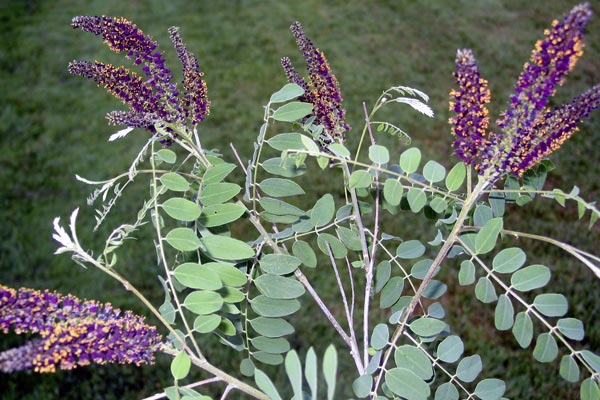
At present, there are more than 1,000 alien plant species from 213 families in Europe, with the dominant ones being the large, globally widespread families: Asteraceae (692 species), Poaceae (597), Rosaceae (363), Fabaceae (323) and Brassicaceae (247). Thirty-four per cent of the introduced species are of Asian origin, 23% and 22% originate respectively from North and South America, and 17% – from Africa. Since 1992, the EU has spent more than EUR 58 million on 180 projects for combating invasive species and restoring the damage they cause. For comparison – the United States estimates its expenditure on combating biological invaders at about EUR 80 billion per year. According to recent studies, 21 species of invasive plants occur in Bulgaria, with the greatest threat to biodiversity, nature and humans posed by: Acer negundo, Ailanthus altissima, Ambrosia artemisiifolia, Amorpha fruticosа, Bidens frondosus, Elodea nuttallii, Fallopia bohemica, Opuntia humifusa, Paspalum distichum, Robinia pseudoacacia.
The implementation of control over some of these invasive plant species can be very difficult and prolonged. Raising awareness of these „invaders“ among the public is a prerequisite for winning this battle. Prevention of alien plant species is of paramount importance. For this purpose, it is first necessary to identify those alien species that have the potential to become invasive. This is required in order not to allow potentially invasive species to turn into invasive ones. Of particular importance for the control of invasive species are early warning, knowledge of and compliance with international and national rules on preventive measures, strengthened customs control and good coordination with plant health (phytosanitary) services.
When a given invasive species is already widely distributed, the only way to control it is through the application of specific control measures, which must be in line with its biological and ecological characteristics and specific features, as well as with the specifics of the different habitats and ecosystems in which it has spread. The best approach is the integrated use of different control methods (mechanical, chemical, biological), based on in-depth ecological studies, regular monitoring and careful coordination with all stakeholders.
Alien plant species are one of the priorities of numerous international organizations, within which specialized working groups, departments, etc. have been established to conduct scientific research, develop regulatory documents and maintain information systems (EPPO, FAO); various projects are funded to develop databases on the presence of alien plant species, their invasive potential, pathways of introduction and appropriate measures for control and limitation of their spread (DAISIE, GRIS, GISD, NOBANIS, ESENIAS, etc.). Bulgaria is an active participant in all international initiatives and has ratified all documents related to alien invasive species.
Very recently, only a month ago, the European Commission took an important step towards halting the loss of biological diversity by adopting a list of invasive alien species of Union concern, in accordance with Regulation (EU) No 1143/2014 of the European Parliament and of the Council. This is a list of priority species that require joint action to prevent, reduce or mitigate their adverse impact and to significantly improve the effectiveness of European policy with regard to the internal market trade rules. The Member States must implement measures for prevention, early detection and rapid eradication of new invasions and for the management of already widely distributed invasive alien species included in the list. The listed alien species may no longer be deliberately cultivated, transported, reproduced or released into the environment. The list can be found on the official website of the European Commission.