

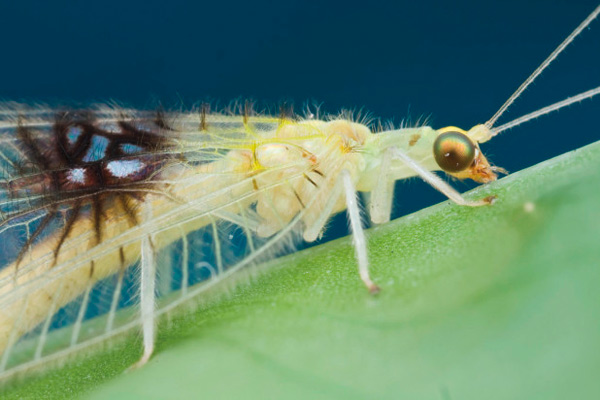
The mechanisms for controlling the population density of harmful insects and mites, epizootics and antibiosis are powerful factors of natural regulation, which is the basis of integrated plant protection. Knowledge of these mechanisms makes it possible to limit the use of chemical plant protection products and to protect the natural environment from pollution with pesticides.
The objective of integrated plant protection is to ensure a certain population density of pests in biocenoses, known as the “contaminated field” method and expressed by the so‑called economic injury level – EIL. It assumes that the complete eradication of pests leads to deprivation of food for parasitoids and predators and to a reduction in their numbers, to disturbance of biodiversity in biocenoses, to the emergence of new species and groups of pests, and to the disruption of relationships between beneficial and harmful organisms that have been built up over a long period.
The application of modern plant protection associated with integrated pest management is impossible without knowledge of the fundamentals of biological and integrated plant protection and of the qualitative and quantitative composition of pests and biological control agents in primary and secondary biocenoses (agrocenoses).
Biological and integrated plant protection (BIPP) do not exert adverse effects such as those of chemical plant protection (CPP), which are expressed in: disturbance of the biological balance in primary biocenoses and agrocenoses in favour of pests; creation of conditions for the emergence of new economically significant species and groups of pests; risk of poisoning humans, wild animals, pollinators, plants and their produce; reduction or complete elimination of the factors of natural biological regulation; development of resistance in pest populations to the applied plant protection products (PPPs), etc. Furthermore, they increase biological diversity in biocenoses; do not pollute the natural environment and are a key component in the protection of crops from pests in organic (biological) farming. These and other important qualities make them without alternative for the protection of plants and their produce from pests.
Integrated plant protection (IPP) has a short history of about 70 years, but the rapid manifestation of a number of shortcomings of total chemical plant protection stimulated and accelerated its emergence, development and application. Many specialists do not sufficiently understand the essence of this type of plant protection, and in the Plant Protection Act (State Gazette, No. 61, 25 July 2014) it has not found an appropriate place in terms of implementation and explanation.
Integrated plant protection is a system for regulating the numbers of major plant pests below the economic injury levels, through the use of the results of natural regulation and/or known control methods applied individually or combined in the most appropriate way. During the last quarter of the previous century in Bulgaria, fundamental studies were carried out on the elements of this control – the main pests on crops were identified and studied; their biological control agents and their regulatory role, the economic injury levels, effective methods for monitoring and forecasting, the most suitable combined application, plant protection products with negligible impact on biological control agents and not disrupting the biological balance in agrocenoses. And most importantly – there were sufficient and well‑trained integrated plant protection specialists at national, regional and lower levels, who improved their qualifications annually. During this period Bulgaria occupied one of the leading positions in Europe in the application of integrated plant protection – on about 1 million decares of vineyards; on hundreds of thousands of decares of orchards; on several million decares of cereal crops; on about 300,000 decares of tobacco; in combination with biological control in all greenhouse complexes in the country.
Since the beginning of the 1990s the application of integrated plant protection, including biological plant protection, has gradually declined, remaining only on small areas and in individual greenhouse complexes.
The reasons for this are fundamental and numerous, and their resolution is possible only through profound reforms in plant protection, expressed in:
– Restoration of the independence of the Plant Protection Institute.
– Separation of plant protection from the Bulgarian Food Safety Agency and restoration of the National Plant Protection Service with the necessary directorates within it.
– Increasing the number of plant protection specialists, including the appointment of specialists in biological control and integrated plant protection.
– Continuous improvement of the qualifications of specialists in plant protection, biological control and integrated plant protection only at universities accredited in the field of plant protection (faculty of plant protection).
The protection of plants from pests is an extremely responsible state activity, affecting not only the protection of crops and their produce from pests, but also the natural environment as a whole – biodiversity, soil, water, i.e. it concerns the ecology of humans and animals. If integrated pest management, as specified in the Plant Protection Act (Supplementary Provisions, paragraph 1(23)), is to be implemented, comprehensive reforms are imperative, and the amendment of the Plant Protection Act is becoming more than topical. The current organisation of plant protection in Bulgaria does not meet the requirements of the Plant Protection Act and the specific expectations of society for clean produce, clean soil and clean water.