

Wheat and barley have infectious diseases with similar but also differing etiologies. During the past season (2015/2016), fungal manifestations dominated in both crops in the country, with some of them showing a trend of intensification and causing significant damage.
In wheat
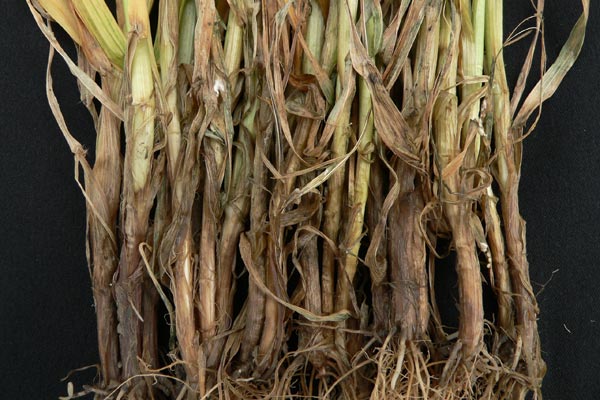
Rhizoctonia rot has two main manifestations - root rot (Rhizoctonia solani, R. cerealis) and sheath and stem base spotting, caused mainly by R. cerealis Take-all (Gaeumannomyces graminis var. tritici) - the symptoms of the disease initially resemble those caused by other soil-borne pathogens, but this manifestation is typified by the darkening of the bases and the presence of dark mycelium on and within the affected tissues. Primarily towards the end of the vegetation period and after harvest, the perithecia of the fungus also form on the stem base tissues.
Conditions during the second half of the vegetation period were particularly favorable for the development of two of the rusts on wheat - leaf rust develops with varying significance almost annually in the country, while stripe rust occurs more rarely, but this spring was surprising due to the wet and cold spring.
The past season also provided very good conditions for septoria leaf blotch (Septoria tritici), which reached the flag leaf in susceptible varieties and where there were gaps in the vegetation treatments
In barley
damage from net blotch( Drechslera teres) dominated and led to significant leaf spotting. Undoubtedly, the disease continues to be the leading one in this crop and most likely will remain so during the current season.
Leaf scald (Rhynchosporium secalis) was in the group of locally developing fungal diseases, with its development most often being a consequence of using infected seeds and gaps in their disinfection. For the same reasons, there were also manifestations of barley stripe
Protecting wheat from the diseases mentioned above, as well as from other potential manifestations (tan spot, powdery mildew), requires constant monitoring of the crops and taking protective measures according to the specific epidemiological situations. - crop rotation, healthy seed material, seed disinfection, resistant varieties. Sowing at precisely defined times is of great importance. If plants enter the winter period in an unsuitable phenological state, they are vulnerable to freezing, and subsequently to infectious diseases. Such a situation requires timely fertilization of the crops and, in the presence of fungal diseases, determining the timing and products for vegetation treatments, taking into account the dynamics in the development of each disease. A good guideline is the principle of two fungicide sprays - first treatment at the first node stage (simultaneously with herbicide), and the second - at the beginning of heading. When a specific situation dictates changes, this scheme should be adapted, including by conducting a third spray to protect the ears (Fusarium head blight, tan spot, black point).
In barley treatments are usually dictated by the development of net blotch. The first spray is particularly important, as it reduces the infection pressure from existing damage from the autumn-winter period, and in a rainy spring, a second treatment is likely necessary to avoid leaf scald and a significant yield reduction, as well as a better health status of the seed for sowing.