

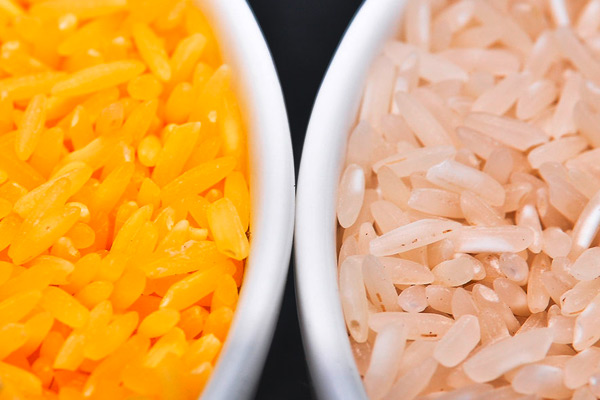
Over 100 Nobel laureates signed an open letter calling on the international environmental organization Greenpeace to stop its campaign against genetically modified crops and feed, including against Golden Rice, which is considered one of the possible solutions in the fight against the global shortage of beta-carotene.
The shortage of food and the malnutrition of the rapidly growing population, especially in the poor regions of the world, have recently become a main topic of debate in the scheme for and against genetically modified crops. Alongside questions regarding the effects on human health and the ecological balance from the use of agricultural products that are the result of genetic engineering, the discussion has also extended to corporate monopolies that are increasingly involved in the profitable GMO business.
Nobel laureates in defense of Golden Rice
Over 100 Nobel laureates signed an open letter calling on the international environmental organization Greenpeace to stop its campaign against genetically modified crops and feed, including against Golden Rice, which was considered a solution in the fight against the global shortage of beta-carotene. According to the Nobel Prize winners, who work in various fields of science – medicine, physics, chemistry, biology, literature – the public is currently reacting excessively emotionally to the appeals of various non-governmental organizations that seek to completely deny the achievements in improving seeds through biotechnological methods with the aim of increasing the available food on a global scale. At the head of the initiative are Richard Roberts and Phillip Sharp, who received the Nobel Prize in Physiology or Medicine in 1993 for the discovery of genetic sequences known as introns. The advocacy of the cause for the active entry of GMO products onto the market by the scientific elite opens the doors for the legalization and dissemination of all kinds of genetically modified crops. The story recalls another popular agro soap opera from the last few months, namely the extension of the authorization of the active substance glyphosate.
In a report published in May 2016, the research unit of the U.S. National Academy of Sciences (NAS) – the National Research Council (NRC) – claims that the consumption of genetically modified foods does not harm human health. The NRC, however, has been subject to criticism because of its links with business, as the day before the publication of their study the non-governmental organization Food & Water Watch, which works in the field of consumer rights protection, presented its own report claiming that the NRC had received millions of dollars in funding from biotechnology companies.
Greenpeace’s position
“The allegations that someone is blocking genetically modified Golden Rice are untrue. Golden Rice has failed to provide the solution it was looking for and is currently not available for sale,” commented Wilhelmina Pelegrina, who works for the organization’s office in Southeast Asia. According to the International Rice Research Institute, it has not been proven that Golden Rice actually addresses vitamin A deficiency. “Instead of investing in this extremely expensive PR exercise, we should address the problem of malnutrition through a more diverse diet, equal access to food and ecological farming,” the statement of the environmental organization reads.
Rice of gold
The days are gone when the shelves of the neighborhood grocery store were lined only with packages of white rice (Oryza sativa). We could hardly have imagined that, in addition to the classic white rice, brown, black, purple and red, and why not yellow, would soon take an honorable place on our table. The latter appeared thanks to the efforts of two scientists – Ingo Potrykus and Peter Beyer. In 1992 they undertook the ambitious task of developing a rice plant that produces beta-carotene (provitamin A) not only in its leaves, where it is needed for photosynthesis, but also in its edible part – the endosperm. “Golden Rice” was created through the transformation of ordinary Oryza sativa with two genes for the biosynthesis of beta-carotene: from yellow daffodil and from the soil bacterium Erwinia uredovora.