

Lemon balm is one of the most widely harvested medicinal plants in Bulgaria. In terms of quantities used, it is among the first 20 species of medicinal plants, with 450,000 kg of leaves and stalks of lemon balm produced and exported annually in our country. The plant has been known since ancient times as a valuable essential oil-bearing and medicinal plant. The favourable climatic and soil conditions in Bulgaria facilitate the cultivation and growing of lemon balm, which is also a good opportunity for starting one’s own business.
Diseases:
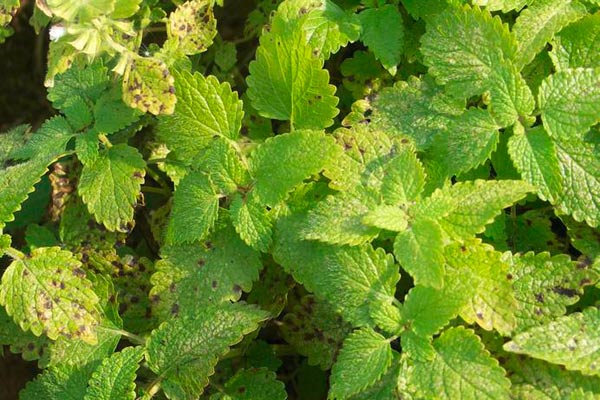
Dark brown leaf spots. The causal agent is the fungus Septoria melissae. It is widespread and causes annual damage in seedling production and in old plantations. The first symptoms appear in spring, with the retention of moisture in the plantations being a favourable condition for its development. It is characterised by the formation of small (2–6 mm), angular, brown to black spots with a violet margin, which are delimited by the venation. The disease develops throughout the entire vegetation period and, under severe attack, the affected leaves fall off. Copper-containing preparations can be used to limit the damage. In case of strong development of the disease, the plantation should first be mown, the interrows cultivated, and only then treated with plant protection products.
Pests:
Leafhoppers – Eupterix atropunctata, Eupterix colina, Empoasca flavescens. The damage caused by all species is similar – small, pinpoint discolorations on the leaves, which may merge into larger yellowish spots; under heavy infestation the leaves dry up and fall off.
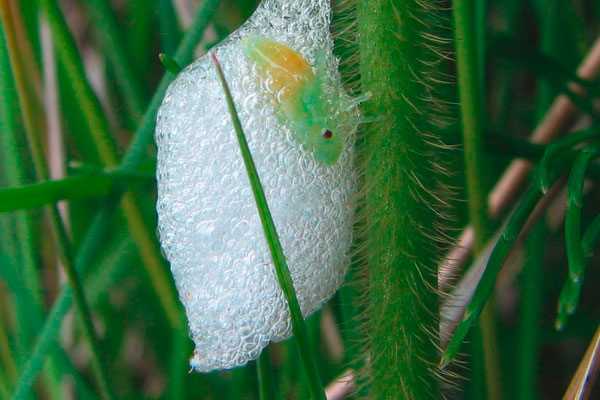
Meadow spittlebug – Philaenus spumarius, usually occurs in spring. Both larvae and adults are harmful. The larvae are covered with a characteristic envelope of viscous liquid containing air bubbles. They are usually located in the leaf axils and, at high population density, especially on young plants, can inhibit the development of vegetative shoots and generative organs.
In dry weather during the summer months, severe damage to the leaf mass is caused by spider mites – Tetranychus urticae (Two-spotted spider mite). It damages the plant by piercing the epidermis on the underside of the leaves and sucking cell sap from the chlorophyll grains. At the sites of damage, light pinpoint spots are formed. The leaves may acquire a mottled appearance, the spots later coalesce, turn brown, and heavily infested leaves fall off. At high population density, the mites envelop all above-ground parts with webbing threads and the plant may dry out.