

Thrips setosus (Moulton)
Synonym: Taeniothrips setosus Moulton, 1928: 328.
Classification: Thysanoptera, Thripidae
Categorization: Major pest of cucumber, tomato, eggplant, pepper. In 2014 it was included in the EPPO Alert list – Pests presenting a possible risk to EPPO member countries. (EPPO Alert list – 2014-10).
Economic importance:
In the available literature there is no indication that T. setosus causes serious direct or indirect damage in its area of origin. Nevertheless, studies conducted in Japan show that T. setosus has rapid development, high fecundity and a high potential for population increase. These studies also established a large number of host plants, combined with the ability to transmit viruses. Under favourable conditions for development, T. setosus can multiply and become a serious threat to plants, especially those grown under greenhouse conditions.
As a vector of tomato spotted wilt virus, this thrips poses a risk both to outdoor plants and to those grown in greenhouses – plants for planting, cut flowers and other ornamentals from various families – including Solanaceae and Cucurbitaceae.
Due to its small size and high reproductive capacity, this pest is difficult to detect and to control. It is advisable to take measures to avoid the risk of further spread of T. setosus in the EPPO region.
Hosts:
The main hosts of T. setosus are cucumber, pumpkin, tomato, eggplant, potato, sweet pepper, tobacco, hydrangea, sesame, ornamental flowers. It has been reported in Korea as a pest of rice, in Japan on tobacco and tomato, and in the Netherlands also on weed species such as Lamium purpureum, Heracleum sphondylium and Urtica dioica.
Dissemination:
This thrips is unlikely to spread naturally over long distances. Its dispersal is probably facilitated by international trade. It is transported with plants for planting, cut flowers and foliage, fruits and vegetables, soil and growing media.
Damage:
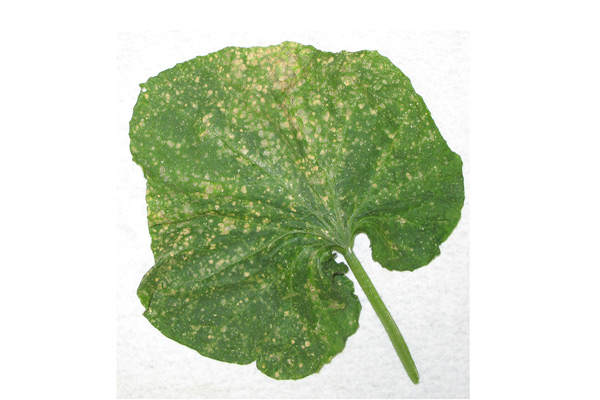
Despite its common name (flower thrips), T. setosus does not feed on pollen from plant flowers (Murai 2001a). It attacks plant leaves and can transmit TSWV (Tomato spotted wilt virus).
Biology:
The life cycle is spent partly in the soil. Similar to Thrips palmi, adults emerge from the pupae in the soil and move to the leaves and flowers of the plant, where they lay their eggs. Second-instar larvae move into the soil, where they pupate and complete their development cycle. The mouthparts are specialized for sucking. As a consequence, plant damage is caused by sap sucking during feeding by the pest.
Control:
Populations of Thrips setosus can be monitored by placing blue and black sticky traps.
Mechanical and cultural practices are applied for the control of the pest.
Among biological control agents, the most suitable are species of the genus Amblyseius – predatory mites, or the genus Orius – predatory bugs.
In countries where this thrips is present, chemical control is carried out in the field and especially in greenhouses, using imidacloprid and pyrethroids, but these also destroy natural enemies.