

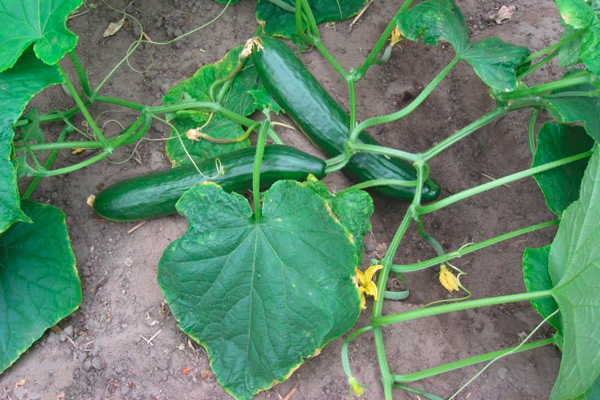
The primary center of origin of cucumbers is India. The species was cultivated there as early as 3,000 years ago. The greatest genetic diversity is also found in this region. It is assumed that cucumbers were brought to Europe by Alexander the Great. They were known and used for nutritional and cosmetic purposes in Ancient Egypt, Greece and the Roman Empire. The beginning of their cultivation in greenhouses was introduced by Louis XIV, and they were brought to America later.
The species is characterized by high plasticity, which is a prerequisite for its wide distribution throughout the world. It is grown both in the open field and in protected cultivation facilities. It is characterized by a short vegetation period until fruiting and rapid yield formation.
Cucumbers are one of the main vegetable crops grown in Bulgaria. They contain 95% water, but at the same time are rich in potassium, sodium, calcium, phosphorus, enzymes and mineral salts, which are important for the human body. Despite their low nutritional value, they are present daily on the Bulgarian table because of their excellent taste and dietary qualities.
Several cultivar types are grown worldwide: greenhouse (fruit length over 30 cm); slicing (fruit length 18–25 cm); Betalpha type (12–15 cm) and gherkins (5–8 cm). The largest producer and consumer of cucumbers is China, followed by Turkey, Iran, Russia and the USA. In 2009, 60.6 million tons of cucumbers were produced, harvested from 2 million hectares.
In our country, from a seasonal vegetable in the recent past, today they are offered on the market all year round. The predominant areas occupied by this crop are in greenhouse complexes. In the open field mainly gherkins are grown, which supply the processing industry, and salad cucumbers in small quantities. Of the 51,297 t produced in 2014, only 6,783 t were gherkins and other field-grown cucumbers, while the remaining 44,514 t were greenhouse-grown. In the structure of greenhouse production, cucumbers rank second with 20–30% of the area. The predominant greenhouse areas occupied by this crop are unheated and two crops per year are grown in them. In recent years, consolidation of the greenhouse sector has been observed. Along with small greenhouses in private yards, larger complexes are being developed – new facilities are being built and old ones are being renovated. Alternative sources of heating are being sought. As a result, the area of heated greenhouses in the country is increasing, in which crops are grown year-round and yields increase significantly.
Cucumbers and gherkins have the largest share in the export of greenhouse vegetables. Tomatoes, strawberries, mushrooms and others are exported in significantly smaller quantities. A traditional market for our vegetables, and in particular for cucumbers, is the Czech Republic. Greenhouse cucumbers have a good market in Romania, Latvia, Germany, Greece. In recent years, exports of organically produced cucumbers have increased. They are successfully marketed in Germany and the United Kingdom.
The largest importer of vegetables, including cucumbers, to Bulgaria is Turkey, followed by Greece, Spain, Macedonia, the Netherlands and others. Data from agri-statistics show that we export greenhouse produce at higher prices and import at lower prices. With few exceptions, the balance is positive, in favor of exports. We import mainly long-fruited greenhouse cucumbers, and at the end of summer also gherkins – from greenhouse and field production, for the needs of the processing industry. The structure of exports is similar. The changes that the greenhouse sector in our country has undergone, the continuous fluctuations in area and yields have also affected the production of greenhouse crops and in particular cucumbers. A large part of the greenhouses that were operating until 1990 were liquidated and production dropped sharply. Later, although at a much slower pace, the revival of the sector began. Construction of new complexes also started and modern cultivation technologies are being introduced.