

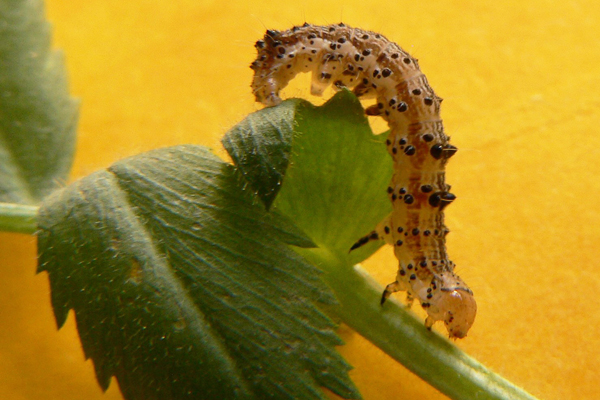
Among the pests with high risk for the countries of the EPPO region are the following species from the family Noctuidae:
Heliothis virescens (Lepidoptera: Noctuidae) (tobacco budworm)
H. virescens is polyphagous and attacks 55 species from 14 families. Tomato, tobacco, potato, cotton, legumes, maize, pepper, lettuce, maize, as well as ornamentals such as geranium, ageratum, chrysanthemum, gardenia, petunia, verbena, zinnia and others.
Damage: The female moths lay their eggs on the flowering or fruiting parts of the plant and the hatched caterpillars feed on leaves, flowers and fruits. The larvae damage or destroy buds and flowers, may penetrate into the fruits and feed on the seeds. Pupation takes place in the soil. The pest causes significant damage to tomato, tobacco, cotton and maize.
Dispersal: The moths are able to fly over long distances. In North America the pest overwinters in the southern parts and during the summer it spreads northwards through the flight of the moths.
Pathways for entry: Fruit of vegetables, plants for planting, cut flowers, soil from countries where H. virescens is present.
Possible risk: Tomato and the other host plants are major crops for Europe. According to the study of the European and Mediterranean Plant Protection Organization (EPPO), the climatic conditions are suitable and the risk of entry of the pest is high, especially for the southern parts of the region, where it may overwinter.