

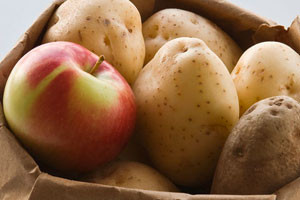
The successful and prolonged storage of plant produce in the post-harvest period depends on a number of internal and external factors. The main internal factors are the water content, the physiological activity of the cells at the moment of harvest, the degree of development of the plant organ and its covering tissue, the concentration and type of respiratory substrate (carbohydrates, proteins, fats), etc.
Among the external factors, the most significant in the post-harvest period are temperature, environmental humidity, and gas composition. The quality and storability of the produce also depend on the conditions and the applied agricultural practices during the growing season – pruning, fertilization, irrigation regime, etc. Significant temperature fluctuations can lead to bitter pits, watercore, or a tendency for the fruit flesh to brown. Well-exposed fruits store better and accumulate more carbohydrates, acids, and phenols compared to shaded ones. Uneven water supply up to the moment of harvest reduces fruit mass and worsens their structure. Under an optimal irrigation regime, the content of carbohydrates and acids is higher and their breakdown occurs more slowly. High fertilization rates, especially one-sided fertilization, worsen the quality and storability of fruits. Fruits from very young and old trees are of lower quality and are more difficult to store.
In the post-harvest period, a number of biochemical changes occur in plant produce, the more important of which are the following: Decrease in the amount of organic acids; increase in sugar content due to the hydrolysis of starch; intensification of the synthesis of volatile aromatic substances.
The full article can be read in the journal "Plant Protection", issue 10/2015.