

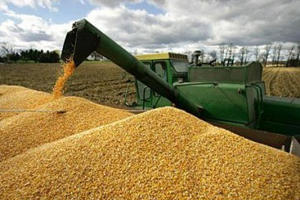
According to data from the Dobrudzha Agricultural Institute, in the last fiscal year, 1500 tons of basic seeds from Bulgarian varieties were sold, while this year, only 650 tons have been registered for sale. In an interview for Darik Radio, the director of the Institute, Assoc. Prof. Dr. Ivan Kiryakov, shared that last year, 6.5 - 7 million decares of Bulgarian wheat were sown, and this year, this number is expected to drop to 4 million decares. Experts are concerned that imported seeds are not sufficiently tested under the specific agroclimatic conditions in the country, and this could lead to unsuccessful harvests and disappointed farmers. On the other hand, the entry of Western seed companies into the Bulgarian market over the last 20 years has significantly changed the scientific environment in agricultural institutes and calls into question the existence of local seed varieties important for Bulgarian agriculture.
At the end of August 2015, the Executive Agency for Variety Testing, Approval and Seed Control (EAVTASC) published a worrying list of all varieties in Bulgaria that are threatened with extinction:
http://www.iasas.government.bg/bg/news.html?newsid=128
When talking about Bulgarian vegetables, for example, it should be kept in mind that they are produced in Bulgaria, but this does not mean they are produced from Bulgarian varieties. The first varieties registered in the country were created by the gardeners themselves. Scientific-based selection was only organized from the beginning of the 20th century. In reality, until the middle of the century, Bulgaria had varieties for most vegetable crops, and with excellent qualities, fully adapted to the specifics of our agroclimatic conditions. Between the 1950s and 1970s, with the creation and expansion of agricultural science, the number of selected varieties was reduced to increase quality. The crops for which we are known, not only domestically, are peppers, tomatoes, green onions, garden beans, and garden peas. The trend since 2000 has been a drastic reduction in seed production in the country's scientific institutes and experimental stations. And despite the enormous desire of a handful of scientific collaborators to return traditional Bulgarian agriculture to its golden age, attempts remain only in the backyard of agricultural science. New varieties exist, as can be seen from the rich assortment of the Maritsa Vegetable Crops Research Institute in Plovdiv, but seed production is lacking, which renders selection meaningless and sends vegetable producers to foreign companies.