

The home of the bees was built with funds under Measure 311 of the Rural Development Programme and amounts to 70,000 leva.
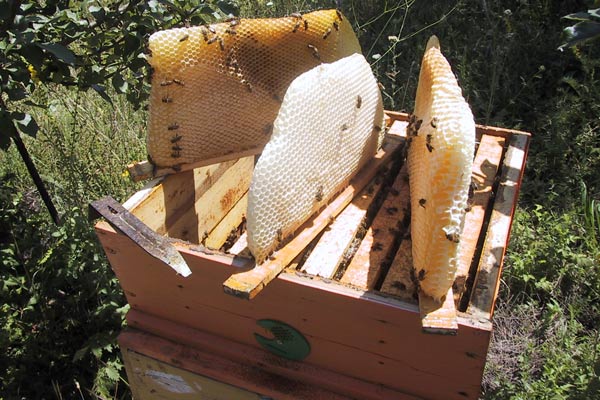
The winged pharmacists of nature, as they are called by Nedyalka Mihova, the owner of the Honey House in the village of Prilep, now have a home where, with great dedication, the journey of honey has been recreated. The greatest attraction for tourists in the Honey House are the dwellings of the bees – from the oldest, in crevices of rocks, to the modern hives. On the green meadow there are tree trunks and hollows, which are also gladly inhabited by the winged workers. Visitors can also see the first dwellings that humans made for bees – a clay hive, known in ancient Egypt, and the so‑called “travna” or woven hive from wild vine, plastered with a mixture of soil, wood ash and other ingredients, used in our lands. The demonstration hive with glass walls attracts the most curious glances. Here one can follow everything in the life of the bees – from the birth of the babies, the building of the honeycomb, to the idleness of the male drones.
The distinctive beekeeping museum also presents an anatomical diagram of the bee, the members of the winged family, and its greatest enemies from which it protects itself – the bear, the hornet, the bee‑eater, the wax moth. The centrifuge, the tank, the solar wax melter, which turns the old wax combs into “golden wax”, are part of the tools of beekeeping labour presented in the museum.
Nedyalka Mihova, who holds the titles “Beekeeper of Dobrudzha” and “Queen of Honey”, believes that by creating the Honey House she is following her long‑standing dream. For her, the bees are not only very hardworking, but also have a good memory. “If we move a hive, within 12 days they return to the old place,” shares the hostess, describing her observations. The work of the bees is hard and requires a huge dose of attentiveness, order and strict discipline.
On one of the walls in the bee museum are written the words of Albert Einstein: “If the bees disappear from the face of the Earth, man would have no more than four years to live. The more pollination, the more plants, the more animals and the more people.”
Beekeeping Elixir
The beekeeping cocktail, called ambrosia, is prepared for all guests of the Honey House. The thick syrup for the drink is made from a large jar of honey, a kilogram of freshly squeezed lemons and 50–100 grams of bee pollen. The hosts’ preserved recipe attracts tourists from all over the world who are passionate about the secrets of natural Bulgarian honey.