

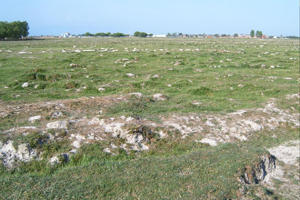
Salinization of agricultural land is one of the main environmental problems affecting crop productivity and the quality of plant production, especially in areas with arid and semi-arid climates. Salt stress is a phenomenon that simultaneously causes osmotic stress, specific ionic effects and mineral imbalances in plants, as a result of which it damages a number of physiological and biochemical processes. According to FAO data, saline areas worldwide amount to 800 million ha, of which over 80 million ha are arable. Each year between 1 and 2% of the world’s arable land is lost as a result of inappropriate agronomic practices and persistent trends in changing climatic and hydrological conditions. The area of saline soils in Europe is about 35 million ha, predominantly in countries with a drier climate. The total area of saline land in Bulgaria is about 33,000 ha. Saline soils in the country are found in areas with intensive agriculture, on land equipped with irrigation systems and on land of high value. These soils are distributed mainly in the regions of Plovdiv, Sliven, Yambol and Burgas. Despite their relatively limited distribution in the country, the salinization process has significant economic importance. Agricultural output is characterized by deteriorated quality and reduced quantitative parameters. The return on investment in land reclamation practices is low. In the areas with the highest degree of development of the salinization process, soil salinization is the main reason for the abandonment of land with high potential fertility.
The full publication in the journal “Plant Protection” sets out the causes of salinization, the physiological damage occurring under the influence of salt stress in plants, the mechanisms of adaptation and some options for protecting agricultural crops through the use of various preparations and chemical substances.