

Drought and high temperatures are the most characteristic stress factors for agricultural crops in our country. Their negative impact on agricultural plants is complex and directly or indirectly causes disruptions in almost all physiological processes – water exchange, mineral nutrition, photosynthesis, growth, etc. The negative effects of these stress factors are particularly significant during the reproductive period, especially during gamete formation and the initial stages of seed and fruit development. The ultimate result of this impact is reduced yields of agricultural crops and deteriorated quality of plant production.
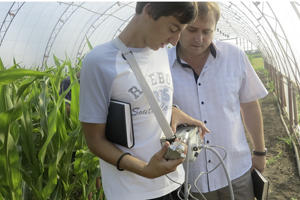
Drought is an unfavorable combination of meteorological factors, in which plants experience significant water deficit (Fig. 1). During the day, with increasing light intensity and temperature, a midday water deficit occurs in plants. It is temporary and easily overcome by plants within the day or at night, when root pressure restores the hydration of the above-ground organs. Water deficit up to certain levels is not harmful and even has a positive effect on plants. It is known that the photosynthetic function of plants is optimal under a mild water deficit in the leaves – within 5-10% (the Brilliant effect) due to better gas exchange compared to that at full leaf turgor.
When plants are unable to maintain the necessary tissue hydration, a residual water deficit develops in them. It is most clearly observed in the early morning hours as wilting of the lower leaves, since optimal hydration has not been fully restored overnight. The residual water deficit has a negative effect on the physiological status. In this case, the stomata (small openings in the leaf blade, constituting 1-3% of the leaf area) close to preserve tissue hydration, but this leads to at least two negative effects. First, the uptake of carbon dioxide necessary for photosynthesis is limited. Second, the cooling effect of transpiration – the evaporation of water from the leaves – is reduced.
The optimal temperature for the growth and development of most agricultural plants is within the range of 20 - 25 °C. At temperatures above 30 °C, the growth rate decreases, and above 35 - 40 °C, various structural and functional disorders occur. The processes related to the formation of reproductive organs, as well as photosynthesis, are the most sensitive. Even brief exposures to temperatures above 40 °C damage the photosynthetic process. The combination of high temperatures with drought, which is often observed in practice, is particularly harmful. It is known that under good plant water regime, high transpiration intensity can lower leaf temperature by several degrees compared to the surrounding air. Conversely, under drought, due to reduced transpiration, leaf temperature can significantly exceed the temperature of the surrounding air. When the adverse impact of drought and high temperatures exceeds the plants' tolerance potential, water stress sets in and the realization of various acclimatization mechanisms begins.