

Last week, the European Union approved the import of 10 new genetically modified crops for food and feed and two types of ornamental flowers. Information from the European Commission's press center states that the selected crops have undergone the full authorization procedure, which includes a positive scientific assessment by the European Food Safety Authority (EFSA). The authorizations will be valid for 10 years, and all products derived from these specific GMO crops will be subject to EU labeling and traceability rules. The use of seven other agricultural crops was also extended.
The approvals will be added to the existing list of 58 GMO crops authorized in the European Union. The genetic modifications primarily concern protection against pests or herbicide resistance. Two types of carnations developed by Suntory Holdings were also approved for import.
The adopted GMOs are as follows:
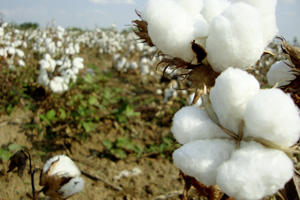
maize MON 87460, soybean MON 87705, soybean MON 87708, soybean MON 87769, soybean 305423, soybean BPS-CV127-9, maize MON 88302, oilseed rape, cotton T304-40, cotton MON 88913, cotton LLCotton25xGHB614.
7 renewed authorizations:
maize T25, maize NK603, oilseed rape GT73, cotton MON 531 x MON 1445, cotton MON 15985; cotton MON 531 and cotton MON 1445.
2 types of GMO carnations: IFD-25958-3 and IFD-26407-2.
In unison with the ninth round of negotiations for the Transatlantic Trade and Investment Partnership (TTIP), the new GMO authorizations in Europe were officially published. Nothing is coincidental, and this decision reveals the EU's active policy towards legalizing and introducing the controversial crops, which have been part of the American citizen's menu for years.
The approvals still do not mean the cultivation of GMOs on the territory of the old continent, but they managed to stir spirits in the two opposing camps. Environmentalists see the Commission's actions as a retreat from Jean-Claude Juncker's promise to change GMO rules to allow national governments to ban such crops, even with EU-level authorization. The US government made several sharp remarks that the decision represents an obstacle to the negotiations for the planned free trade agreement between the EU and the US. Aligning European with American legislation in the field of agriculture is a bilateral process that requires international patience and at the same time carries significant risks. It is no secret that democratizing the decision-making procedure in the EU is quite cumbersome and, in most cases, doomed to failure. To reject or approve a genetically modified crop, a qualified majority in the Council of Ministers of the EU is required. Over the past 10 years, in practice, not a single vote in the Council has had a specific final result subject to definitive implementation in the various countries. Many small countries like Austria, Luxembourg, and Hungary have often blocked decisions and adhered to a course of opposition. As a result of the constant "non-decision-making," the EU was forced to designate the European Commission as the legal body in whose hands the entire responsibility for accepting or rejecting genetically modified crops rests. Whether each member state will manage to challenge already adopted clauses remains to be seen.
We are curious to see what the next steps of the participating partners in this innovative and endlessly controversial field will be.