

![MultipartFile resource [file_data]](/assets/img/articles/harizanova-2023.jpg)
Interview with Prof. DSc Vili Harizanova, Dean of the Faculty of Plant Protection and Agroecology at the Agricultural University of Plovdiv
The history of training in plant protection in Bulgaria is closely related to the history and development of agronomic education in our country.
At the beginning, the first Agronomy Faculty, established by Decree No. 7 in 1909, was part of Sofia University and its first Dean was Prof. Yanaki Mollov, who, in parallel with his teaching activities, also performed the responsible task of Minister of Agriculture.
A decisive role in the establishment of the Agronomy Faculty at university level was played by Dr. Dimitar Atanasov, who managed to secure the missing funds for the construction of an independent building, for the equipment of a phytopathological laboratory, a greenhouse, a crop production laboratory, books and specializations. Thus, in a short time favourable conditions were created in Bulgaria for successful science: infrastructure, a world-class phytopathological laboratory, qualified professors and textbooks. These efforts gave an impetus to the further-definition of the Plant Protection specialty and the first cohort of students was admitted in the 1950-1951 academic year. Within the specialty two independent departments were formed – Entomology and Phytopathology.
On 4 June 1975 the specialty “Plant Protection” was relocated from - Sofia to the Higher Institute of Agriculture (HIA) in Plovdiv. By Decree No. 27/1.09.1983 / a Faculty of Plant and Soil Protection was established at HIA with Dean Prof. Dobri Burov. In 1991 a second specialty was opened – Agroecology, and the faculty was renamed Faculty of Plant Protection and Agroecology.
- Prof. Harizanova, from the establishment of the Faculty of Plant Protection in Plovdiv 40 years ago to this day, you have been committed to the concept of combining plant protection with environmental protection and, more specifically, soil protection. Is this the concept that makes the faculty you head so successful, sought after and preferred?
This is certainly one of the reasons. The Faculty management has always been guided by the understanding of the close link between plant protection and the environment. Soil and water contamination with pesticides, destruction of beneficial insect species, including pollinators, as well as disruption of the natural balance are among the possible negative effects on the environment from the application of plant protection. The fact that we have specialists in these two fields enables us to train plant protection specialists who apply modern methods and means for crop protection, taking into account the factors of natural regulation and, on the other hand, ecologists who are well acquainted with the possibilities to reduce the harmful impact of agricultural practices and plant protection.
In this sense, it can be said that the Faculty offers unique training in these two specialties.
- From the very beginning of the establishment of the Plant Protection specialty in 1951 there were two departments – the Department of Entomology and the Department of Phytopathology. Even then, the discipline Biological Control was created within the Department of Entomology and Plant Immunity within the Department of Phytopathology. What is the role of biological control in modern plant protection and do you consider integrated plant protection to be the future for ensuring plant health?
Biological plant protection has a history of more than 2000 years, but after the widespread introduction of synthetic chemical pesticides following the Second World War until the end of the last century, it was somewhat forgotten in most European countries. In Bulgaria, however, the so-called biological control was widely applied until 1990. Unfortunately, when other European countries began mass production of bioagents, not a single biolaboratory remained in our country. We had experienced specialists both in the production and application of bioagents in various field and perennial crops. But as an academic discipline, Biological Control, later renamed Biological Plant Protection, has been taught without interruption to students of all specialties in the Faculty. The leading lecturers Prof. Angel Harizanov, Prof. Troya Babrikova, and for a short period Prof. Venelin Pelov, developed the discipline, wrote textbooks and books, created teaching aids and everything necessary for our students to receive the best possible training.
Unlike Biological Plant Protection, the concept of Integrated Plant Protection is much younger; it emerged in the 1960s in response to the already manifested shortcomings of chemical control. Its history is short, but there should be no doubt regarding its future. By definition, integrated plant protection combines all known methods for the control of pests, diseases and weeds, and the biological method is among the most essential elements of any integrated plant protection programme.
To date, Europe has a strategy on how to reduce environmental pollution, biodiversity loss and the harmful effect on the climate through changes in agricultural systems and plant protection, with a key role assigned to integrated plant protection.
In essence, biological plant protection and integrated plant protection „work“ in favour of nature, not against it, and fit into the vision for the future of agriculture.
- The third "green" revolution has started in Europe, which involves radical changes in the philosophy of plant protection. The aim is to achieve a high health status of crop production in an unstable, highly dynamic climatic and phytosanitary environment. What is the scientific, technological and product toolkit against the background of the strict regulatory regime for the use of pesticides, for risk management, for building a different level of awareness and defining adequate expert solutions?
You very accurately define the changes that will occur in the philosophy of plant protection – radical. From plant protection aimed solely at directly destroying a given harmful organism, to plant protection in which this is the last resort. Plant protection is becoming a component of the broader concept of plant health, which includes the health of the soil in which we will sow the seed, the complex of microorganisms and nutrients in that soil, the characteristics of the seed, including resistance or at least tolerance to economically important diseases and pests, the application of new agricultural practices in crop cultivation, such as intercropping, trap crops, strips of flowering plants, mulching, etc., which encourage beneficial organisms and have a repellent or suppressive effect on harmful ones. When we add the opportunities provided by the digitalisation of processes – the internet, remote sensing methods, innovative means of managing pest and disease population density without necessarily destroying them – these are only a small part of the technological and product toolkit, as you put it, with the help of which we could achieve the objectives set out in the Strategy. It is a matter of time before these new products and technologies become widely used in practice, but for this purpose much more intensive work is needed at national level to raise the awareness of farmers about the changes that will take place and about innovations in plant protection. The direction is clear. Successful agriculture requires close cooperation within the knowledge triangle: science – education – business and public administration. The creation of the necessary expert capacity of well-trained specialists who will work in close cooperation with scientists, with university education and with branch organisations of producers, processors and traders is essential.
As an educational institution, we fulfil our task – to train young specialists in the spirit of this new philosophy.
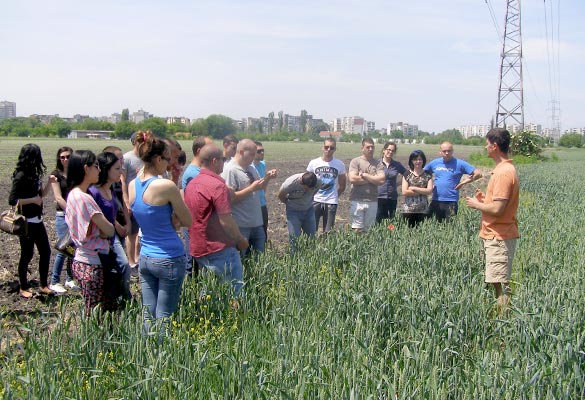
- In 2013 the Centre for Integrated Management of Plant Diseases was established at the Faculty of Plant Protection and Agroecology. What exactly does this centre do and can it be used by students, lecturers and producers alike?
The Centre was officially opened on 20 May 2014. The Centre offers a modern plant protection system to support farmers in the country. The methods used include forecasting the development of plant diseases and pests on the basis of meteorological data and mathematical models with internet access, conducting field and laboratory research to solve important practical problems. The results are available online and reach stakeholders quickly. They are useful not only for the lecturers, PhD students and students of the Agricultural University, but also for farmers.
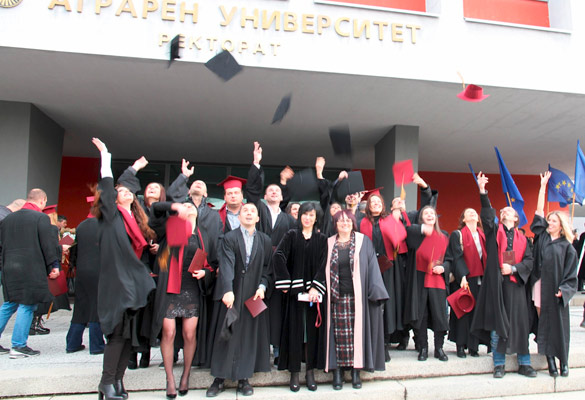
- The transformation of the Higher Institute of Agriculture into a university at the beginning of the new millennium coincided with the harmonisation of the European higher education systems. This necessitated the creation of new courses, modules and specialties that meet the European requirements for quality and knowledge transfer. Since 2016, the specialty “Plant Protection” has been ranked first in the university ranking system in Bulgaria. What is the reason for this huge interest in your faculty? Is your training sought after by foreign students as well?
Interest in the specialties in the field of Plant Protection is dictated primarily by the need for specialists with such a profile. Agriculture needs knowledgeable doctors of plants. The importance of this type of specialists worldwide is increasing in parallel with the ever-wider adoption of the concept of sustainable agricultural development, in which plant protection must not harm the environment.
The recognition and first place in the professional field of Plant Protection are a logical result of excellent work at many levels. Building on the good traditions inherited from the first lecturers of the Faculty, we maintain a high level of bachelor’s, master’s and doctoral programmes in plant protection in close cooperation with leading foreign universities under programmes such as Tempus, Erasmus, Horizon, etc. The first and so far only joint master’s programme in the field of plant protection in Bulgaria, which is also offered in English, is accredited at the Agricultural University. This is the master’s programme Plant Medicine, which is the same for 12 European universities. Within another international project, a doctoral programme has been developed and is to be accredited, again common to 10 European universities – “Plant Health in Sustainable Agriculture“. Our Faculty is also a pioneer in offering a bachelor’s programme in plant protection in English, in which we have already graduated 10 bachelors from the Republic of South Africa.
The Faculty has human resources specialised in the professional field of Plant Protection, narrow specialists in entomology, phytopathology, nematology, herbology and other scientific areas, which only a few European universities possess. In addition to the excellent and modernly equipped laboratory facilities where students carry out their practical exercises, another exceptional advantage of the training we offer is the university’s training, experimental and implementation base. And thanks to our close cooperation with business, we provide our students with pre-graduation internships in a real working environment.
The Agricultural University of Plovdiv and the company „SGS Bulgaria“ join forces for the testing of plant protection products
- An important unit in the structure of the Agricultural University is the Centre for Biological Testing, where various expert assessments are carried out in the field of plant protection. In 2021 the Agricultural University of Plovdiv signed a contract with SGS Bulgaria Ltd. in the field of biological testing of plant protection products. What is the significance of this collaboration and can we consider it a real step forward in science-business relations in Bulgaria?
The Centre for Biological Testing was established by a decision of the Academic Council of the Agricultural University of 14.03.2012. During the period 2012-2014 all necessary documents were prepared and the equipment and furnishings required for the approval of facilities for natural and legal persons were provided. Since January 2015 the Centre for Biological Testing has held a Certificate for conducting biological testing of plant protection products on the territory of the Republic of Bulgaria. The Centre carries out a number of paid expert assessments in the field of plant protection, such as analyses to determine the health status of seed and planting material, testing of plant materials and goods of plant origin, of soil, physiological status of growing plants, identification of pests, etc.
The Centre has the most highly qualified staff in the field of plant protection, ensuring quality in conducting trials in accordance with Good Experimental Practice.
In 2021 the Agricultural University – Plovdiv signed a contract with SGS Bulgaria Ltd. in the field of biological testing of plant protection products. SGS has 3 experimental stations in the country. The collaboration with the Swiss company allows AU–Plovdiv to cover the main crops in the different regions of Bulgaria. The certificate of the facility has been extended until 2027, expanding its scope to include perennial crops, field, vegetable and greenhouse crops. All joint activities are carried out according to the relevant methodologies, with strict compliance with the regulatory documents for biological testing of plant protection products.
Thank you for the interview
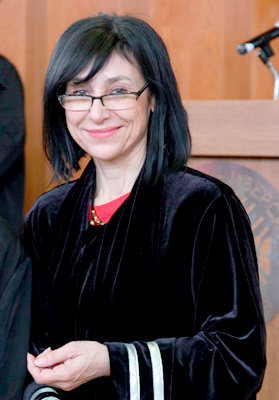
Vili Harizanova is a Professor of Entomology and Dean of the Faculty of Plant Protection and Agroecology at the Agricultural University – Plovdiv. She graduated from the English Language School in her hometown of Plovdiv with a medal and was preparing for a career in journalism when fate intervened and she chose the profession of agronomist in plant protection. In 1985 she graduated in Plant Protection at AU–Plovdiv, followed by a PhD in plant protection and more than 30 years of a teaching career at the Department of Entomology at the same university.
Thanks to international research and educational projects in which she participates or which she leads, she has had the opportunity to meet interesting people from all over the world, to become acquainted with different approaches in agriculture, plant protection and student training, and with different worldviews and life philosophies.