

![MultipartFile resource [file_data]](/assets/img/articles/ботанически-продукти-заглавна.jpg)
The continuously increasing world population and our fast-paced world require high-quality food that is accessible and available in large quantities. When it comes to agriculture and the need to meet the growing demands of the population, the use of pesticides often becomes a subject of debate. In the short term, pesticides significantly support pest control. In the long term, however, pesticides are harmful to human health and the environment. When making decisions on pest control, it is important to weigh the advantages and disadvantages of pesticide use.
Public lectures in the field of organic farming
A pesticide is any substance or mixture of substances intended to prevent pests and the potential loss of production. The use of pesticides has significant benefits. The main benefits include improved crop quality and increased yields. Secondary benefits include food security, increased income and reduced spread of pests. In the short term, pesticides reduce crop losses, save time and other valuable resources. On the other hand, the disadvantages of widespread pesticide use are substantial. These include environmental pollution, loss of natural antagonists of pests, pesticide resistance, reduction of honey bees and pollination, losses of neighbouring crops, losses of fish and birds, and contamination of groundwater. Soil fertility is also affected by the killing or damage of microorganisms caused by pesticides. People who work regularly with pesticides, such as farmers, are at high risk.
Insecticides are products for controlling harmful insects. They are subdivided into larvicides, which destroy insect larvae at different stages, and ovicides, which destroy insect eggs.
Chemical insecticides have been used for decades to control pests that attack vegetable crops and transmit infectious diseases. They can quickly control insect populations, especially when it is necessary to treat large areas. But this comes at a cost.
The toxic substances they contain can harm human health and the environment, while some pests may survive and become resistant. Approximately 500 insect species have developed this ability over the last 50 years, costing agriculture billions of dollars in losses each year.
The growing concerns include:
- persistence of the toxicity of chemical pesticides in the environment (residues);
- toxic effects on non-target organisms, including humans;
- pest resistance to frequently used insecticides;
- the introduction of new invasive species and the geographical expansion of the ranges of established pests.
These concerns prompted European legislators to vote for a ban on neonicotinoids, one of the most widely used insecticides in the world, fuelling researchers’ efforts to find “more environmentally friendly” ways to control pests, which are responsible for 40% of crop losses worldwide.
Part of the problem with conventional insecticides is that they can poison both harmful and beneficial insects, including honey bees.
To solve these problems, an EU-funded research consortium is working on a new generation of “biopesticides” that are pest-specific, harmless to humans and do not develop resistance. Botanical insecticides are also included in this group of products.
The EU applies many different tactics to limit the use of conventional pesticides in agriculture, not only because they are harmful to human health, but also because they pose a threat to the environment as a whole.
Biofungicides for the control of diseases and pests in vegetable crops
Green pesticides are an alternative to synthetic insecticides in agriculture. Green pesticides, also called ecological pesticides, are derived from organic sources. They do not cause harm to humans and animals, to habitats and ecosystems. Botanical pesticides are derived from plant sources. They do not pose a threat to the environment and to human health. The range of these products is continuously expanding, which makes it necessary to understand the mechanism of their action. Many plant extracts contain alkaloids, esters, glycosides, etc., and possess phytopesticidal properties. Plant substances used against pests may have antifeedant, repellent or toxic effects.
Plant essential oils show a broad spectrum of activity against pests, ranging from antifeedant and repellent effects to growth regulation, inhibition of oviposition and destruction of insects.
Recent research shows that some chemical components of these oils interact with the nervous system of insects. They meet the criteria for “risk reduction” from pesticides. These plant oils are well accepted in agricultural practice as “green pesticides” that may prove sufficiently effective, especially for the production of organic food. While the development of resistance continues to be a problem for many synthetic pesticides, it develops more slowly to essential-oil-based pesticides.
Mineral and vegetable oils can be successfully included in plant protection technologies for pest control; they are an alternative that gives a chance to natural regulators. In the development of control systems for the green peach aphid (Myzus persicae Sulz.), the efficacy of various oils applied alone or in combination with certain insecticides has been studied.
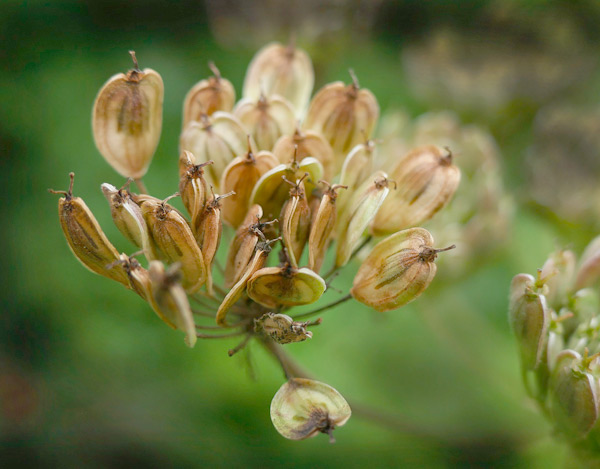
Anise essential oil has a toxic effect and reduces the population density of the green peach aphid – M. persicae.
High insecticidal activity against M. persicae has been established with the application of crude soybean oil, while refined rapeseed oil significantly reduces the number of plants infected with cucumber mosaic virus (CMV). Essential oils of anise, dill and basil have a toxic effect and reduce the population density of M. persicae.
The effects of various essential oils and aqueous plant extracts are also being studied against the cotton aphid (Aphis gossypii Glover). The efficacy of rosemary essential oil has been evaluated against the two-spotted spider mite, as well as its effects on tomato plants – hosts of the pest. The results of laboratory bioassays show that pure rosemary oil causes complete mortality of the mites at concentrations that are not phytotoxic to the host plant.
Many essential oils (EOs) have insecticidal, fumigant, attractive and repellent properties against a wide range of insects with certain selectivity. EO-based insecticides are active against various species, penetrate rapidly and leave no toxic residues in treated plants. Some problems have been recorded with them (volatility, solubility and oxidation), which play an important role in their activity, application and persistence. For this reason, new formulations using nanotechnology, “nanoformulation”, can solve these problems and offer multiple advantages. Thus, encapsulation of EOs has significant prospects as commercial insecticidal products.
India and China play a leading role in replacing synthetic pesticides with alternative natural plant-based biopesticides.
Over the past 30 years, research on botanical insecticides has grown enormously. The commercialization of botanical insecticides continues to develop at a relatively rapid pace. Nevertheless, plant products account for only 5.6% of all biopesticides used and less than 0.05% of all pesticides used. There is increasing commercialization of botanical insecticides in China, Latin America and Africa, regions where socio-economic conditions have led to some of the worst examples of human poisoning and environmental contamination with pesticides. Plants are likely to have greater value in developing countries, where useful plant species are often locally abundant, accessible and inexpensive. In many tropical countries, semi-refined plant preparations are likely to be relatively safe for users and more cost-effective than imported conventional plant protection products. In EU countries, botanical insecticides are still niche products for use, but they have significant market potential.
Since the late 17th century, it has been known that many plants contain toxic substances that are avoided by insects. They are often used in crops as repellents. Such plants include mint, basil, bay leaf, lavender, lemon balm, etc.
Hundreds of years ago, nicotine was extracted from tobacco and used as a contact insecticide, and later pyrethrin – from the flowers of pyrethrum (a type of chrysanthemum). Other examples include azadirachtin (from the tree Azadirachta indica), limonene from citrus, rotenone from the tree Derris eliptica, capsaicin from hot peppers, etc.
Today, ready-to-use standardized botanical products are available on the market, easy to apply, with a.a. azadirachtin, pyrethrin, orange oil, garlic extract, etc., effective against a wide range of pests, which can be successfully used on a number of vegetable crops.
Botanical products are promising. They affect only the target pests, are effective in very small quantities, decompose rapidly and provide a safe living environment and are residue-free in food. When included in integrated pest management programmes, botanical pesticides can significantly reduce the use of conventional pesticides or be used in alternation and in combination with other insecticides, creating an opportunity to reduce the total amounts of chemical insecticides applied and to slow down the development of resistance in populations.