

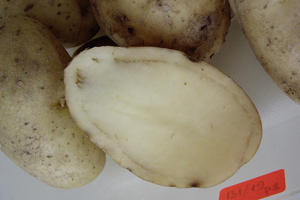
Brown rot of potatoes is a bacterial disease caused by the pathogenic bacterium Ralstonia solanacearum.
The disease is widespread in Europe (Germany, Greece, Italy, Romania, Turkey, Yugoslavia, the United Kingdom, Spain, the Netherlands, etc.), Asia, Africa, and America.
Bacterial brown rot is a harmful disease for cultivated plants of the Solanaceae family in regions with tropical and temperate climates, which is why its causal agent is included in the quarantine list of most countries. Significant economic damage has been observed on potatoes, tomatoes, and tobacco in the USA, Indonesia, Brazil, Colombia, Egypt, and South Africa. In the Philippines during 1966-1968, total losses were 15% for tomatoes, 10% for eggplant and pepper, and 2-5% for tobacco. In India, total losses are sometimes observed in tomato production.
The main hosts of the pathogen are potatoes (Solanum tuberosum), tomatoes (Lycopersicon esculentum), tobacco (Nicotiana tabacum), eggplant (Solanum melongena), pepper (Capsicum annum), banana (Musa paradisiaca), cotton (Gossipium sp.), peanuts (Arachis hypogaea), and castor bean (Ricinus communis).
In Europe, race 3 of Ralstonia solanacearum is widespread, which has a limited host range - potatoes (Solanum tuberosum), tomatoes (Lycopersicon esculentum), eggplant (Solanum melongena), and the weed plants black nightshade and bittersweet nightshade (Solanum nigrum and Solanum dulcamara).
Mode of Spread:
- Infected tubers are the primary means of spreading Ralstonia solanacearum. The development of the disease depends on temperature (above 25°C is particularly favorable for bacterial multiplication) and on moisture. In cool conditions, infected plants do not show symptoms but are a "reservoir" of bacteria and can transmit the disease to tubers in the form of a latent infection. This leads to new foci of infection.
- The bacterium persists for up to one year in soil, adhering to undecayed plant debris, agricultural machinery, equipment, work tools, footwear, and storage facilities.
- Rain and irrigation water spread the pathogen to new uninfected areas.
- The bacterium enters plant roots through wounds caused by work tools during potato cultivation and wounds from soil pests - nematodes and insects.