

Diseases During Fruit Storage
The storage of fruits depends on the species and varietal composition, as well as the conditions under which they are stored. Late apple and pear varieties and quince can be stored under ordinary conditions for up to 2-3 months, and in a refrigerator - for up to 4-6 months. Under domestic conditions, storage is best done in cellar rooms, where temperatures are lower and air humidity is higher.
Storage is best carried out in refrigerated fruit storage facilities, where a constant temperature is maintained, from minus 1°C to about 3-5°C for the different species, and relative air humidity of 85-90%. Under these conditions, fruits can be stored throughout the winter, until spring.
The temperature and air humidity must be controlled throughout the entire storage period. Fruits from different varieties should be stored separately.
With an improper storage regime, diseases of an infectious or non-infectious nature develop on the stored fruits.
Infectious diseases:
- Soft Rot - manifests as yellow to pale brown spots, around mechanical injuries on the fruits, with watery and soft tissues, with an unpleasant moldy smell and an alcoholic taste. The rotting encompasses the entire fruit, which softens and is easily crushed when pressed, and under high humidity, a dense blue-green mold develops.
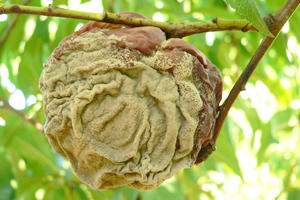
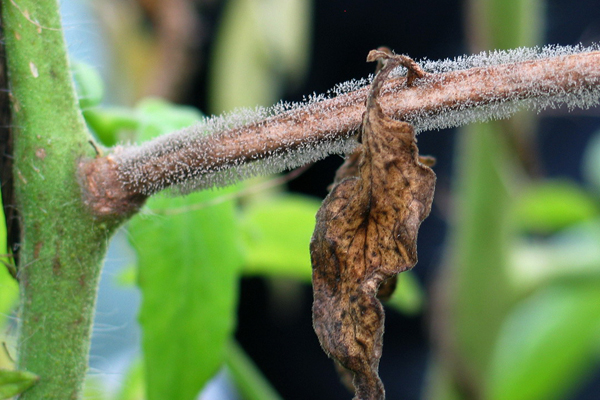
- Gray Mold - on the fruits, under high humidity, a gray-white fluffy mold develops from the mycelium and spores of the fungus. The spots quickly spread to adjacent fruits and in a short time, infection foci are formed. Stored fruits should be checked regularly and upon manifestation of the disease, they must be quickly removed and destroyed.
- Bitter Rot - manifests as brown rot on the surface of the fruits or as internal rotting around the seed cavity, which is filled with a cotton-like mycelium, speckled with clusters of pink spore masses. The fruits have a bitter taste and an unpleasant odor.
- Brown Rot - the pathogen penetrates the fruits through injuries caused by pests, diseases, and hail. The surface of infected fruits becomes shiny, dark - brown or black. The disease spreads quickly to adjacent fruits, especially at low temperatures and high air humidity.
Non-infectious diseases:
- Scald of Fruits - light brown spots on the surface of the fruits, which enlarge and gradually penetrate to a depth of up to 1 cm into the fruit. The disease is due to a disturbed temperature regime and poor gas exchange, during which toxic substances such as acetic acid, methyl alcohol, acetaldehyde, etc., accumulate around the fruit.
- Jonathan Spot - development of necrotic, pale brown superficial spots, located around the lenticels of the fruit. The cause of the disease is disturbed gas exchange. When attacked by secondary microorganisms, wet rot develops.
- Bitter Pit - under the skin of the fruit, small, brown nodules of dead cells with a spongy consistency and bitter taste are formed, reaching a depth of 1-2 cm. The disease is due to a calcium deficiency.
Diseases of Potatoes During Storage
To store healthy and consumable potatoes, it is necessary for the tubers to be well-ripened, without mechanical damage and disease infestation. Potato storage facilities should be cleaned and disinfected with a 3% solution of copper sulfate. Potatoes should be stored at a temperature of 2-4°C, relative humidity of 80-90%, and good ventilation of the storage. Periodic checks should be carried out for the timely removal of rotting tubers.
Under unsuitable storage conditions, infectious and non-infectious diseases develop on potatoes.
Infectious diseases:
- Dry /Fusarium/ Rot - a fungal disease that manifests as a light brown, sunken, dry spot around an injured area on the tuber. The spot grows slowly and encompasses the entire tuber, which mummifies. Under the spot, the interior of the tuber acquires a loose structure. Under moisture, a pale pink or creamy mold develops. The optimal storage temperature is between 2-5°C.
- Wet Rot - caused by bacteria and within 5-6 days the tuber softens, rots, and turns into a slimy mass with an unpleasant odor. The disease is transmitted from one tuber to another and foci of decay occur. Rotting tubers should be removed, ventilation should be increased, and a temperature of 2-5°C should be maintained.
- Phoma Dry Rot /Phomosis/ - the disease manifests on the surface of the tuber in the form of large, rounded, up to 2-5 cm, sunken and well-demarcated from healthy tissue, brown spots with a net-like structure. Under the spots, the tissues are dry and spongy, and later cavities covered with gray mold are formed. Temperatures below 4°C and above 10°C are unfavorable for the development of phomosis. Light curing of the tubers for 3-4 days before placing them for storage is recommended.
Non-infectious diseases:
- Black Heart - in the pith of the tuber, the tissues have necrotized and turned black, gradually hardening, drying out, and cavities are formed. The cause of the disease is oxygen deficiency. To prevent the disease, it is recommended to store tubers in layers, not higher than 1-1.5 m, with ensured ventilation through ducts and fans.
- Freezing of Tubers - with light freezing, the damage manifests as darkening of the vascular bundles. At minus 1°C to 3°C, the tubers freeze and become hard. After thawing, the tissues soften and become macerated /break down/ - the process is irreversible.
- Sweetening of Tubers – this disease is observed when the temperature is kept around 0°C for a prolonged period. Then excess sugars accumulate in the tubers due to reduced respiration. When such tubers are placed in warmth /around 10°C/, respiration intensifies and their sweetish taste disappears.
Diseases of Bulb Crops During Storage
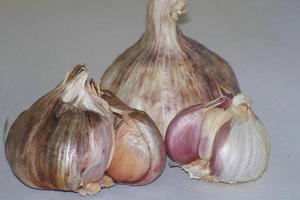
During storage, onion and garlic bulbs should be healthy, clean, without mechanical damage, and covered with scales. They should be stored in ventilated storage facilities, in bulk or in shallow layers, maintaining a temperature of 0-2°C and up to 65% air humidity. With an improper storage regime, the following diseases develop:
Black rot on onion and garlic - the bulbs soften, their scales dry out and become mummified, and a black powdery mass forms between them.
- Speckled soft rot on onion - the tissues around the neck soften and collapse. When cut, it is visible that some of the inner scales have rotted and have a cooked appearance and emit an unpleasant odor.
- Neck rot on onion - the rotting starts from the neck, with the diseased scales being watery and limited from the healthy ones by a narrow ring. Later they become mummified and under moisture become covered with gray mold.
- Gray rot on garlic - yellowish-brown, slightly sunken, small spots develop, which gradually enlarge during storage. Upon harvesting, the bulbs should be well-dried and stored in cool and ventilated rooms.
- Blue-green mold rot on onion and garlic - the outer scales and the base of the bulbs become covered with brown watery spots, gradually become mummified, and only the outer scales remain. In garlic, the head darkens and disintegrates into separate cloves.
- Diseased bulbs smell strongly and become covered with a blue-green mold. Only mechanically healthy bulbs should be stored, maintaining optimal conditions.
- Fusarium rot on onion and leek - the heads of onion, the roots, and the false stem of leek soften, turn brown, and rot. A pink mycelium develops between the scales and leaves.