

We can all already see that the day is not far off when we will witness large-scale reindustrialisation on a global scale, one of the effects and lessons of the epidemiological catastrophe caused by Covid‑19. This widescale transformation will undoubtedly also affect the textile industry. Let me recall: years ago Europe decentralised a large part of its textile (and garment) industry and transferred it to the Asian continent. During the transition period Bulgaria acted even more radically. It drew a line through its in every respect unique sheep farming as a source of wool, through the production of fibre crops, as well as through its textile industry.
There are sufficient indications that Europe will revise its former decision. Because the deficits and imperfections of this project were exposed with full force during the pandemic. The route of supplies from the East turned out to be excessively long and insecure. The key point that concerns us is: Will Bulgaria take advantage of this prospect, of this horizon, will it make a proactive move? Will it attract foreign investment interest? To answer these questions, first and foremost the objectives must be structured, and at a rapid pace, a business model must be chosen together with options for its financing. There are two options. The first: for Bulgaria to form a sufficiently significant raw material resource – wool, cotton, silk, flax, hemp – and to trade it on the foreign market. The second: the raw material to be utilised in the country in the form of fabrics and garments, with the final product also being export‑oriented.
As is known, in the not‑too‑distant past Bulgarian agriculture produced sufficiently high‑quality raw material for the well‑developed domestic textile industry. Sheep farming was the pride, the authority and the face of our livestock sector. The Institute of Animal Science in Kostinbrod, the Institute of Mountain Agriculture and Livestock in Troyan, the Institute of Agriculture in Karnobat and the University of Veterinary Medicine in Stara Zagora modelled in detail its profile and vision – breeding, rearing technologies, veterinary services…
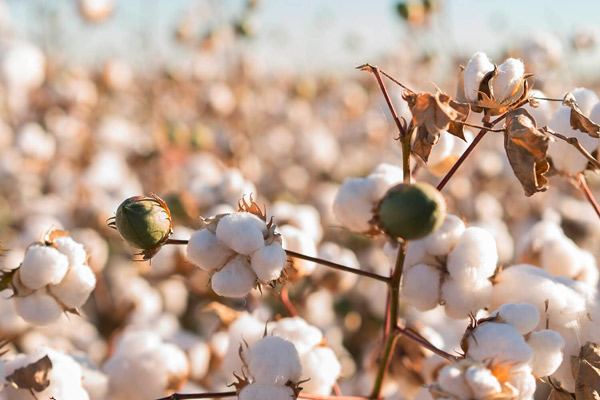
Let us continue with the fibre crops. Cotton production was not some exotic whim, but a conceptual strategy, successful by many indicators. The Cotton and Durum Wheat Research Institute in Chirpan provided the scientific backing for this important production. Flax, hemp and sericulture were a real presence in Bulgarian crop production and, in this capacity, participated in the resource mix of our textile industry, which for its time was at a sufficiently high technical level. For example: the textile combines in Gabrovo, Sliven, Sofia and many other places.
A few will say that these highlights from the recent past will in no way evoke tenderness and nostalgia among the governing circles. And this is quite natural, since a repetition of events cannot occur! Analogies, comparisons and memories in today’s political and business environment have no capital value; they cannot motivate and stimulate interest.
The restart of the production of raw materials and of final textile products is undoubtedly a complex issue. If today’s governing team decides that Bulgaria can join the major business that the textile industry in fact is at European level, it must necessarily readjust part of the model of current agricultural production. This presupposes reducing the glaring imbalance and disproportion between grain production and the other subsectors. In all likelihood it will be necessary to find investment partners for restoring the technological capacity of textile enterprises. Financial lines will be needed to revitalise sheep farming and the production of the remaining raw materials. In other words: in addition to money, professional capacity, expertise and competencies will be required. That is to say – a new dynamic, projected with reason, intellect and foresight.
There is no shortage of analysts who claim that the challenge – to revive the textile business to a new life with the help of agriculture – is a major opportunity for our economy. The European market is “hungry” for quality textiles. The stability, intensity and sustainability of this strategic industrial segment are of very high value – it is capable of generating a high profit margin and of creating new jobs. A real alternative for the return of some of the Bulgarian migrant workers who are picking strawberries across Europe!
Let us not forget: agriculture is a robust and strong system. An important advantage that must be interpreted correctly and used wisely and rationally!