

Forage production as a science studies the biology, ecology, and production technology of crops classified and used as fodder, their quality, and the methods for – their harvesting and storage. The availability and production of high-quality feed occupy a central place in animal husbandry.
Forage crops are used for feeding animals and, on a global scale, it has been estimated that they represent 26% of the Earth’s land area and 70% of the agricultural area (FAO, 2010). Such crops are usually annual and perennial cereal grass species of the family Poaceae and annual and perennial leguminous plants of the family Fabaceae.
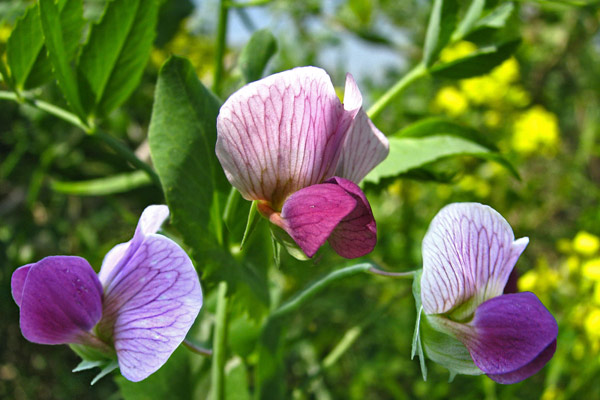
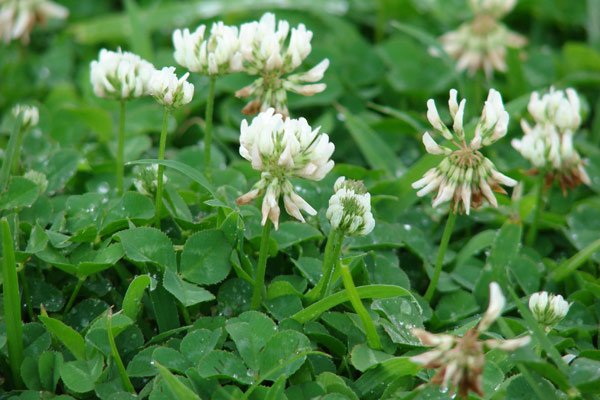
The range of forage crops grown in each country varies depending on the climate and the needs of animal husbandry, but among them perennial alfalfa (Medicago sativa L.) is one of the most preferred and widespread high-protein forage crops. Increasing its productivity and quality is among the main objectives and tasks in forage production. In addition to alfalfa, about 60 other legume crops are grown as a source of fodder for different animal species, including forage pea (Pisum sativum L.), white clover (Trifolium repens L.), red clover (Trifolium pratense L.), soybean (Glycine max L.) and others.
Cereal grain crops – maize (Zea mays L.), barley (Hordeum vulgare L.), wheat (Triticum aestivum L.), oats (Avena sativa L.), sorghum (Sorghum halepense L.) etc., due to their high dry matter content, are also used as feed for ruminant animals, but because of their low protein content they are often considered low-quality nutritional sources.
Forage legume crops provide high-quality, protein-rich feed. They are preferred in the establishment of balanced crop rotations with a positive impact on subsequent crops, and they play a key role by enriching the soil with nitrogen through nitrogen fixation, which does not pollute the environment, is very well utilized by subsequent crops, and provides grain rich in protein.
A main trend in forage production is associated with targeted influence on crop yield in the direction of its optimal increase, realization of the full plant potential, and enhancement of the nutritional value and qualitative parameters of the feed.
Today, climate and resource challenges are of particular importance for the development of the agricultural sector and, in particular, for the cultivation of forage crops. The negative effects of agriculture on the environment (climate change, pollution with harmful substances, reduction of biodiversity, changes in soils, landscape, etc.) necessitate an increasing need for efficient and sustainable production. The application of the principles of sustainable agriculture in forage production is based on the use of new, environmentally friendly, scientifically substantiated and energy-efficient technologies, through which the preservation of soil fertility, biological diversity and the environment can be ensured. In this regard, special attention must be paid to minimizing the harmful impact on the environment, ecosystems and natural resources.
Sustainable forage production depends on the agricultural practices and integrated approaches applied in the cultivation of forage crops, with the aim of providing high-quality nutritional feed with high economic value.
The success of a sustainable forage production system includes the application of a multidisciplinary approach related to solving social, economic and environmental problems. The main factors contributing to the development of sustainable forage production can be defined in several aspects:
- Selection of suitable forage crops that are adaptable to current problems related to climate change and the environment. The sectoral structure of animal husbandry, the yield per unit area and the crude protein obtained are of great importance for the choice of crop, its significance and economic importance for the specific region. Forage legume crops, in addition to their high protein content, are of great importance for maintaining and improving natural soil fertility and reducing the quantities of mineral nitrogen fertilizers used. Their inclusion in crop rotation as predecessors of other crops largely reduces the need for nitrogen fertilization, which is particularly important for the development of sustainable agriculture. Through breeding, research and plant protection activities, the aim is to create varieties that meet modern requirements for feed production and environmental protection. The main indicators guiding breeding are high productivity combined with high quality of forage and seeds, resistance (tolerance) to economically important pests and other stress factors, good adaptability to growing conditions and high economic, applied and ecological effect.
- Integration of forage legume crops into mixed cropping systems with cereals in order to increase the productivity and quality of the feed. The advantages of mixed cropping systems are expressed in: a) higher species diversity, mutual complementarity between plant species in terms of available resources, and the presence of symbiotic interactions, which creates good preconditions for high productivity and quality and ecological stability; b) reduction of the negative impact of abiotic and biotic stress factors such as drought, diseases, weeds and pests, based on the principle of increasing biodiversity in a given ecosystem; c) optimization of fertilization.
- Proper use of soil resources in a way that preserves or increases soil fertility. The cultivation of perennial forage crops ensures the maintenance of permanent plant cover, which plays a key role in reducing soil erosion and preserving soil structure.
- Protection and management of water resources. Irrigation must be carried out using surface water, while at the same time being strictly regulated.
- Development and application of new knowledge and innovations from research activities in practice through effective exchange of this knowledge between scientists and agricultural producers and farmers.
Sustainable forage production is primarily focused on issues related to the protection of the environment, landscape, natural resources and the biological diversity of flora and fauna. The application of sustainable practices in the cultivation of forage crops will play a decisive role in ensuring high-quality, healthy and cost-effective feed with increased productivity per unit area for the needs of animal husbandry.