

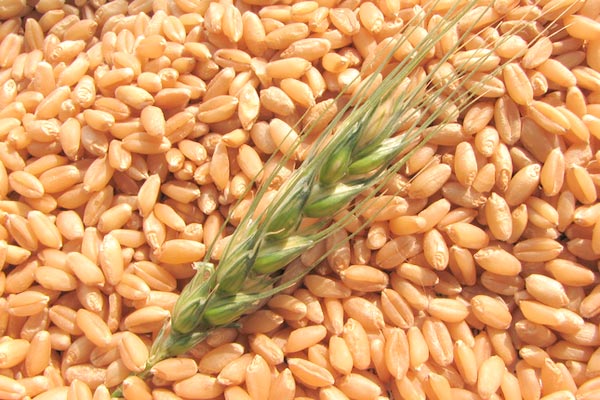
Over the last 10–15 years, in connection with the serious changes that have occurred in Bulgarian agriculture, interest in einkorn - an ancient cereal crop - has increased among a number of private landowners and farmers from different regions of the country. In addition to specialized agricultural publications, it has also been discussed in programs on Bulgarian radio and television, often raising the question of why einkorn is no longer grown in Bulgaria?
In 2002, a fairly serious pilot investment project for Bulgaria was developed – Bulfaro for growing ecologically clean wheat of the ancient Farro variety with guaranteed purchase on the markets in the EU and the USA. The project was presented by "Nord Shipping" Ltd. Ruse, Bulgaria, jointly with the American Investment Program for Bulgaria – California, USA and the Institute for Cereal Crops - Rome, Italy. However, this excellent project, for reasons unknown to us, did not work out.
According to the classification of the Russian scientist K. A. Flaksberger from 1929, supplemented in 1935, the following species of einkorn exist: wild einkorn (one-grained) – Triticum aegilopoides Bal.( Link. ) = Tr. spontaneum Flaksb., wild emmer (two-grained) - Tr. dicocoides Korn., cultivated einkorn (one-grained) – Tr. monococcum L., cultivated emmer (two-grained) – Tr. dicoccum Schubl. (Schrank ).
In Western Europe, the hexaploid wheat spelt – Tr. spelta L. is also included in the einkorn group.
Einkorn ( Tr. monococcum L. ). The spikes of this einkorn are small to medium-sized. The spike has a brittle rachis and disarticulates into spikelets upon maturity. Usually, each spikelet contains one grain.
Einkorn is a small plant that hardly lodges. Forms that are not demanding of heat and are highly drought-resistant are widespread. It is distinguished by high resistance to fungal diseases, which is why the world-renowned Russian geneticist Nikolai Vavilov defined Tr. monococcum as an accumulator of complex immunity.
Due to its low productivity, difficult threshing, and brittle spike, it is not of interest for production.
Some results from the testing of einkorn at the "Sadovo" Seed House will be presented here. In the first year, sowing was done crosswise in two directions at the end of October with a seeding rate of 20 -25 kg/decare. The seeds were not treated. No fertilization or spraying with herbicides, fungicides, and insecticides was applied. A very healthy crop was grown on 40 decares, from which an average yield of 217 kg/decare was obtained.
In 2012, the following yields were achieved in demonstration trials at the "Sadovo" Seed House: village of Paskalevo, Dobrich region – 100 kg/decare, village of Ovcha Mogila, Veliko Tarnovo region – 108 kg/decare, village of Okop, Yambol region – 123 kg/decare, village of Dobrich, Elhovo region – 300 kg/decare, village of Ceretelevo, Plovdiv region - 277 kg/decare and town of Opaka, Targovishte region – 390 kg/decare. The average yield from the 6 trials is 216.3 kg/decare.
The grain is characterized by the following indicators: thousand kernel weight - 31.86 to 32.52 g, test weight – 45.6 to 59.8 kg and wet gluten content - 16.0 %.
In another series of three trials, the following results were recorded: "Sadovo" Seed House - 200 kg/decare, village of Kǎnchevo, Kazanlak region – 118 kg/decare and the lowest yield was obtained in village of Panicherevo - 54 kg/decare. The average yield from these three trials is 124 kg/decare.
Emmer ( Tr. dicoccum Schrank ) is a species towards which geneticists and breeders show great interest due to its wide polymorphism, high vitality and immunity, and especially its undemanding nature towards growing conditions. It is characterized by good early maturity. Even ultra-early maturing samples have been identified. An important trait is disease resistance - rusts and powdery mildew. Thus, the Indian variety Khapli is a source of immunity to stem rust. Emmer is distinguished by its high resistance to loose smut. It is not attacked by the wheat stem sawfly. Furthermore, it has a high protein content in the grain, reaching up to 23.9 %, and some samples also possess high drought resistance.
The spikes of this einkorn are dense, with their side view being wider than the front view. The spikelet usually contains two grains. It is used for food and fodder. In terms of density, the spike is close to durum wheat, but is much narrower. Due to its valuable qualities, emmer is of definite interest for wheat breeding. There are a number of varieties of this species in the world, with the varieties Vernal and Khapli being particularly interesting.
The most famous variety from the emmer group is Farro – from pharaoh, as it is believed that in ancient times the pharaohs ate this wheat and during the Roman Empire, it was the main food of Roman soldiers. Characteristic of this wheat is that it is grown as a semi-primitive, semi-wild species, which makes it extremely resistant to all kinds of diseases and pests, drought, cold, rain, etc. Nature has perfected this species to survive. Due to its resistance, treatment with herbicides is not necessary. The root system of Farro is much more powerful than that of common wheat. Thanks to this, Farro absorbs much more nutrients and moisture from the soil and does not require fertilization. Due to its resistance and vitality, Farro can thrive on undemanding terrains – not particularly fertile lands and semi-mountainous regions with an altitude of 1200 – 1400 m.
Due to the disease resistance of Farro, annual crop rotation is not necessary; usually the following scheme is applied: three years of Farro, one year of another crop, and again three years of Farro. Farro wheat is particularly popular in Italy and finds exceptionally wide application in traditional Italian cuisine for preparing soups, for protein-rich porridges, for the production of Corn flakes and others. The grain is a good alternative to rice and other cooked grains. It is especially suitable for children's Cereal foods due to its high protein content.