

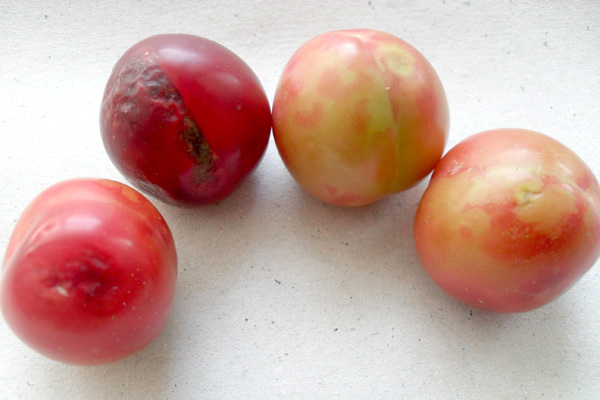
Plum is attacked by a number of viral diseases, the economically most important of which is undoubtedly plum pox (PPV). For the first time in the world, symptoms of this disease were described in Bulgaria in 1917. The first scientific publication reporting the viral nature of the disease was by Prof. D. Atanasov in 1932. Initially, the disease began to spread slowly in the countries of Eastern Europe, gradually gaining momentum, and in the 1950s–1970s of the last century it reached Western Europe. Its spread continued in North Africa, the Middle East, India and China. In the USA, plum pox was recorded in Pennsylvania in 1999, followed by New York and Michigan in 2006. In Canada, PPV was detected in Nova Scotia and Ontario in 2000.
The causal agent of the disease is Plum pox virus (PPV), which attacks wild and cultivated species of the genus Prunus – plum, myrobalan plum, peach, apricot, almond, sweet cherry and sour cherry. Based on different biological, serological and molecular properties, ten strains of the virus have so far been described and characterized (PPV-D, PPV-M, PPV-Rec, PPV-EA, PPV-C, PPV-T, PPV-W, PPV-CR, PPV-An and PPV-CV). The most widespread strains, differing in their mode of transmission by aphids and in the type and severity of symptoms they induce in different hosts, are PPV-M and PPV-D. The PPV-M strain is spread rapidly by aphids and is considered an epidemic form of the virus. It is the most common virus strain in Southern, Eastern and Central Europe. PPV-D, on the other hand, is the most widespread virus strain in Western Europe, Chile and the USA. It is known that this strain is transmitted much less efficiently by aphids and is not an epidemic form of the virus.
In Bulgaria, as a result of extensive molecular differentiation of a large number of plum virus isolates, it has been established that PPV-Rec (68.7%) is the main strain in plum, followed by PPV-M (18.2%) and PPV-D (12.3%) (Kamenova, 2015). The PPV-Rec strain is characterized by high virulence and transmissibility by aphids.
The symptoms of plum pox vary greatly depending on the virus strain, the host species, the cultivar, the location and the season. On the plum leaves, pale green or light yellow chlorotic dots, spots, rings or lines appear, which are best seen in transmitted light and in cloudy weather. The symptoms on the leaves are most clearly expressed when they are fully developed. They are often unevenly distributed and may appear only on individual branches of the tree or on single leaves. On the fruits of susceptible cultivars with dark colouring, bluish necrotic rings are observed, which in many cases are sunken. In cultivars with yellow fruits, the spots and depressions are pale red, while in yellow-green and green-coloured fruits they are oil green, changing to blue-violet before ripening. Necrotic spots may extend into the fruit flesh and reach the stone. The damaged flesh is red-brown in colour and often gummous. Fruits showing symptoms have deteriorated taste qualities and reduced sugar content.
Yield of infected trees may be reduced by 20–30%, and in susceptible plum cultivars such as Kyustendilska sinya sliva, Tetevenka, Dryanovska and others, by up to 90% as a result of fruit deformation, premature fruit drop and reduction of the assimilative leaf surface. Losses are also expressed in the low sugar content of infected fruits and the premature death of highly susceptible cultivars.
The disease is spread in two main ways. Firstly, and most importantly, through infected rootstocks and scions, which potentially allows rapid spread of the disease within individual countries and worldwide. Secondly, it is transmitted by aphids from infected trees or infected wild species such as blackthorn. It has been proven that more than 20 species of aphids can transmit PPV in a non-persistent manner, the main ones being Brachycaudus cardui, B. helichrysi, Myzus persica, Phorodon humuli, Aphis spiraecola, A. craccivora, A. gossypii, A. fabae. The virus is acquired by the vector (aphids) within a few seconds, a process favoured by prior starvation. Immediately afterwards, the vector is capable of infecting other plants, for which brief sap sucking (often just a few seconds) is sufficient.
Planting resistant plum cultivars such as Jojo and tolerant ones such as Stanley, Gabrovska, Izobilie, Altanova Renkloda, Titeu Timpurio, Nancy mirabelle, Cacanska rana, Cacanska lepotica, Cacanska najbolja, Ruth Gerstetter, Hanita, Elena, Tagara and others is one of the main preventive measures for the control of plum pox.
Other economically important viral diseases in plum are plum deforming variegation and plum line pattern mosaic.
Plum deforming variegation (caused by a strain of Prune dwarf virus – PDV) is also known as plum dwarfing due to the fact that in some plum cultivars the virus induces dwarf growth of the trees. The symptoms of the disease appear in the form of narrow, very slightly wrinkled, dark green willow-like leaves. Chlorotic dots, small rings and spots often appear on the deformed leaves. The petals are narrow and crinkled and a large part of the pistils die, so that in susceptible cultivars – such as Italian plum – yield is reduced by up to 80%. The expression of symptoms varies depending on ambient temperature. It has been established that at a constant temperature above 22 °C the symptoms are masked.
European plum line pattern mosaic (European Plum line pattern) is caused by strains of Apple mosaic virus (ApMV) or Prunus necrotic ringspot virus (PNRSV). On the leaves, light green or yellow spots appear in the form of lines, rings or an “oak leaf” pattern, which are located mainly towards the periphery of the leaf blade. On the leaves of plums from the Myrobalan subgroup, the viruses cause a golden yellow net-like mosaic. The symptoms are visible mainly on the leaves that develop in spring and early summer and are masked at the high summer temperatures.
The viruses PDV, PNRSV and ApMV belong to the group Ilarvirus and are spread through infected scions, rootstocks, pollen and seeds.
Plum bark split (Plum bark split) and plum narrow striped variegation (Plum narrow striped variegation) are two different viral diseases caused by strains of the same virus, Apple chlorotic leaf spot virus (ACLSV).
It has been established that the virus is spread by grafting. There are no data on transmission by vectors or seeds. The first symptoms of the disease plum bark split are red-brown spots on the trunk and branches of infected trees. Gradually they darken and most often the bark cracks. Over time it becomes necrotic and separates from the trunk. The growth of diseased trees in some cases is reduced to one-third of that of healthy trees. The leaves are smaller than normal and begin to fall earlier.
Plum narrow striped variegation is better known under the name plum pseudopox. The disease is characterized by more distinct symptoms on the fruits, but a more reliable diagnostic feature is the symptoms on the leaves, although they are less noticeable and may sometimes be absent. The leaf symptoms are expressed as narrow small rings, lines and arcs of pale green colour. The symptoms of the disease linear mosaic and those of plum pox differ in that they are narrower. The symptoms on the fruits are expressed as slightly sunken depressions and small rings. Usually the fruit flesh beneath the spots is more superficially altered than in plum pox.
European stone fruit yellows (European stone fruit yellows phytoplasmas (ESFY)) is a phytoplasma disease caused by Candidatus Phytoplasma prunorum. Japanese plum (Prunus salicinia Lindl.) as well as apricot and peach are susceptible to the phytoplasma, showing very clearly expressed disease symptoms, whereas in European plum (Prunus domestica L.) infection in most cases is in a latent form. The leaves of infected Japanese plum trees are smaller than normal, yellowish, cylindrically curled, then they acquire a brown-red colour and become brittle. Bud drop is also often observed. Cultivars from the European group are symptomless carriers, but when grafted on the rootstock Prunus Marianna, it is possible for the trees to show the symptoms described for Japanese plum. The phytoplasma is spread through infected planting material and by the plum psyllid Cacopsylla pruni.
Due to the lack of chemical means for control of viral and phytoplasma diseases in fruit crops, the production of certified (virus-free) planting material is regarded as the main preventive measure to prevent their spread and harmful effects. Regular control of aphids and other pests that are vectors of viruses and phytoplasmas is also a preventive measure to limit their spread.