16 January - Plant Protection Specialist Day!
120 years later!
Author(s): Весела Шишкова, Главен редактор
Date: 18.01.2016
33161
By Decree of Prince Ferdinand of 16 January 1896, the officially regulated beginning of the fight against pests on agricultural crops and of plant protection in our country was laid
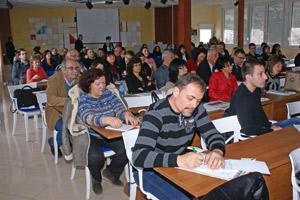
This year, the professional holiday of the Plant Protection Specialist, dedicated to the highly impressive anniversary – 120 years since the beginning of state plant protection in our country, was held in Hisarya. The occasion brought together the elite of this key agricultural activity from various fields – administration, science, business.
To our great regret, this holiday too was marked by self-pity, underestimation by those in power, and nostalgia for the past. The apathy, indifference and annoyance of many went hand in hand with the euphoria, emotional outbursts and inflated expectations of the few optimists in the hall. After 120 years of existence, Bulgarian plant protection seems to be acquiring the typical mindset of an outsider – one who may be capable, even highly capable, yet some person or circumstance prevents them from realizing their potential.
The large-scale transformation in 2011, which brought into being (the mountain laboured and brought forth a mouse) that colossal megastructure BFSA (today it is directly and officially stated that it is a colossus with feet of clay), into which the then very successfully operating NCSPP was incorporated, marked the beginning of the end of the national plant protection system. The team of the NCSPP was greeted with “Welcome” and was pushed into a corner of the Agency. We are witnessing today that plant protection is the object of a widescale devastation. The material and technical base has been plundered. The administrative capacity and professional competence of the staff, stripped to the bone, is moving by force of inertia along a downward curve. The specialists in the BFSA are divided into two groups: veterinary doctors are important, plant protection agronomists are second-rate. The dictate is powerful and peremptory – a staggering difference in salaries, almost all regional directorates of the Agency are managed by veterinarians. All attempts – both timid and bolder – to change this discriminatory regime have so far come to nothing! The withdrawal of plant protection from the BFSA, regardless of its form, is classified by the management of the Agency and the MAF as counterrevolutionary, conspiratorial, criminal...
In this situation, unreal by today’s standards, of neglect, short-sightedness and myopia on the part of those governing the plant protection administration, it must nevertheless fulfil its responsibilities, including creating an environment for sustainable plant protection, in line with the EU environmental standards for good practices, including authorisation of PPPs for use, control of the trade in pesticides and their use by farmers, as well as phytosanitary activities, whose characteristics include personal commitments to protect the external border of the EU from non-indigenous quarantine and invasive species.
The challenges facing plant protection are many. On the one hand, climate change activates many of the abiotic factors that cause difficult-to-predict turbulences and reactions of harmful organisms. The epidemiological situation very often changes its parameters and harmfulness. On the other hand – the pressure of invasive species is becoming ever stronger. In other words: this dynamics, this ultra-aggressive expansion generates the need for well-defined action schemes and strategies, smart decisions, and positioning of plant protection at higher levels. Put differently – rescue operations are no longer what they used to be! The success index is the sum of activities and innovations, in high technological and competent agronomic presence – elaboration of a national strategy for effective plant protection, including monitoring systems for risk assessment and management, for prevention, for information exchange between the different levels – administration, science, business and production in real time, positioning and activation of modern, multifunctional tools for attacking and eliminating risks, for ensuring permanently protected regions, for safeguarding plant health as part of the food chain, a highly sensitive topic in the contemporary concept of ecological, intensive and high-yield agricultural production.
x x x
The slogan of the Plant Protection Specialist’s holiday was “LET US MAKE AN EFFORT TO WORK UNITED”. The idea that administration, science and business should stand together for the cause of involvement and support is extremely topical, adequate and timely in the conditions of today’s reality and the actual presence of Bulgarian agriculture in the European agricultural area. Unfortunately, at least for now, this avant-garde idea and great opportunity to unite the interests of all participants in the national plant protection system remains in the realm of good intentions. Because the state administration is in a coma and barely surviving within the BFSA system. The Institute of Plant Protection practically does not exist; in fact, it “exists” as a part of another institute. From the rostrum of the forum, Prof. Olya Karadjova painfully admitted that all the young associates who had won and implemented prestigious European projects had left the scientific field, disappointed by the disrespectful attitude towards their work and contributions. The Faculty of Plant Protection and Agroecology at the Agricultural University in Plovdiv is one of the few remaining oases in its capacity as a prestigious educational institution. But how many of its graduates find realization in the field? Naturally, there is an explanation for this phenomenon, but it could be the subject of another discussion. BAPP, the branch organisation of Bulgarian producers and traders of PPPs and fertilizers, is desperately seeking lobbying support among those in power. The latest attempt is its inclusion in the elite CRIB club, with the fragile hope that from there a river of sympathy and involvement will start to flow...
120 years later. Plant protection needs change. Because, as is known, efforts and motivated desires are nothing without results. Bulgarian plant protection cannot be successful, modern, intensive and up to date if there is no adequate state policy. Decisions taken without a vision for the future, which serve some momentary interest or preference, lead to a dead end, construct a machine for reproducing defects, define a roadmap to very modest destinations!
Is this what we need, dear plant protection specialists?