More than 20 species of pests have been established on lettuce, with varying degrees of importance. Some of them are of economic significance also for other vegetable crops in protected cultivation facilities – greenhouse whitefly, aphids, leaf-mining flies, etc. Besides the direct damage resulting from feeding, some also cause indirect damage as vectors of dangerous viral diseases. It is known that aphids transmit mosaic viruses (e.g. lettuce aspermy). The greenhouse whitefly, in turn, is a vector of the infectious lettuce pseudoyellows virus in lettuce, cucumbers, melons and others (Beet Pseudo Yellows Virus – BPYV), which, at a high level of infestation, can cause significant damage.
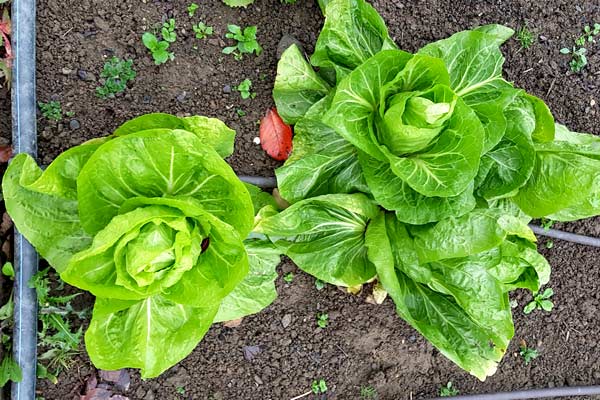
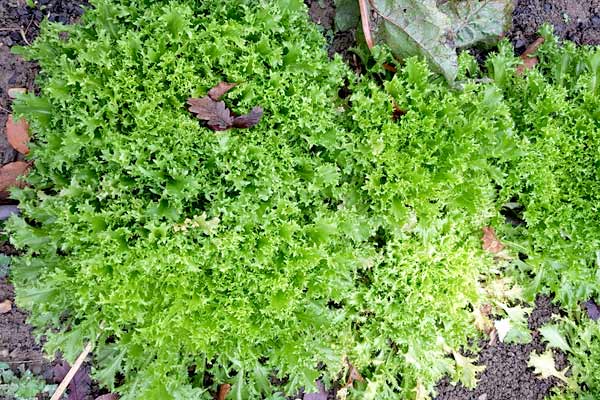
In recent years, lettuce – head lettuce, leaf lettuce and butterhead lettuce, has been a major component in production schemes in greenhouses, mainly as an intermediate crop during the autumn-winter period. Through staggered transplanting, production for the market is ensured for fresh consumption with very good nutritional, taste and dietary qualities. The leaves are rich in vitamins (provitamin A, B 1, B2, B6, PP, C, E, K), organic acids (citric, malic, etc.) and mineral salts. Due to its cold tolerance and short vegetation period, two harvests can be obtained in unheated facilities. A widely applied practice is its cultivation before the production of dense and pricked-out seedlings for glass and polyethylene greenhouses, as well as for field sowings.
In the trophic chains of the “plants-pests-bioagents” system, lettuce occupies an important position due to the following circumstances:
- It is a host to pests, mainly oligophagous and polyphagous species that also attack other vegetable crops.
- It is a linking element for the realization of the year-round development cycle in
non-diapausing species (greenhouse whitefly, aphids, leaf-mining flies, etc.), which form several generations when outdoor conditions are unfavorable.
- It provokes reactivation of species with facultative diapause (spider mites, some moths, crane flies, etc.), which begin to feed and cause damage.
- In the green conveyor of plants there is sufficient fresh food, preferred by most pests. Thus, conditions are created for the preservation of species threatening subsequent crops.
- At the same time, some beneficial species – predators, parasitoids and zoopathogens, are preserved
and survive the unfavorable autumn-winter conditions.
More than 20 species of pests have been established on lettuce, with varying degrees of importance. Some of them are of economic significance also for other vegetable crops in protected cultivation facilities – greenhouse whitefly, aphids, leaf-mining flies, etc. Besides the direct damage resulting from feeding, some also cause indirect damage as vectors of dangerous viral diseases. It is known that aphids transmit mosaic viruses (e.g. lettuce aspermy). The greenhouse whitefly, in turn, is a vector of the infectious lettuce pseudoyellows virus in lettuce, cucumbers, melons, etc. (Beet Pseudo Yellows Virus – BPYV), which, at a high level of infestation, can cause significant damage.
For the identification of pests with a view to conducting timely and effective control, regular monitoring of the plants is necessary in the seedling growth stage and after transplanting. All changes and deviations in the habitus and sanitary status of the roots and the aerial parts of the plants are indications of pathological processes or pest invasion. On the basis of damage symptoms and the morphological characteristics of the harmful stage, and to facilitate diagnostics, pests can be grouped as follows:
- Retarded or arrested growth, discolored and wilted leaves, especially the outer ones. On the roots, small-sized galls – Root-knot nematodes – Meloidogyne spp.
- On the outer leaves, small yellowish-white spots, on the underside a fine web with small round eggs and mites in it – Spider mites – Tetranychus spp.
- Feeding damage on the leaves and the presence of holes of various sizes and shapes. Gnawing through young plants immediately at soil level and their death. In more advanced plants – the plant is partially destroyed and wilted.
- Presence of slimy traces on the leaves and around the plants – Slugs.
- Presence of green caterpillars, 28-40 mm, with longitudinal light lines, a pale yellow stigmal stripe, with 3 pairs of abdominal legs, moving in a looping manner – Silver Y moth – Autographa (Phytometra) gamma, Golden twin-spot moth – Chrysodeixis (Plusia) chalcites.
- Earthy-grey to dark brown caterpillars, 40-50 mm, smooth, with a wide light stripe on the back. When disturbed, they curl up into a “ring” – Turnip moth – Agrotis (Scotia) ypsilon.
- Pale green caterpillars, 12-20 mm, with 1 dark green and 1-2 yellow-white lines on the dorsal side – Rusty moth – Udea ferrugalis.
- Young plants gnawed and cut off at soil surface, which break and “fall”. Partially gnawed and destroyed leaves and growing point.
- Presence of rodent droppings – Mice.
- Presence of small black, 15-20 mm, jumping, incompletely winged insects – Crickets – Gryllus spp.
- Gnawing of small roots, lifting and wilting of plants – Mole cricket – Gryllotalpa gryllotalpa
- Destruction of root hairs, newly formed roots, perforation and skeletonization of leaves near the soil. Small, 0.3-1.0 mm, white to grey-violet, jumping wingless insects – Springtails – Collembola.
- On the underside of the leaves, small, 1.0-1.5 mm, delicate, white “flies” and waxy white, elliptical, immobile larvae – Greenhouse whitefly – Trialeurodes vaporariorum.
- Outer leaves covered with colonies, inner leaves filled with small insects and white cast skins. Discoloration of leaves, sometimes rotting of the heart – Aphids.
- Light green, yellow-green to pink, 1.5-2.0 mm – Peach aphid – Myzodes persicae.
- Yellow-green to reddish, 2.0-2.5 mm – Potato aphid – Aulacorthum solani.
- Retarded plant development, wilting in warm weather. Stunting and wrinkling of leaves. On the roots – yellow-green to dirty green, 2.0-2.5 mm, broad, round-shaped aphids – Pemphigus bursarius.
- Small silvery white or rusty spots with barely visible dark brown to black dots. Presence of small light yellow-green or brownish insects, 0.9-1.2 mm, with elongated spindle-shaped bodies – Onion thrips – Thrips tabaci, Western flower (California) thrips – Frankliniella occidentalis.
- On the leaves, small yellow-white dots with torn upper epidermis, like pinpricks, yellow-white curved mines with lines of black dots. Inside them, whitish cream, entirely or partially yellow-orange larvae, up to 3 mm, without head and without legs – Leaf-mining flies – Liriomyza spp., Phytomyza spp.
- Feeding damage on roots and destruction of young roots. In the soil – grey-brown larvae, 12-15 mm, with a head, without legs, with spines at the posterior end of each segment – St. Mark’s fly – Bibio spp.
- Feeding damage on roots and leaves near the soil surface. In the soil – coarse, thick-skinned larvae, 22-40 mm, with a small head, without legs, earthy grey with a rusty-brown tinge, similar to cutworms, but they do not curl up into a “ring”, widened at the posterior end, with 4 horn-like projections and 2 large black spiracles on the last abdominal segment – Crane flies –Tipula spp.
Of the pests listed, those that are constant and of economic importance for lettuce are the greenhouse whitefly, the peach aphid and the potato aphid, the caterpillars of the silver Y moth and the golden twin-spot moth, the leaf-mining flies and especially the slugs. Infestation by other harmful species is also possible, depending on the preceding crop, as well as on the weed and cultivated vegetation around the greenhouses. An example of the latter is the root aphid P.bursarius with poplar as its main host and lettuce as one of its intermediate hosts. In late autumn it is often observed in polyethylene greenhouses in the vicinity of this tree species.
Some pests are specialized on the underground organs – root-knot nematodes, springtails, mole cricket, P.bursarius, St. Mark’s fly, and additionally also on the leaves – springtails, crane flies. The remaining ones are phyllophagous.
Control
Control of lettuce pests in protected cultivation facilities is complex. Prevention, growing and transplanting of healthy plants has the greatest effect. All prophylactic and agrotechnical measures known and applied to other greenhouse crops are implemented, such as the use of mineral or peat-mineral substrates in seedling production, weed control in and around greenhouses, ensuring an optimal temperature and humidity regime, application of optimal agrotechnics, placing yellow sticky traps, etc.
Proper fertilization of lettuce
To reduce chemical treatments, it is necessary to monitor and record the presence of bioagents. During the autumn-winter season, due to the higher relative air humidity, fungal infections often develop on aphids, sometimes to a sufficient extent to make the use of insecticides unnecessary. The same pests are also often parasitized, mainly by the endoparasitoid Aphidius matricariae. The larvae of the greenhouse whitefly also fall victim to the endoparasitoid Encarsia formosa.
Since lettuce has a short vegetation period until commercial maturity, the application of chemical agents must be reasonable and careful. Seedlings can be treated with systemic, broad-spectrum pesticides, such as those with the active substance oxamyl. Against specific pests during seedling production, registered pesticides are applied.
After transplanting, chemical agents are used in a limited manner and only when absolutely necessary. In such cases, treatments are carried out with products with a short pre-harvest interval, in order to protect the produce from contamination with dangerous toxic residues.