The pear bud weevil causes serious damage not only to the pear
Author(s): Растителна защита
Date: 09.10.2018
5844
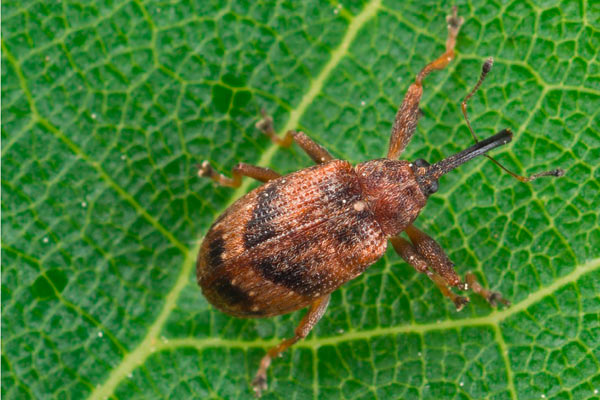
The pear bud weevil (Anthonomus pyri Kollar) is widespread throughout the country and causes serious damage not only to pear, but also to apple, apricot and plum.
The pest is a small snout beetle that develops one generation per year. It lays its eggs in the pear buds in the autumn and overwinters there as an egg. The larvae that hatch in spring completely damage the fruit buds, as a result of which not a single flower develops from them. The damaged fruit buds do not develop during flowering, they dry up and fall off.
Control
Control is directed against the adult beetles before they have laid their eggs – at the end of September to the beginning of October. After 20 September it is best to carry out inspections by shaking the trees, and when an average of more than 5–8 beetles per tree is established, spraying should be started and completed within 5–6 days.
In pear orchards where no regular control against pests has been carried out, the pear bud weevil usually multiplies and its population density often exceeds the economic threshold of harmfulness – 5–8 individuals per tree, which necessitates spraying against the adults before egg laying with Dursban 4E – 0.15% or Vaztak New 100EC – 0.0125%, etc. Control of this pest is effective only against the adult forms at the beginning of autumn. Later, the larvae of the pear bud weevil develop inside the buds and the damage is detected in spring, when control against them is already impossible.