Leafy vegetables and herbs – an important “player” in a healthy diet
Author(s): проф. д-р Стойка Машева, ИЗК "Марица" Пловдив
Date: 28.06.2018
9856
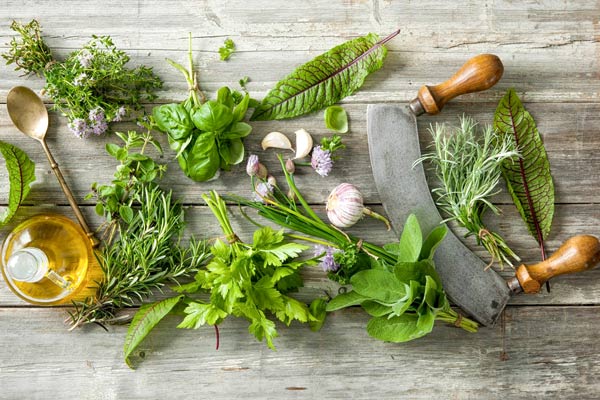
Leafy vegetables – lettuce, endive, arugula, spinach, dock – are widely consumed by people. The same applies to green herbs – parsley, celery, dill, basil. The health benefits of their consumption are significant. They are low in calories, fat-free and low in sodium, which makes them an excellent aid in diets and in maintaining a healthy eating regime. They are an excellent source of vitamins A, C and K and are an important part of the daily menu. They are also rich in calcium and magnesium. They have a beneficial effect on digestive processes. They reduce the risk of developing cardiovascular diseases and regulate blood cholesterol levels. Thanks to the calcium and magnesium they contain, they also help regulate blood pressure values.
Lettuce was first cultivated by the ancient Egyptians. They grew it for its juicy leaves and oil-rich seeds. Later it spread through the Greeks and Romans. Global production of lettuce and chicory for calendar year 2015 was 26.1 million tonnes, 56% of which came from China. Lettuce is an excellent source of vitamin A (mainly through its concentration of provitamin A, carotenoids, beta-carotene), vitamin K and folic acid. It is a very good source of dietary fibre, four chemical elements (magnesium, potassium, copper and iron) and three vitamins (biotin, vitamin B1 and vitamin C). A 25-gram portion of lettuce provides 11% of the daily requirement of vitamin C.
Endive is a valuable leafy vegetable because it is rich in many beneficial nutrients. Endive leaves are an excellent source of fibre, iron, calcium, phosphorus, magnesium, mineral salts, sugars, vitamin A, vitamin B1, vitamin B3, vitamin B5, vitamin B6, vitamin C and vitamin K. Endive also contains the bitter glucoside intybin and inulin. Endive is recommended because of its high nutritional value. Its regular consumption affects digestion and supports the circulatory system. It is a source of cellulose and contains very few calories. It is recommended for people suffering from diabetes because it lowers blood sugar levels. It has been proven that this leafy vegetable has antioxidant effects, supports vision and regulates blood pressure. In addition, it protects against pulmonary diseases and oral cavity cancers.
Arugula is widespread in Central and Eastern Europe; Northern, Central, Southwestern, Eastern and Central Asia; North Africa; Australia. In the past it was often used for scurvy and bronchitis. The Romans used it as a spice. Arugula contains large amounts of vitamin C, beta-carotene, sulforaphane, vitamins B2, B5, B6, fibre, folic acid, vitamins A and K, calcium, iron, potassium, sodium, phosphorus and magnesium, organic acids, essential oils, a large amount of omega-3 fatty acids, pantothenic acid, the sulfur glycoside gluconasturtiin. Owing to this, the plant possesses multiple therapeutic properties – anticancer; detoxifying; antioxidant; lowers blood sugar; stimulates metabolism; slows ageing; increases haemoglobin levels. It also has an immunostimulating effect.
Spinach originates from Ancient Persia. Its cultivation spread to Nepal and from there to China, where it is still called the Persian plant. The Moors brought it to Spain around the 11th century. It is rich in niacin (vitamin B3) and zinc, in proteins, fibre, vitamins A, C, E and K, thiamine (vitamin B1), vitamin B6, folic acid, calcium, iron, magnesium, phosphorus, potassium, copper and manganese. The diversity of flavonoids in spinach has an antioxidant effect, protecting the body from free radicals, particularly in the large intestine. Folic acid is beneficial for the cardiovascular system, and magnesium lowers blood pressure. Studies show that spinach supports the brain’s energy function, memory and mental clarity.
Parsley is one of the most widely used herbs. The Mediterranean region is considered its centre of formation. It has been known to humankind for more than two millennia. For the ancient Greeks it was a sacred plant. At that time it was used mainly as a medicinal plant. The ancient Romans used it to treat kidney diseases. It was not until the Middle Ages that it began to be used as a culinary herb. Parsley contains more vitamin C than oranges. The required daily dose for a person is contained in 20–30 g of the plant. It is a source of flavonoids and antioxidants – luteolin, apigenin, folic acid, vitamins B1, B2, K, A, PP. It also contains iron, potassium, calcium, phosphorus, zinc, alpha- and beta-carotene, lutein and zeaxanthin. Other important compounds in its composition are apiin, chrysoeriol and essential oils containing limonene, myristicin, eugenol and alpha-thujone. Myristicin protects the body from the action of free radicals. The essential oils neutralize agents that cause cancer, such as benzo(a)pyrenes contained in cigarette smoke. All this places parsley in the group of superfoods that protect against cancer. Thanks to folic acid, the herb slows cell division that causes certain types of cancer. It has therapeutic properties for the kidneys and gallbladder, supports the function of the heart and blood circulation. It is recommended in cases of anaemia. It lowers blood pressure and improves lipid metabolism. Parsley has a strong anti-inflammatory effect and is used to treat rheumatoid arthritis and osteoarthritis, various infections and colds. It removes toxins and cleanses blood vessels, joints and the liver, and significantly boosts immunity.
Celery. The species was domesticated from wild celery. Like parsley, it originates from the Mediterranean region of Southern Europe and North Africa, as well as from areas east of the Himalayas. The ancient Greeks used it as a medicine and to make laurel wreaths for athletes. Later it began to be used as food. In Europe it has been popular as a food and spice since the 18th century. Celery is a source of vitamin C, fibre, potassium, molybdenum, manganese and vitamin B6. It has an exceptionally high content of vitamin A; its stalks are a rich source of B-group vitamins – B1, B2, B6, folic acid, calcium, magnesium, iron, phosphorus, sodium and essential amino acids. It contains a whole palette of beneficial nutrients. Celery helps to lower blood pressure. The valuable minerals in its juice neutralize acidity in the body and normalize pH. It is known for its beneficial effects in the fight against cancer cells – it stops their growth. It is a powerful antioxidant and fights free radicals by inhibiting the growth and nourishment of malignant cells. Celery juice has been proven effective in lowering blood cholesterol levels.
Dill comes from Southern Russia, Western Africa and the Mediterranean region, but it is mentioned as early as in the Bible and in ancient Egyptian papyri. The ancient Romans gave dill to gladiators so that they would be resilient and strong. In Ancient Babylon the herb was grown for medicinal purposes, and Hippocrates was familiar with the healing properties of dill and used it in a mouth disinfectant recipe. Dill has a high content of vitamins C, B1, B2, E, PP, P, carotene (provitamin A) and mineral salts of potassium, calcium, phosphorus and iron, and folic acid (vitamin B9). Dill oil contains carvone, d-limonene, α-phellandrene, carveol, dihydrocarvone, α-terpinene, dihydrocarveol, dillapiole, α-pinene, dipentene, isoeugenol. Dill has a high content of monoterpenes and flavonoids, which are known for their protective properties against free radicals and carcinogens. According to research, monoterpenes activate the secretion of the enzyme glutathione S-transferase, which is effective in neutralizing carcinogens. Dill has an antioxidant effect. It is used in cases of chronic vascular insufficiency and as a prophylactic agent against angina pectoris attacks. It has been proven to strengthen blood vessels and reduce high blood pressure. The high content of ascorbic acid and iron salts in dill makes it indispensable in therapeutic nutrition for patients with anaemia.
Basil. Basil originates from the tropics of Asia and Africa. It has been cultivated in Europe for centuries. It is a source of vitamin C, iron, calcium, magnesium and potassium, which is why it is advisable to consume it fresh in dishes, salads, purées, juices or smoothies, in combination with other vegetables and fruits. Basil has antiseptic, antispasmodic, analgesic, anti-inflammatory and mildly stimulating effects. It is used in infectious-inflammatory processes of the genitourinary and respiratory tracts, in fatigue and depression. Taken in large doses, it is toxic. Externally it is used as a poultice for skin rashes and swellings. According to Bulgarian folk medicine, juice from fresh basil leaves is used in purulent inflammations of the middle ear as well as in hard-to-heal wounds.