Oriental fruit moth (Grapholitha Cydia molesta)
Author(s): Растителна защита
Date: 20.06.2018
5560
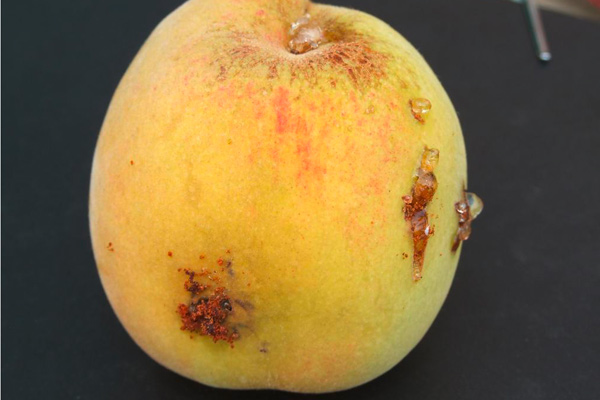

In July, the butterflies of the second generation of the pest are flying and laying eggs. The caterpillars of the third generation damage mainly the fruits. The caterpillar bores laterally, at the points of contact between the fruits or near the stem. Gummosis is often observed. The damaged fruits become deformed or rot. They show signs of premature ripening and drop off.
The caterpillars of the oriental fruit moth are attacked by a large number of parasitoids. Of greatest importance is the braconid Ascogaster quadridentatus Wesm.
Strategy for pest control:
Strict quarantine control is required in order to limit the spread of the oriental fruit moth, by conducting annual inspections in orchards for its timely detection. The beginning of the flight and its dynamics of the oriental fruit moth are determined by pheromone traps.
Chemical control is carried out at the ETL:
-during the vegetation period – 10-15 butterflies per trap per week;
-young orchards – 2-3% infested shoots by the caterpillar;
-fruit-bearing orchards - 5% damaged shoots or 2-4% infested fruits by the caterpillar.
Authorized plant protection products:
avant 150 EC - 33.3 ml/da; vaztak nov 100 EC – 0.0125%; deca EC / desha EC/dena EC - 50 – 70 ml/da; decis 2.5 EC – 0.04%; dimilin 25 WP - 0.04%; dursban 4 EC - 150-200 ml/da; eforia 045 ZC - 150 ml/da; karate express WG /ninja /forza - 100-120 g/da; coragen 20 SC - 16 – 30 ml/da; luzindo 40 WG - 0.025 kg/da; madex twin - 10 ml/da; meteor - 90 ml/100 l water; runner 240 SC – 0.03%; rapax SBS europa - 100-200 ml/da; sumi alpha 5 EC/sumicidin 5 EC – 0.02%.