Start now with the care for garden legume crops
Author(s): Растителна защита
Date: 12.03.2018
7313
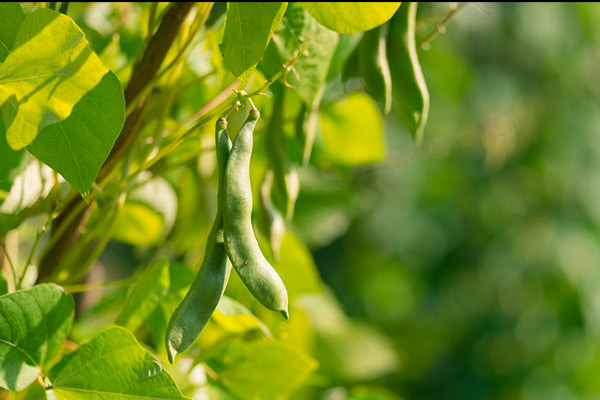
To control diseases and pests in leguminous garden crops, a system of agrotechnical, physico-mechanical, biological, chemical and other measures is applied.
They can be effective when properly synchronized with the phenophases of plant development, the economic injury levels of pests, and the correct choice of plant protection products. The more important practices are as follows:
- Sowing of leguminous crops within the most favourable timeframes for the region, using healthy seed with good germination, free from diseases and pests;
- Cultivation of varieties resistant to diseases and pests;
- Careful selection of fields – in higher and well-ventilated locations;
- Early sowing limits infestation by aphids and viral diseases;
- Observance of spatial isolation of annual leguminous crops from old lucerne stands of at least 500 m, which limits the spread of root weevils, the black bean (beet) aphid, and the lucerne aphid;
- Application of 2-3 year crop rotations will limit attacks by dry root rot, Rhizoctonia root rot, anthracnose, bacterial blight and Ascochyta blight, as well as the mass multiplication of seed beetles, the black bean (beet) aphid, the pea weevil, the pea midge and pea leafrollers. Beans should not be sown after potatoes;
- Regular weeding in the crops, as some weeds serve as food or oviposition sites for pests – pea leafrollers, soybean moth, black bean (beet) aphid, polyphagous cutworms;
- Emergence. In a wet and cool spring, during the emergence period in beans, attacks by Rhizoctonia root rot, anthracnose and damage caused by bean flies may be observed. To limit attacks by these pests, it is necessary to select the fields properly, to perform sowing at the optimum depth, and, when fertilizing with farmyard manure, to plough it well into the soil, since scattering it on the surface attracts flies;
- During the vegetation period, all agrotechnical measures are applied – irrigation, soil cultivation, fertilization, etc., which promote the development of vigorous and strong plants with higher resistance to attacks by diseases and pests;
- During the second-third true leaf stage (April), root weevils, Rhizoctonia root rot, halo blight and anthracnose appear. Later in the vegetation period, during the budding stage (April-May), the black bean (beet) aphid appears. Warm weather and high air humidity have a positive effect on the development of the pest; the absence of abundant and heavy rainfall during the aphid reproduction period leads to an increase in population density. Beneficial species such as ladybirds, syrphid flies, lacewings, etc. in leguminous crop stands limit the multiplication of aphids. Ladybirds occur at their highest density in May and July, lacewings from May to September, and the larvae of syrphid flies from May to August;
- During flowering (May-June) and the formation of the first pods of beans, peas and faba beans, the pea weevil, pea midge, pea leafrollers, soybean moth (first generation), hazel seed weevil, vetch seed weevil and the pea (bean) five-spotted weevil are observed. The green pea aphid also appears. Two or three treatments of the crops are carried out, the first at the beginning of flowering and the second and third at an interval of 7 to 14 days;
- During the yellowing period and at the beginning of pod ripening in beans (July-August), the bean seed weevil lays its eggs. During this period, the common two-spotted spider mite also causes damage. In hot and dry weather, the damage caused by this pest may reach levels that compromise the harvest. Harvesting of annual leguminous crops (beans, peas, faba beans, etc.) in August-September is carried out within short timeframes and without residues. By deep ploughing of the soil, shattered pods and seeds are buried at a greater depth, which makes it difficult for the seed beetle adults to emerge. This measure also significantly reduces the population density of root weevils and the pea (bean) five-spotted weevil, which most often damage peas and faba beans.
Timely plant protection measures, optimally combined with good agronomic practices, ensure leguminous crops in the vegetable garden that are free from diseases and pests.
In issue 2/2018 of the journal ”Plant Protection” you will find which Bulgarian varieties of green beans to choose – a brief description and, most importantly, which dangerous diseases they are resistant to.