Invasion of the common vole threatens the crops
Author(s): ДЗИ в гр. Ген. Тошево
Date: 18.02.2018
5288
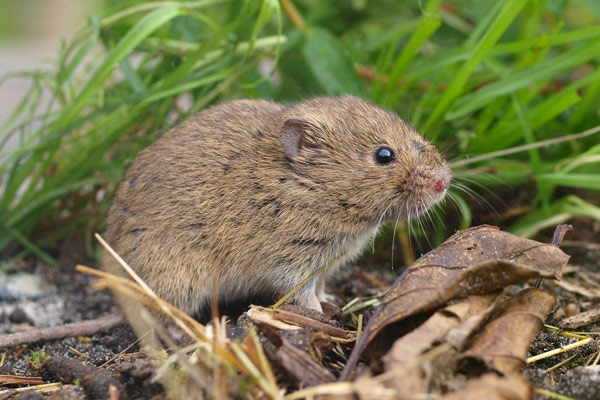
The common vole (Microtus arvalis Pallas) lives in burrows in the soil, which have a diameter of 3–5 cm. In summer it prefers lower and moist areas, and in winter – drier and well-drained ones. It lives in colonies, building its nests at a depth of about 30 cm. A single female inhabits an area of 90–100 sq.m. It gives birth 4–6 times a year to 4–7 young. Gestation lasts 20–21 days. The next fertilisation may occur on the day of parturition. The young reach sexual maturity 45 days after birth. Reproduction starts in February–March, reaching its peak in June.
The warm and almost snowless winter has created favourable conditions for the development of the common vole in our country. Surveys of wheat crops in Dobrudzha at the beginning of February show that in some areas, especially along the Black Sea coast, the pest population reaches 5–6 active colonies per decare. These are mainly areas located in the vicinity of lucerne stands.
The current climatic conditions necessitate a thorough inspection of the crops for the presence of active colonies. The areas are inspected by route survey, while at the same time the openings of the colonies are covered with soil. A few days later a second inspection is carried out to determine the activity of the colonies.
The placement of baits is recommended when there is 1 active colony per decare. The baits are placed in the openings, which must then be covered with soil. For control it is advisable to use ready-made baits – Phostoxin/50%/ pellets. When placing them, it is mandatory to comply with the requirements for working with highly toxic substances.