Examples of successful use of sex pheromones in integrated plant protection
Author(s): проф. д-р Вили Харизанова, от Аграрен университет в Пловдив
Date: 09.01.2018
10835

The first successful programmes for the use of sex pheromones in integrated pest management systems date back to the 1970s.
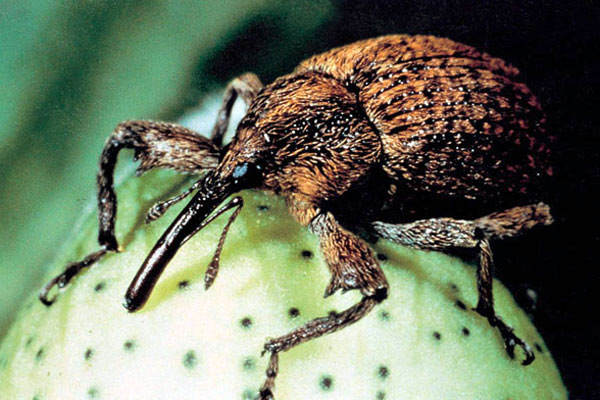
The boll weevil (Anthonomus grandis Boheman) has been among the key cotton pests in the USA since 1892. In 1978 a programme for its complete eradication was launched (Dickerson et al., 1987). Pheromone traps were placed on millions of acres of cotton fields to monitor new and existing areas. The programme was funded by federal and state resources, as well as by growers, and saved billions of dollars during its implementation. A very important result was also the reduction of insecticides used to control the boll weevil, estimated at 40% of the total consumption in the USA (Dickerson et al., 1987).
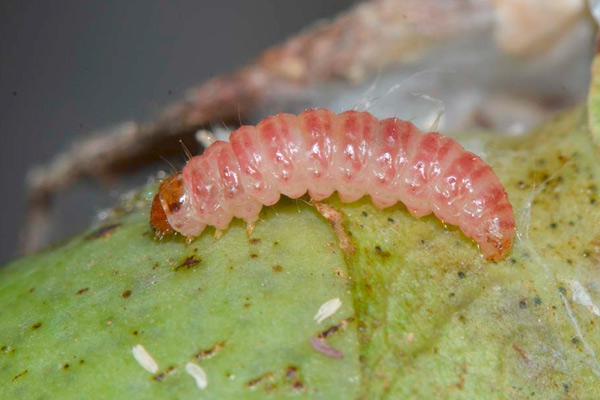
Attempts to control the pink bollworm (Pectinophora gossypiella Saunders) by the mating disruption method started with the use of the pheromone “hexalure” in the early 1970s (Baker et al., 1991). A large-scale IPM programme applying pheromone for the control of pink bollworm in cotton in Arizona used selected commercial formulations (including two insecticide treatments) to reduce the bollworm population over 5 consecutive seasons. The results were so good that at present only partial control of the pest is required. Integrated pest management programmes including pheromones have been implemented in India and Pakistan, and on the largest areas in Egypt. In 1995 thousands of acres were treated with pheromones. According to published data, the treated areas are increasing annually, and the level of control is comparable to that achieved by conventional plant protection using insecticides (Luttrell et al., 1995).
The codling moth is one of the most dangerous pests of pome fruit species worldwide. Because of it, the greatest number of insecticide sprays in apple and pear in the north-western parts of the Pacific region is applied. Pheromones for mating disruption were tested in Oregon, Washington and California (Bloomers, 1994). The results were impressive, and the problems observed in the pilot project were related to pest attacks in the areas adjacent to the experimental orchards. It is considered that these localised attacks are due to the uneven distribution of the pheromone in the numerous peripheral parts of the orchard and the varying wind direction. Also, immigrating mated females from other areas are difficult to control.
In 2004, apple growers in Michigan successfully applied the mating disruption method with sex pheromones on large areas. They not only reduced the percentage of damaged fruits, but also the number of accompanying treatments, which led to lower costs. In 2007, pheromone dispensers were applied on over 8,000 acres. Growers who chose the mating disruption method reduced by up to 50% the total number of treatments against codling moth, as well as the number of organophosphate insecticide applications from 5 to 1 between 2001 and 2008. The total amount of organophosphate insecticides used against codling moth decreased by 65%. In 20 orchards where the mating disruption method was applied for 4 consecutive years, the average number of males caught in pheromone traps decreased by 93%. Codling moth damage to fruits was 95% lower in orchards where the mating disruption method was applied compared to orchards where only insecticides were used. The average return was 1.75:1 (profit:costs). The cost of applying the mating disruption method ranged from $125–$170/acre, depending on the number of dispensers per acre and the type of dispensers. The additional income from reduced insecticide costs and increased fruit yield after using the mating disruption method for 4 years amounted to $210–$305/acre per year. Thus, revenues exceeded costs in a ratio of 1.75:1.
The tomato leafminer (Tuta absoluta Meyrick) is a major pest of tomato. The larvae attack the leaves, but the damage is particularly severe when the caterpillars enter the fruit. In 1979, work began in the USA on the development of a control system through the application of sex pheromones. Commercial use of the pheromone increased in 1980 when the moth became increasingly resistant to insecticides. There were several problems associated with the use of chemical preparations: control became very expensive, as the increasing number of sprays did not provide results; pesticide residues led to rejection of consignments of tomatoes intended for export; and there was a mass increase of secondary pests which had previously been maintained at low population levels by repeated treatments. By the end of the decade, producers of fresh market and processing tomatoes in Mexico had completely switched to IPM programmes using the mating disruption method for tomato moth. The pheromone is particularly interesting because it can be used successfully even at very high levels of infestation by the moth. In most pheromone programmes, their application must begin when the pest population is at a low level. Traps and lures were widely used to detect the first emerging moths, allowing more precise and timely application of pheromone or insecticide (Jenkins et al., 1991).
The examples are countless and include not only pests of agricultural crops, but also of forests.