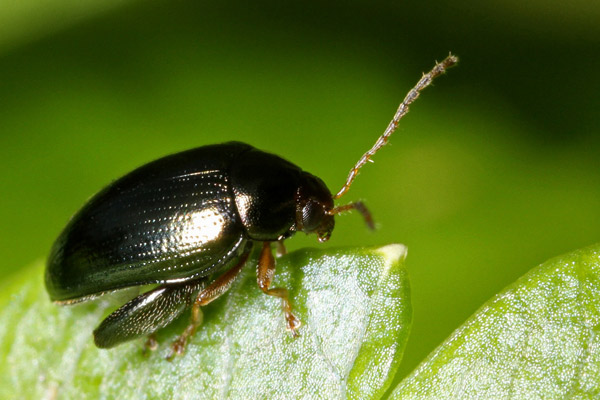
Rapeseed stem flea beetle – Psylloides Chrysocephala
Author(s): Растителна защита
Date: 10.10.2017
7123
.jpg)
Damage:
The rape stem flea beetle is widespread everywhere and at
high population density causes enormous damage. The pest develops one
generation per year. It overwinters as egg, larva and adult insect.
In September, the adults begin to feed intensively and from the end of September to mid-December they lay their eggs. The hatched larvae initially bore into the epidermis of the stems, and later into the petioles and the central veins of the leaves. Part of the larvae hatch in spring.
A related species to the rape stem flea beetle is the Small rape stem flea beetle. Other harmful species on oilseed rape are: black, light-legged, wavy-striped, flax, hemp and other species of flea beetles.
Control:
3 Chemical control is applied at an economic threshold: 2 adults/m² at emergence; 4 adults/m² after the appearance of the 3rd leaf; 3–5 larvae per plant.
Registered insecticides for control:
Mavrik 2 F – 30 ml/da; Citrin Max – 5 ml/da; Deka EC – 30 ml/da; Decis 100 EC – 5 ml/da; Dukat 25 EC – 30 ml/da; Mageos – 5 g/da; Nurelle D – 60 ml/da; Pirinex Supreme 3V – 60 ml/da; Sherpa 100 EW – 25 ml/da.