Integrated control of the Mediterranean fruit fly in Croatia
Author(s): Росица Димитрова, главен експерт растително здраве, БАБХ
Date: 15.02.2014
5455
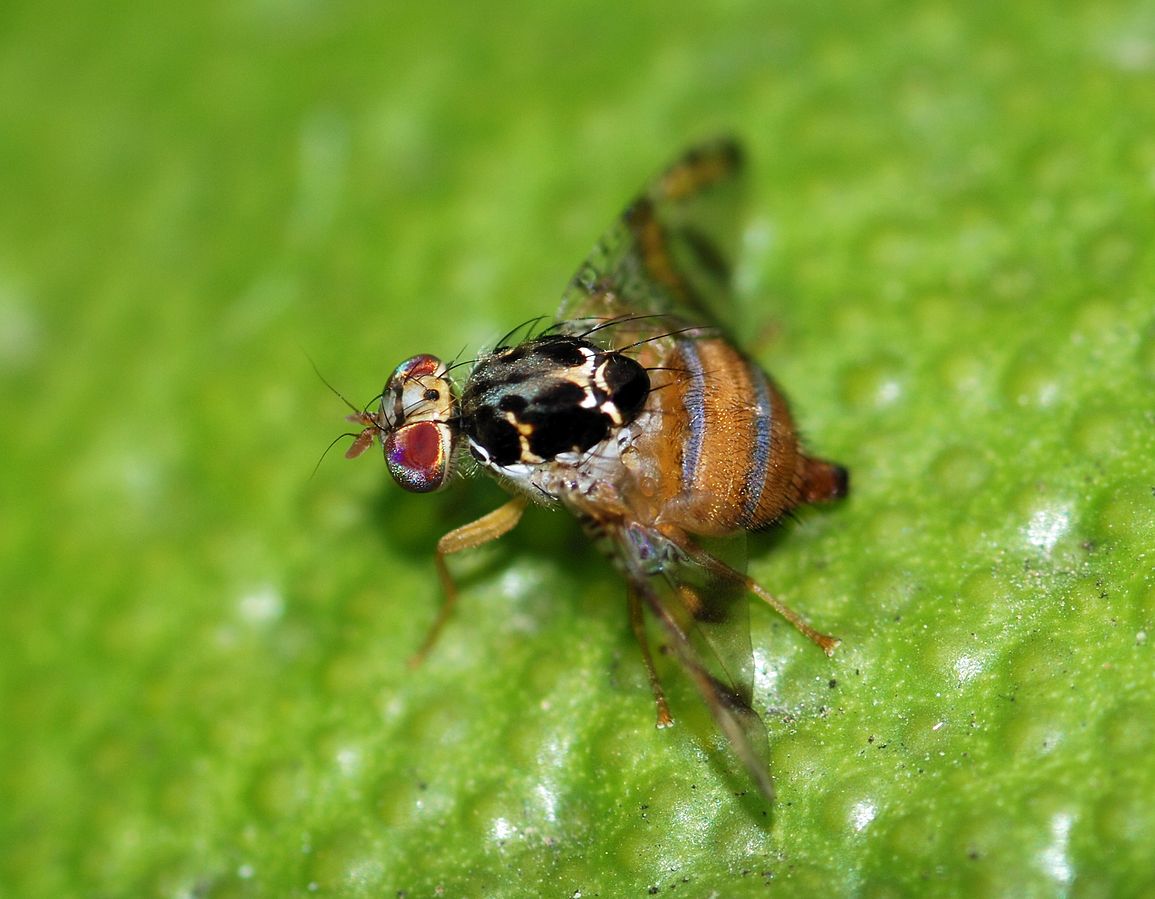
The Neretva Valley in Croatia is a region characterized by a large number of ecosystems and habitats, diverse flora and fauna, and designated ornithological and ichthyological reserves, as well as protected zones. The valley cultivates mandarins, which are a significant livelihood for the local population. The primary economically important pest affecting mandarin production in Croatia is the Mediterranean fruit fly (Ceratitis capitata). A large portion of the mandarins is exported to several EU countries, as well as to Russia, Serbia, and other states where the species is quarantined and regulated. However, intensive control using insecticides is not advisable, on one hand due to the specific ecological significance of the region, and on the other due to the risk of pesticide residues in the fruits.
For this reason, the Ministry of Agriculture of Croatia, with the support of the FAO/IAEA and not least – the local agricultural producers, decided to implement a large-scale integrated pest management program involving the Sterile Insect Technique (SIT).
The method has been successfully applied in a number of countries (Spain, USA, Mexico, etc.) and is sufficiently refined, successful, and economically viable.
To date, the program has progressed through several stages:
2000 – 2013: Monitoring and surveys
2007 – 2009: Economic analysis (Ministry of Agriculture in cooperation with the IAEA)
2009 - 2010: Construction of a factory for rearing and packaging sterile flies in Opuzen, Croatia
2010 – 2011: Pilot project on 1500 ha (in cooperation with producers, the Ministry of Agriculture, and the IAEA)
2012 – 2013: Operational project on over 4,000 ha (in cooperation with producers, the Ministry of Agriculture, and the IAEA)
2013: Plans for expanding the treated area
Implementation of the program in the period 2012-2013:
Treated area: 4,000 ha of orchards (stone fruit species, figs, mandarins)
Procurement, packaging, and release: 320-350 million male flies annually (about 11 million sterile males weekly)
Program period: April – November annually
Number of personnel: 10 people
Number of vehicles: 5 cars (2 of which equipped with an automatic fly release system)
Number of boats: 2
Number of traps for monitoring and tracking the distribution of released sterile flies: 150
Fruit sampling: 2t of inspected fruits annually
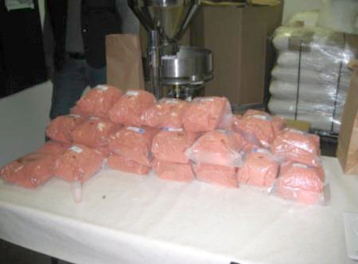
Radiation-sterilized male pupae
Radiation-sterilized male pupae are purchased from Spain or Israel, where factories for their production are already established. The sterilized pupae are marked with fluorescent dye for easy distinction from wild individuals. The pupae are reared further in two ways – packaged in paper bags or placed in so-called racks, whose tiers are separated by mesh for better ventilation, and are fed a suitable semi-synthetic nutrient medium and water. Pupae reared by both methods are placed under optimal conditions for development and emergence (about 23°C and 70% relative humidity). To improve the sexual activity and searching behavior of the males, aromatherapy with ginger essential oil is also conducted.
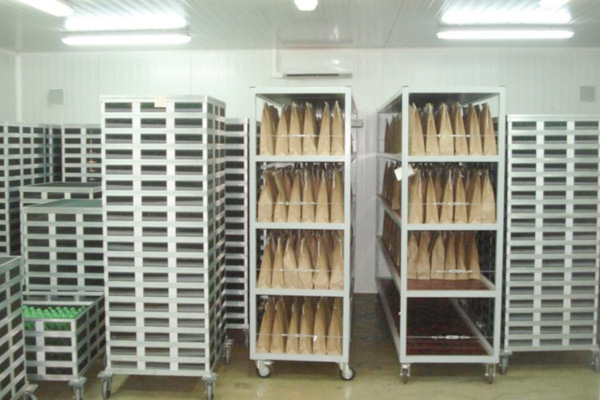
Emergence facility
The pupae are reared under optimal conditions until their emergence and are released at regular intervals throughout the area to cover not only the agricultural lands but also the surrounding areas where hosts of the Mediterranean fruit fly are found. This is done to prevent the existence of reservoir zones that could serve as a source of wild fertile insects. Continuous monitoring is carried out, and fruit sampling is performed to track the program's effectiveness.
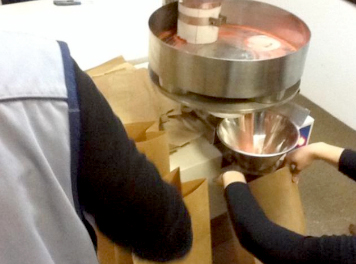
Distribution of pupae in paper bags for emergence
The sterile flies are released in two ways – via paper bags , which are manually torn and scattered by personnel in hard-to-reach areas (including by boat). In more accessible areas, vehicles equipped with ground dispersal devices are used.
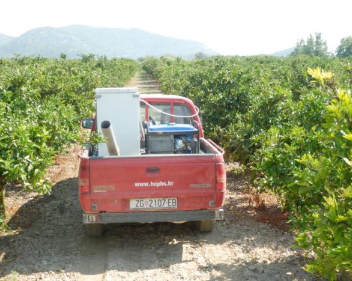
machines for automatic fly dispersal via car
The devices consist of a cooling system (refrigerator) equipped with a pipe for blowing the flies into the plantations using an air stream.
The results for 2012 are:
mandarins: 1.02 larvae/kg (treated zone); 32.07 larvae/kg (untreated zone); 96.8% efficacy;
figs: 5.6 larvae/kg (treated zone); 21.5 larvae/kg (untreated zone); 73.9% efficacy;
peaches: 1.4 larvae/kg (treated zone); 18.5 larvae/kg (untreated zone); 92.4% efficacy;
For exports in 2011, 4.1% infested fruits were recorded, while in 2012, 0.9% infested fruits were found.
A large quantity of mandarins from the early Ishikawa variety, which ripens in September, is exported. Interest in it is high because it is very juicy, seedless, and comes to market before all others. Furthermore, Croatian mandarins are produced with integrated pest management and are high-quality, free of pesticide residues. Against secondary citrus pests (scale insects and aphids), only one treatment per production season is carried out. In addition to the sterile insect factory, a packing station has been built nearby, where the fruits are sorted, treated against fungal infections, packed, and directly loaded for export. The program's successes are significant, and currently, the possibility of its expansion is being explored. The 4,000 ha treated so far represent half the territory. Covering the entire valley of 8,000 ha, which contains hosts, will likely necessitate the use of aerial transport for dispersing the flies.