Lemon balm – the fragrant remedy of ancient Greek healers
Author(s): Растителна защита
Date: 16.06.2016
9318
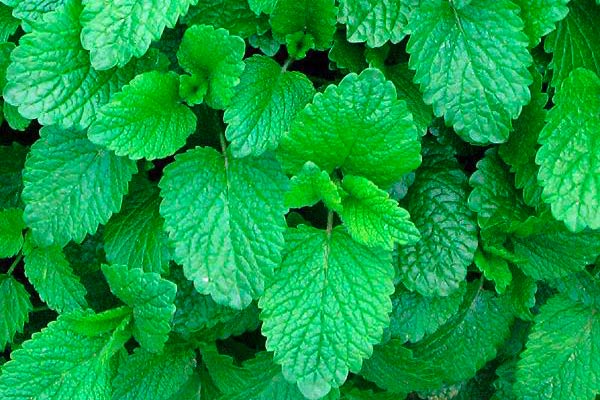
Lemon balm is one of the most extensively harvested medicinal plants in Bulgaria. It ranks among the first 20 species of medicinal plants, with approximately 450,000 kg of lemon balm leaves and stems produced and exported annually in our country. This herb has been known since ancient times as a valuable essential oil-bearing and medicinal plant. The favourable climatic and soil conditions in Bulgaria facilitate the cultivation and growing of lemon balm, which is also a good opportunity for starting one’s own business.
Lemon balm is one of the most extensively harvested medicinal plants in Bulgaria. In terms of quantities used, it ranks among the first 20 species of medicinal plants, with 450,000 kg of lemon balm leaves and stems produced and exported annually in our country. These quantities are obtained from natural habitats, but mainly from cultivated areas. Lemon balm is cultivated very successfully. Thus, on the one hand, its wild-growing habitats are not threatened with reduction and extinction, and on the other hand, this contributes to securing a large quantity of raw material with guaranteed quality. Cultivation is the best approach to preserving wild-growing habitats, both of endangered species and of those used in particularly large quantities, such as lemon balm.
Lemon balm has been known since ancient times as a valuable essential oil-bearing and medicinal plant. In our country it grows throughout the territory, in gardens and yards, along roads and fences, on the fringes of forests and meadows. Lemon balm is cultivated in many countries of Central and Southern Europe. In Bulgaria, the variety Melissa has been developed and disseminated, from which high-quality raw material is obtained.
Lemon balm owes its medicinal properties entirely to its composition. It contains substances that have a spasmolytic effect on the digestive and respiratory systems. It also has sedative and analgesic effects. It exerts a beneficial influence on the nervous system as well.
The favourable climatic and soil conditions in Bulgaria facilitate the cultivation and growing of lemon balm, which is also a good opportunity for starting one’s own business. Lemon balm develops very well on fertile soils with light to medium mechanical composition and with a neutral or slightly alkaline reaction. The wide range of biologically active substances allows for the production of a number of products from lemon balm, and from them – a whole palette of end products for the pharmaceutical, food and flavouring, and perfumery industries. Professionals in the sector call it a “high-tonnage herb” because of the large exports to foreign markets, where it is in demand and well accepted.
Lemon balm is a relatively thermophilic plant and, under our conditions, it overwinters successfully. It has moderate light requirements and can be grown as an intercrop in young orchards. In that case, it almost does not bloom, but if it is grown for leaves this is favourable, because they do not lose their aroma.
Propagation and care
Lemon balm can be propagated by seeds, by seedlings, and by dividing the rhizomes. Since the seeds germinate slowly, direct sowing is not preferable. The most reliable method for successful propagation is by seedlings produced in hotbeds in greenhouses or in cold frames. The seeds are sown in March. The seedlings are ready for planting in a permanent place when the plants are 10–12 cm high, have formed 6–7 leaves and have a well-developed root system. This usually takes place in May. When the seedlings are grown in cold frames, the seeds are sown in May, and the seedlings are ready and transplanted to a permanent place in October. Depending on the cultivation conditions, lemon balm can be harvested for 3–5 years.
Care during the first year includes 3–4 treatments during the vegetation period to loosen the soil and destroy weeds. If necessary, 2–3 irrigations of the plantation are carried out.
The leaves are harvested 2–3 times before flowering. The most suitable time for harvesting is in the morning after the dew has lifted, in calm and sunny weather. The cut stems are dried in the shade or in a dryer. From 4 kg of fresh leaves, 1 kg of dry leaves is obtained.
Opportunity for own business
The cultivation of medicinal plants is a serious economic alternative for owners of semi-mountainous and mountainous land. When the species are perennial, the main investment in their production is made only during the first year, and from the second and subsequent years, costs decrease by about 60–80%, while yields increase. The return on the expenses incurred begins in the very year of establishment of the plantations and there is no need to wait a long time. And since our country is the second largest exporter of medicinal plants in Europe in terms of quantities, and one of the leading exporters in the world, it is important to know that the cultivation of herbs not only provides a livelihood, but is also the best way to preserve their natural habitats.