'Quinoa - a gift from the gods'
Author(s): Нора Иванова, Редактор Растителна Защита /РЗ/
Date: 05.01.2016
6667
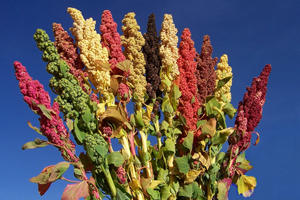
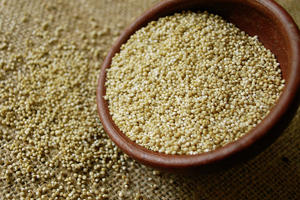
In 2013, the Food and Agriculture Organization of the United Nations (FAO) declared the year the International Year of Quinoa, and the small, tasty seeds - a "superfood". Quinoa is easily digested by the body, its carbohydrates break down slowly, and it has a complete amino acid profile. All of this guarantees the perfect menu for space travelers, and on planet Earth, it offers hope for solving global problems of long-term nutrition for its growing population. At the same time, the increasing demand for exotic imported products in Europe automatically creates conditions for an imbalance in quinoa production in the countries that are the primary sources of this crop.
Quinoa (Chenopodium quinoa) is not a cereal because it belongs to the Amaranth family (Chenopodiaceae), which also includes spinach and beets. Quinoa is a grain-like annual crop, grown primarily for its edible seeds and its high nutritional value. The food of the Incas, as researchers call it, is a seed, not a grain, and possesses beneficial properties similar to those of several leafy vegetables such as spinach.
Classification
empire: Eukaryota
kingdom: Plantae
subkingdom: Tracheobionta
division: Magnoliophyta
class: Magnoliopsida
order: Caryophyllales
family: Chenopodiaceae
subfamily: Chenopodioideae
genus: Chenopodium
species: C. quinoa
Nutritional Value
Quinoa seeds contain essential amino acids such as lysine and large amounts of calcium, phosphorus, and iron. The leaves are also edible and closely resemble those of amaranth. Quinoa is becoming increasingly popular in European cuisine, not only as a versatile substitute for rice and due to its low carbohydrate content but also because of the absence of gluten, which has recently been considered a primary cause of allergies. Quinoa also contains large amounts of vitamins B and E. In the modern era, quinoa is particularly valued because its protein content is very high (14% by mass), although not higher than most legumes. In 100 g of raw quinoa, there is approximately (percentages of the recommended daily intake): 65% phosphorus, 55% magnesium, 35% iron, 14% protein, and 7% dietary fiber. In 2013, the Food and Agriculture Organization of the United Nations (FAO) declared the year the International Year of Quinoa, and the small, tasty seeds - a "superfood".
Roots of the Quinoa Agricultural Crop
The staple food of the Incas even 5000 years ago was quinoa. They considered the plant sacred, a gift from the gods, and called it "the mother of all grains." This agricultural crop was first cultivated as a harvest in the Andean region of Ecuador, Bolivia, Colombia, and Peru 3000 to 4000 years ago. The name "Quinoa" comes from the Spanish spelling of the name of the Quechua Indian people "Kinwa" or "Qin-wah." During the conquest of South America, Spanish colonizers mockingly called quinoa "Indian food," and subsequently destroyed the Indian quinoa fields and banned its cultivation. However, they never realized that the Incas secretly continued to grow quinoa in the almost inaccessible high parts of the Andes, where colonizers did not set foot because the air was thin and living conditions were harsh.
Cultivation
A characteristic of the plant is that it can grow under any conditions and in any soil. Quinoa can be cultivated from 0 to 4000 m above sea level, in territories where other crops cannot thrive. The plant adapts quite successfully to climates ranging from desert to hot and dry. It can also grow with relative humidity from 40 to 88% and temperatures from -4 to +38°C. Quinoa efficiently utilizes water resources, is tolerant, and resistant to soil moisture deficiency, while simultaneously producing acceptable yields with rainfall of 100 to 200 mm. After harvesting, the grains must be processed to remove the coating containing bitter-tasting saponins. The seeds, in addition to culinary needs, can also be used for fodder due to their richness in trace elements. The best time for planting is from late April to late May. When soil temperatures are around 15 °C, plants emerge within three to four days. Seeds should be sown no deeper than 15 cm. Planting can be done by hand or with a seeder. Plants should be thinned to 15-45 cm apart. One kilogram of seeds will be needed per decare. Sowing in rows facilitates weeding, which is mandatory. Soil moisture will likely be sufficient until early June for germination. Quinoa is ready for harvest when its leaves have fallen. The seeds can easily be collected by hand. The timing of the quinoa harvest is important because if it has rained, the dry seeds can germinate. The best time to harvest the crop is during dry weather.
Globalization
In 1996, quinoa was classified by the FAO as one of the most promising crops for humanity, not only because of its beneficial qualities and its many uses but also as an alternative for solving the serious problems of feeding the planet. Alongside this global recognition, NASA also included it as a suitable crop for sustaining crew life in space ecological systems (Controlled Ecological Life Support System). Quinoa is easily digested by the body, its carbohydrates break down slowly, and it has a complete amino acid profile. All of this guarantees the perfect menu for the space traveler. Due to its proverbial adaptability to extreme ecological conditions, quinoa cultivation has increased in recent years and has even spread to areas where no one thought it could thrive, let alone yield a good harvest. The leading producers of the ancient Inca crop are Bolivia, Peru, the USA, Ecuador, and Canada. Quinoa is also cultivated in England, Sweden, Denmark, the Netherlands, Italy, and France. In tropical territories, such as the savannas of Brazil, experimental cultivation of quinoa has been conducted since 1987, yielding larger quantities than in the Andean region. There are no longer any boundaries for the cultivation of a specific agricultural crop, nor for its consumption, even when a particular food is not tied to the local food culture. This, of course, also leads to consequences different from popularizing and feeding the world with a specific superfood. The increasing demand for exotic imported products in Europe, for example, automatically creates conditions for an imbalance in quinoa production in the countries that are the primary sources of this crop. Prices rise due to increased demand, and local consumption of quinoa decreases in favor of its export. In rural areas, farmers begin to sow only quinoa, and thus crop diversity drastically decreases at the expense of soil resources, which become depleted with continuous planting of the same crop. The role of speculative games by traders, driven by quick profits and stimulated by the new commercial niche – veganism/vegetarianism, whose philosophical principles long ago left the orbit of proper and healthy eating, is also not insignificant.