2 degrees Celsius
Author(s): Нора Иванова, Редактор Растителна Защита /РЗ/
Date: 08.12.2015
5609
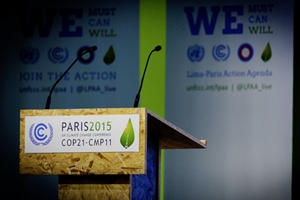
On November 30, the United Nations World Conference on Climate Change (COP 21) was officially opened in Le Bourget near Paris. Over 100 countries, including EU member states, will sit together at one table for nearly two weeks to discuss problems common to all, related to the global climate changes on our planet. The presidents of the USA, Russia, China, as well as the French head of state François Hollande and UN Secretary-General Ban Ki-moon will deliver detailed reports with proposals for long-term solutions.
According to data from the World Meteorological Organization, 2015 is the hottest year since measurements began. Greenhouse gas levels in the atmosphere have reached new highs, and the global average concentration of carbon dioxide in the spring of 2015 in the Northern Hemisphere surpassed the barrier of 400 parts per million for the first time, studies show. Thus, 2016 will be even warmer than 2015, and so on, until the moment is reached when it will already be too late to stop the harmful impact on nature. If global warming is not limited, and by 2°C compared to the pre-industrial era (1850-1900), the expected natural disasters will become reality, not Hollywood production. Entire cities will be submerged, a large part of agricultural land will disappear, and the migration wave, as a consequence of climate change, will alter national borders forever. Around 250 million climate refugees will leave their homelands by 2050. The solution is one - a sharp reduction in energy consumption and the replacement of fossil fuels with renewables. All of this included in an international agreement that is binding on all countries and guarantees precise and clear legal priorities, obliging states to adopt laws in this direction, and is not of a voluntary nature. Will the major partners succeed in reaching a consensus in 13 days in this perhaps doomed battle?
13 Days
The World Conference will last exactly 13 days, from November 30 to December 11, and the negotiations are expected to be tough because the participants have set themselves overly ambitious goals: reducing greenhouse gas emissions by at least 40%, achieving 40% energy efficiency, and increasing renewable sources by at least 30% by 2030. The European Parliament's proposals for reducing emissions in aviation and shipping will also be discussed as a real possibility for limiting greenhouse gases. Will a potential global agreement containing the above-mentioned proposals manage to save the world?
Ranking 2015
In connection with the upcoming meeting, experts from the Central and Eastern European Environmental Center have developed a special "Ranking - 2015", which includes EU member states. Regarding their activity for adaptation to global climate changes, the countries are divided into three groups. The first, which has a high rating, includes 9 countries, with the top three places held respectively by Austria, Denmark, and Finland. In the group with a medium rating are ten countries, led by the Netherlands, Slovakia, and Romania. In the third group with a low rating are 9 countries, with the top three being: Cyprus, Bulgaria, and Croatia.
Hristo Dunchev, director of the Central and Eastern European Environmental Center, says that the ranking is determined based on six indicators with a total of 15 sub-indicators. Among them, the more important ones are: economic, implementation of the EU Strategy on adaptation to climate change, actions in the field of renewable energy, implementation of the directive on the assessment and management of flood risks.
A Plan to Save the Planet or a Geographic Map of Poverty?
Even in a global problem like climate change and its consequences, the gap between rich and poor countries is more than tangible. To implement the plan to save the planet, it is necessary to transition to green energy and adhere to national strategies for adaptation to climate change. All of this costs money, which a large part of the poorer countries do not have. An exceptionally important part of the meeting in Paris will be determining the amount and method of financing the adaptation plans of all affected countries. Industrialized countries have stated a commitment to raising $100 billion per year by 2020 as public and private financing to assist poor countries, which must reduce their emissions and prepare for climate change. But according to the UN Environment Programme, the adaptation of all countries to the new requirements will cost about $150 billion annually until 2030. Some experts believe that combating climate change will take between 0.04% and 0.14% of annual global GDP growth.
The other major concern is whether the agreement to be drafted at the current conference will be legally binding. We still remember the bitter experience with the previous one (Kyoto Protocol), which was recommendatory and in that sense very conveniently avoidable by those who found it profitable to expand their industrial activity and mercilessly exploit the already drastically diminishing natural resources.
The Kyoto Protocol is the first global environmental protection agreement, signed back in 1997 as an addition to the UN Framework Convention on Climate Change, but it was never ratified, for example, by the USA. Canada withdrew noisily, and India and China adopted the agreement as non-binding, despite the undertaken commitment to limit 9 types of gas emissions (of the types CO2, CH4, N2O and three types of fluorinated industrial gases: HFCs, PFCs, and SF6), which provoke planetary warming. The goal of the Kyoto Protocol was for the period from January 1, 2008 — December 31, 2012 to reduce the release of these emissions into the atmosphere by 5.2% compared to the 1990 level. The agreement is based on a market principle for regulation, expressed in international trade with quotas for harmful emissions. This means that the state or economic organizations on its territory can sell or buy quotas for the emission of greenhouse gases from national, regional, or international markets (Art. 17 of the Protocol).
New Horizons
Meanwhile, France has promised to invest €2 billion for the development of renewable energy, electrification, and greening in Africa, within a program until 2020, as announced by French President François Hollande at a meeting with African leaders. In his official speech in Paris on November 30, Bulgarian President Rosen Plevneliev emphasized that he sees the future in "restructuring our economies, abandoning the resource-intensive production models of the past." The low-carbon global economy, according to US President Barack Obama, is possible only and solely if a price is fixed on carbon. Our climatic fate remains unclear until the world economic elite decides which scenario to assign to its taxpayers.