'Plant protection activities in perennial plantations during May'
Author(s): ас. Кирил Кръстев, Институт по декоративни и лечебни растения – София
Date: 11.05.2026
1846
![MultipartFile resource [file_data]](/assets/img/articles/заглавна-раст-защита-май-2026.jpg)
The expected rainfall in May can lead to fruit cracking, especially in cherries and sour cherries, and can also intensify infections from fungal and bacterial diseases in permanent plantations. Due to the warm weather, preventive fungicide sprays will definitely be necessary. Insecticide treatments are also mandatory, as higher temperatures favor insect development.
More suitable conditions for conducting plant protection sprays will occur during the second half of the first and second ten-day periods and in the last days of the month.
For permanent plantations affected by hail, expected during the second ten-day period of May, treatment with copper-containing fungicides is recommended to limit the risk of secondary infections by pathogens.
In fruit nurseries
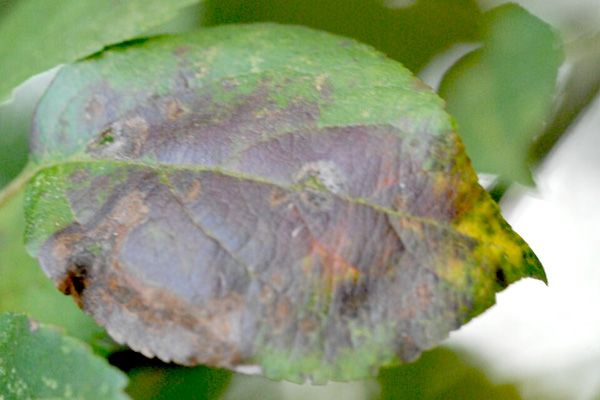
57 fungal diseases of apple have been described, but scab, caused by the fungus Venturia inaequalis, is the most damaging fungal disease of this crop not only in our country but also in all countries where apples are grown. Under favorable conditions for disease development, losses in susceptible varieties can reach up to 100%.
The fight against diseases and pests in fruit trees in nurseries and seedbeds continues. Against scab on apple and pear, 2-3 sprays are carried out with one of the following copper preparations – 1% Bordeaux mixture, Funguran OH 50 WP -150-250 g/dka, Champion WP - 0.3%, Caper Key – 180-300 g/dka; against powdery mildew on apple and peach – 3-4 sprays every 8-10 days with a sulfur-based preparation - Sulfur WG 600 g/dka, Solfo 80 WG – 750 g/dka or one of the preparations - Sistan 20 EW – 0.03%, Luna Experience – 50-75 ml/dka, Flint Max 75 WG – 0.02%; against cylindrosporiosis with Silit 544 SC – 125 ml/dka; against aphids and leaf-eating insects with an insecticide based on deltamethrin - Deca EC – 30-50 ml/dka, Decis 100 EC - 7.5 -12.5 ml/dka, Delmur – 50 ml/dka, Meteor – 0.06 -0.09% or another pyrethroid preparation.
In fruit orchards
Trapping bands are placed, soaked with a pyrethroid insecticide – Decis 100 EC - 7.5 -12.5 ml/dka, Sumicidin 5 EC (0.02%), Aficar 100 EC (15 ml/dka), Efcymetrin 10 EC (15 ml/dka) on the trunks of apple, pear, plum and walnut trees against codling moths. The corrugated cardboard strips, 15-20 cm wide, encircle the trunks below the first scaffold branch, after cleaning the old bark from the entire trunk. The band is tied only at the upper end.
Non-toxic trapping bands made of corrugated cardboard are placed, and observations are made for the flight of butterflies from the second generation of codling moths.
Wormy fruits from cherry fruit fly are collected and placed under frames – isolators, to monitor their development next year. 500-1000 fruits are needed – 50-100 under 5-10 cages.
From mid-month, every 8-10 days, apple orchards are inspected to determine the density of leaf-mining moths, mites, and aphids.
Plum orchards are inspected for sharka disease. Infected trees, if not from tolerant varieties, are marked for uprooting in the fall.
Fruit trees suffering from chlorosis are fertilized with iron sulfate - 150 g/10 l water.
Fruits with false caterpillars of the plum fruit sawfly are collected and placed under frame isolators to monitor its development in the spring of the following year. 500 – 1000 fruitlets are taken and placed equally under five isolators.
Plantations infested by fall webworm are treated with Dipel 2X (0.1%) or another preparation based on Bacillus thuringiensis.
Plantations infested by the flatheaded borer are treated repeatedly every 8-10 days with a pyrethroid preparation - Decis 100 EC, Sumicidin 5 EC, Aficar 100 EC, Efcymetrin 10 EC, Mavrik 2F, at their highest registered doses. Spraying is targeted against adult insects when they emerge from their shelters.

Larva of Capnodis tenebrionis L.
Against larvae at the end of the month, a double watering with contact insecticides at normal concentration can be performed, e.g., Decis 100 EC – 7.5-12.5 ml/dka. The solution must reach the main roots, at a depth of 20 cm. The use of granular preparations is also possible, e.g., Ercole GR, incorporated to a depth of 5-10 cm in the tree basin. After incorporation, light watering is mandatory.
Among biological agents, the entomopathogenic nematode Steinernema carpocapsae (Capsanem) is applied twice, at one million per tree. To achieve maximum efficacy, the nematodes require higher humidity for several days. For better action, the product Biorend-R can be added at a dose of 5 cc, which helps the nematodes survive in dry/hot environments and increases their efficacy, and also acts as a biostimulant for the tree, aiding its recovery.
It is also possible to apply the microbial insecticide Naturalis (Beauveria bassiana) via irrigation at a concentration of 0.1-0.2%. The fungus also requires increased humidity.
A third post-bloom spray on pear orchards is carried out 10-12 days after the second, against scab, brown rot, white leaf spot, rust, and pear fruit sawfly, pear psylla, respectively with one of the preparations – Curacao (200 ml/dka), Chorus 50 WG (50 g/dka), Captan 80 WG (150-180 g/dka) and with one of the following pyrethroid preparations - Decis 100 EC (7.5 -12.5 ml/dka), Sumicidin 5 EC (0.02%), Aficar 100 EC (15 ml/dka), Efcymetrin 10 EC (15 ml/dka).
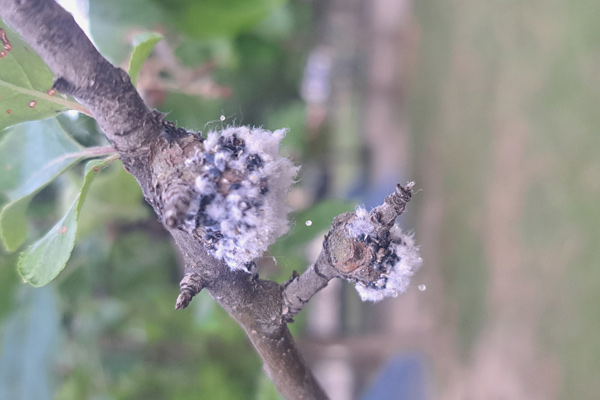
The woolly apple aphid (Eriosoma lanigerum Hausm.) is widespread in our country and is one of the dangerous pests of the apple tree. In very rare cases, it has also been found on pear. It develops up to 17 generations per year. When the weather warms up and sap flow begins in apple trees (usually after the average daily temperature remains above 5°C), the overwintered woolly aphids become active and move onto young shoots, injured areas of branches and trunks, and begin feeding by sucking sap. Colonies gather in dense masses which, due to the waxy cotton-like coating on their bodies, appear wrapped in cotton. When crushed, they release a reddish fluid, which gave them their name. As a result of intensive feeding, the cambial tissue of attacked branches and twigs is irritated, leading to the formation of tumor-like swellings. Damaged branches are not resistant to cold and freeze. The larvae of the woolly apple aphid are parasitized by Aphelinus mali. Parasitized woolly aphids turn black. The parasitoid strongly reduces the pest's density during dry and warm springs.
Apple trees are sprayed with one of the preparations – Curacao (200 ml/dka), Chorus 50 WG (50 g/dka), Captan 80 WG (150-180 g/dka) against scab; with a sulfur-based preparation - Sulfur WG 600 g/dka, Solfo 80 WG – 750 g/dka or one of the preparations - Sistan 20 EW – 0.03%, Luna Experience – 50-75 ml/dka, Flint Max 75 WG – 0.02% against powdery mildew; with one of the following pyrethroid preparations - Decis 100 EC (7.5 -12.5 ml/dka), Sumicidin 5 EC (0.02%), Aficar 100 EC (15 ml/dka), Efcymetrin 10 EC (15 ml/dka) against the first generation of codling moth, woolly apple aphid, leaf-mining moths, aphids; with one of the preparations Decis 100 EC (7.5 -12.5 ml/dka), Sumicidin 5 EC (0.02%), Aficar 100 EC (15 ml/dka), Efcymetrin 10 EC (15 ml/dka), Harpoon (30 ml/dka) against San Jose scale and with one of the acaricides - Apollo 50 SC (40 ml/dka), Nissoran 5 EC (0.05%), Naturalis (100-150 ml/dka) against mites.
Pear orchards are sprayed with one of the preparations – Curacao (200 ml/dka), Chorus 50 WG (50 g/dka), Captan 80 WG (150-180 g/dka) against scab, and with one of the following pyrethroid preparations - Decis 100 EC (7.5 -12.5 ml/dka), Sumicidin 5 EC (0.02%), Aficar 100 EC (15 ml/dka), Efcymetrin 10 EC (15 ml/dka) and others against codling moth, leaf-mining moths and pear leaf sawfly, pear bug, pear psylla.
A fourth post-bloom spray on apricot orchards is carried out with one of the preparations - Carpovirusine (100 ml/dka), Madex Top (10 ml/dka), Dipel DF (50-150 g/dka), Sineis 480 SC (20-37.5 ml/dka), Delegate 250 WG (30 g/dka), Avant 150 EC (33.3 ml/dka), Deca EC (30 ml/dka), Decline 2.5EC (30 ml/dka), Lamdex extra (60-100 g/dka) against oriental fruit moth and anarsia.
Apricot orchards are sprayed with one of the preparations – Curacao (200 ml/dka), Chorus 50 WG (50 g/dka), Captan 80 WG (150-180 g/dka) against shot-hole disease, and with one of the following pyrethroid preparations - Decis 100 EC (7.5 -12.5 ml/dka), Sumicidin 5 EC (0.02%), Aficar 100 EC (15 ml/dka), Efcymetrin 10 EC (15 ml/dka) against oriental fruit moth, anarsia, aphids, leafrollers, and with one of the acaricides - Apollo 50 SC (40 ml/dka), Nissoran 5 EC (0.05%), Naturalis (100-150 ml/dka) against mites.
A third post-bloom spray on cherry orchards is done with Silit 544 SC – 125 ml/dka against cylindrosporiosis, with one of the preparations – Curacao (200 ml/dka), Chorus 50 WG (50 g/dka), Captan 80 WG (150-180 g/dka) against shot-hole disease, brown rot, and with one of the following pyrethroid insecticides - Decis 100 EC (7.5 -12.5 ml/dka), Sumicidin 5 EC (0.02%), Aficar 100 EC (15 ml/dka), Efcymetrin 10 EC (15 ml/dka) against cherry fruit fly and Mediterranean fruit fly, weevils, aphids and scale insects, leaf-eating caterpillars.
It is carried out 10-12 days after catching the first cherry fruit flies. Early-ripening varieties are not sprayed against cherry fruit fly.
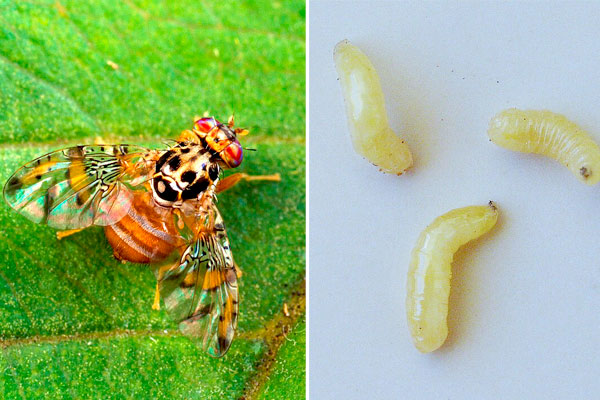
The Mediterranean fruit fly (Ceratitis capitata) has a subtropical origin and is a relatively thermophilic species, but has shown remarkable ecological plasticity and is now distributed on all continents. The fly is a typical polyphage and attacks almost all fruit crops - peach, apricot, apple, cherry, citrus, pomegranate, fig, date, banana, etc. It can feed on pepper, tomatoes, eggplant, cucumbers and more than 70 other plant species.
Approximately 12-15 days after the third, a fourth post-bloom spray is carried out on cherry and sour cherry orchards with Silit 544 SC – 125 ml/dka against cylindrosporiosis, with Curacao - 200 ml/dka, Chorus 50 WG - 50 g/dka, Captan 80 WG - 150-180 g/dka against brown rot and shot-hole disease, and with one of the following pyrethroid preparations - Decis 100 EC (7.5 -12.5 ml/dka), Sumicidin 5 EC (0.02%), Aficar 100 EC (15 ml/dka), Efcymetrin 10 EC (15 ml/dka) against cherry fruit fly, Mediterranean fruit fly, spotted-wing drosophila, sour cherry leaf sawfly, aphids and other pests.
The Mediterranean fruit fly attacks ripening fruits
A second post-bloom spray on walnut trees is carried out with a copper preparation - 1% Bordeaux mixture, Funguran OH 50 WP -150-250 g/dka, Champion WP - 0.3%, Caper Key – 180-300 g/dka against anthracnose and bacterial blight, and with one of the preparations – Closer 120 SC – 20 ml/dka, Teppeki 14 g/dka, Mospilan 20 SG – 25 g/dka against aphids.
Walnut trees are treated with a copper preparation - 1% Bordeaux mixture, Funguran OH 50 WP -150-250 g/dka, Champion WP - 0.3%, Caper Key – 180-300 g/dka against anthracnose and bacterial blight, and with one of the preparations - Carpovirusine (100 ml/dka), Madex Top (10 ml/dka), Dipel DF (50-150 g/dka), Sineis 480 SC (20-37.5 ml/dka), Delegate 250 WG (30 g/dka), Avant 150 EC (33.3 ml/dka), Deca EC (30 ml/dka), Decline 2.5EC (30 ml/dka), Lamdex extra (60-100 g/dka) against codling moths.
A fourth post-bloom spray on almond trees is carried out 10-14 days after the third with one of the preparations – Curacao - 200 ml/dka, Chorus 50 WG - 50 g/dka, Captan 80 WG - 150-180 g/dka against shot-hole disease, scab, cercosporiosis, and with one of the following pyrethroid preparations - Decis 100 EC (7.5 -12.5 ml/dka), Sumicidin 5 EC (0.02%), Aficar 100 EC (15 ml/dka), Efcymetrin 10 EC (15 ml/dka) against almond leaf sawfly, almond seed wasp.
A second spray after flowering of hazelnut plantations is done with a sulfur-based preparation - Sulfur WG 600 g/dka, Solfo 80 WG – 750 g/dka or one of the preparations - Sistan 20 EW – 0.03%, Luna Experience – 50-75 ml/dka, Flint Max 75 WG – 0.02% against powdery mildew, and with Coragen 20 SC (18-30 ml/dka), but contact insecticides from all groups can be used - Decis 100 EC (12.25 ml/dka), Sumi Alpha 5 EC (0.03%), Karate Zeon 5 CS (15 ml/dka), Lamdex extra (100-120 g/dka) against hazelnut weevil.
In strawberry plantations
At the end of flowering, a spray is done with Signum (75 g/dka) against powdery mildew, white and red leaf spots, gray mold, and with one of the preparations - Valmec (60-96 ml/dka), Apollo 50 SC (40 ml/dka), Nissoran 5 EC (0.05%), Naturalis (100-150 ml/dka) against strawberry mite.
After fruit harvesting, strawberry plantations are sprayed 1-2 times every 7-8 days with one of the acaricides - Valmec (60-96 ml/dka), Apollo 50 SC (40 ml/dka), Nissoran 5 EC (0.05%), Naturalis (100-150 ml/dka) against mite species – strawberry, two-spotted spider, Atlantic.
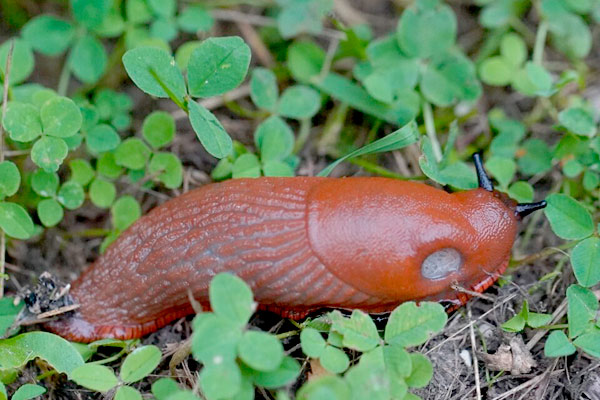
In case of slug infestation, Mesurol Schneckenkorn is scattered - 300 g/dka.
Strawberry plants infested with viral diseases and root weevils are uprooted.
In raspberry plantations
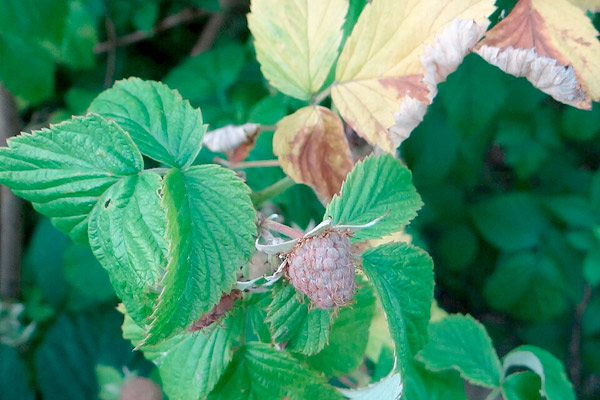
Post-bloom, raspberry bushes are sprayed with Signum (100 g/dka) to control didymella, coniothyrium, rust, anthracnose, leaf spots, and with Decis 100 EC (7.5 -12.5 ml/dka) or another pyrethroid insecticide against raspberry moth, aphids, leaf-eating caterpillars, and with Bermectin (15-100 ml/dka) against raspberry mite and common two-spotted spider mite. Raspberry plants infested with viral diseases are uprooted.
In currant plantations
A second post-bloom spray on currant plantations is carried out 10-14 days after the first with a copper preparation - 1% Bordeaux mixture, Funguran OH 50 WP (150-250 g/dka), Champion WP (0.3%), Caper Key (180-300) g/dka or Silit 544 SC (125 ml/dka) to control anthracnose and leaf spots, with Topaz 100 EC (0.05%) against American powdery mildew, and with Mospilan 20 SG (25 g/dka) against aphids, Bermectin (15-100 ml/dka) against mites.
To control powdery mildew on currants, 10-14 days after the second post-bloom spray, another spray is done with Topaz 100 EC (0.05%) or a sulfur-based preparation - Sulfur WG 600 g/dka, Solfo 80 WG – 750 g/dka.

Currant clearwing moth
Currant plantations are treated with Silit 544 SC (125 ml/dka) against leaf spots, with Topaz 100 EC (0.05%) or a sulfur-based preparation - Sulfur WG 600 g/dka, Solfo 80 WG – 750 g/dka against powdery mildew, and three times, in case of mass infestation, with contact insecticides with longer residual effect against currant clearwing moth. In case of severe mite infestation, Bermectin (15-100 ml/dka) is added. The first treatment is carried out at the beginning of caterpillar hatching, and the next after 12-15 days.
Weeds in currant plantations are sprayed with Stomp Aqua 250-300 ml/dka.
In vineyards
The fight against downy mildew continues. Preventive treatments are recommended before pathogen sporulation and before rainfall. Spray scheduling is based on incubation periods. These are calculated according to the effective temperature, which equals the difference between the average daily temperature and 7.9 oC, which is the biological zero at which the parasite does not develop. One incubation period lasts until the sum of effective temperatures reaches 61 oC. The calculation of each incubation period begins in the presence of rain or dew for at least 2 hours. It is recommended to carry out preventive treatments against downy mildew at every 4-5 leaves of new growth.
Treatment is done with one of the preparations - Quadris 25 SC – 0.075 – 0.1%, Ridomil Gold Combi 45 WG – 200 g/dka, Ridomil Gold R WG – 500 g/dka, Ridomil Gold SL – 20 ml/dka. If you wish to treat organically, for prevention before or after rain, since the mentioned fungicides are not systemic, you can use a copper preparation - 1% Bordeaux mixture – 180 - 300 g/dka solution, Funguran OH 50 WP – 150 - 250 g/dka, Champion WP - 0.3%, Caper Key – 180 - 300 g/dka. Serenade ASO is also an option, but it is less effective than the systemic fungicides mentioned.
The mentioned contact fungicides also act against anthracnose and red blotch on vines.
The fight against powdery mildew begins. Treatment is carried out when shoots are 10-15 cm long, with 1-2 sprays. For contact fungicides – Akoidal WG – 0.25%, Azumo 80 WG – 400 g/dka, Kumulus – 0.2-0.5%, Solfo 80 WG – 400 g/dka, the interval between sprays should be about 7-8 days, and for systemic ones – Flint Max 75 WG – 0.016%, Folicur 250 EW – 0.04%, Custodia 320 SC – 75 ml/dka, Dinali 090 DC – 50-65 ml/dka, Domark 10 EC – 25-30 ml/dka, Dynasty 25 EW – 40 ml/dka, Luna Experience – 12-40 ml/dka, Synstar – 70-80 ml/dka – 12-14 days.
A second spray against excoriosis is carried out. Treatments are performed when the third leaf separates from the shoot, with one of the fungicides – Thiovit Jet 80 WG (1250 g/dka) or another sulfur-based preparation, Quadris (0.075-0.1%), Mical Flash (0.3%), Universal (200-280 ml/dka).

The fight against grape moths begins. The economic injury levels depend on the generation of the moth species – European grapevine moth and vine moth, and the variety. For the first generation, the EIL is 4-6 eggs or caterpillars per 100 clusters for table grape varieties and 6-8 – for wine grape varieties.
Against the egg stage, preparations with ovicidal action are used. Best in this regard are hormonal insecticides – chitin synthesis inhibitors, juvenoids and others, such as Mimic SC – 90 ml/dka, Coragen 20 SC – 15-27 ml/dka. These preparations also act on young caterpillars, making them a suitable first choice for the next stage – treatment against caterpillars, as there are also many eggs at this time.
Against caterpillars, contact insecticides from all groups are used, such as Aficar 100 EC – 25 ml/dka, Deca EC – 40-60 ml/dka, Decis 100 EC – 12.5-17.5 ml/dka, Lamdex extra – 100 g/dka, Kedo – 40 ml/dka, Coragen 20 SC – 15-27 ml/dka, Meteor - 0.07-0.09%, Voliam – 18-30 ml/dka, Cyperfor 100 EW – 25 ml/dka, Cyclone 100 EW – 25 ml/dka, Sherpa 100 EW 25 ml/dka. The treatment should be carried out in the “black head” stage of the eggs. At higher densities for each generation, at least two treatments are necessary.
Among the biological means for controlling grape moths, against eggs, parasites of the genus Trichogramma can be used at a rate of 80,000 - 100,000 individuals per decare, colonized 3 times against each generation. Against caterpillars - bacterial preparations based on Bacillus thuringiensis - Dipel DF – 50-100 g/dka, Dipel 2X – 100 g/dka, Forey 48 SC – 250-400 ml/dka, Rapax – 100-200 ml/dka, as well as preparations obtained from the fermentation of microorganisms Milsah, Spinlai, Tulga 480 SC – 15.8-20 ml/dka, Sineis 480 EC (spinos