'Enrichment, evaluation and maintenance of genetic diversity in garden legume crops'
Author(s): доц. д-р Славка Калъпчиева, ИЗК "Марица" Пловдив
Date: 08.05.2026
1171
![MultipartFile resource [file_data]](/assets/img/articles/заглавна-бобови-генетика.jpg)
Abstract
The economically most important leguminous crops consumed as vegetables are green beans, green peas, and broad beans. One of the most effective tools for improving the quality of leguminous vegetables is the development of new varieties. The aim of this study is to research, maintain, and enrich the genetic resources of garden leguminous crops for diverse source material in the implementation of breeding programs and to familiarize with the breeding achievements of these crops. From 204 accessions, lines, and varieties of garden peas, 52 genotypes of garden beans, and 9 accessions of broad beans, genotypes with optimal functional and nutritional qualities were identified.
Keywords: garden pea, green bean, broad bean, gene pool
Garden leguminous crops are leading in the world and the most widely cultivated in Europe. The economically most important among them as vegetables are green beans, green peas, and broad beans. One of the most effective tools for improving the quality of leguminous vegetables is the development of new varieties. Research on genetic variability in legume germplasm is an important tool for identifying accessions, lines, and/or varieties with optimal functional and nutritional qualities (Santos et al., 2019, Azam et al., 2020).
To this end, we set out to research, maintain, and enrich the genetic resources of garden leguminous crops for creating diverse source material in the implementation of breeding programs.
Material and Methods
During the period 2022–2025, under field conditions in a collection nursery, accessions, lines, and varieties of garden peas (Pisum sativum L.), garden beans (Phaseolus vulgaris L.), and broad beans (Vicia faba L.) were tested, multiplied, and re-multiplied. The field trials included 190 genotypes of garden peas, 52 genotypes of green beans, and 9 genotypes of broad beans. The materials were sown in working plots of varying sizes depending on the seed quantity. Sowing of broad beans and garden peas was done manually in February over the years, and garden beans in April. Broad beans and garden beans were sown on raised flat beds, in double-row strips with an intra-row spacing of 8–10 cm, while for garden peas, the strip was four-row (80+20+40+20) with an intra-row spacing of 5 cm. The plants were grown according to the technologies adopted for field production of the respective crop. Under greenhouse conditions, due to the small seed quantity, 14 accessions of garden peas were multiplied.
The evaluation of breeding materials was carried out in the "flowering" and "technological maturity" phases.
The main indicators of the trial were:
- Phenological observations to determine the length of the growing period, measured from emergence to botanical maturity in days;
- Morphological characterization, including leaf type, petal coloration, and seed characteristics.
- The harvested seeds were cleaned, measured, and stored.
Results and Discussion
PEA
The tested accessions, lines, and varieties of garden peas under field trial conditions, based on the duration of the growing period, are divided into three groups: early, comprising 20.6% of the studied materials; medium-early, with the largest share of 60.5%; and late, with 18.9%, almost equal to the early group (Fig. 1).
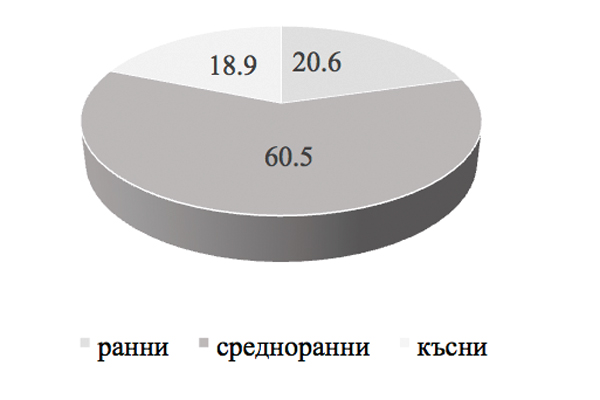
Fig. 1. Distribution of garden pea genotypes according to the duration of the growing period, %
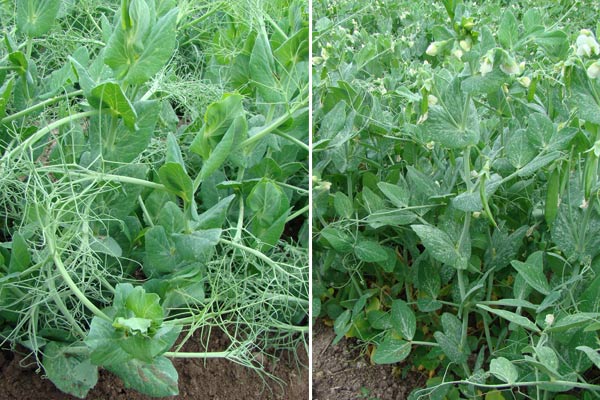
Fig. 2. Leaf type – afila and normal
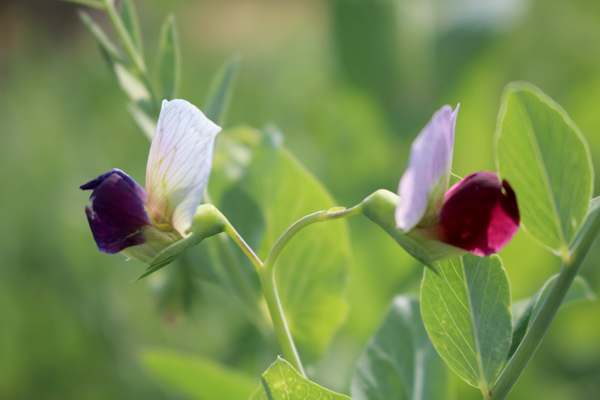
Fig. 2.1. Color – pink
Of the 204 studied pea genotypes, only three are pink-flowering, all others have white flowers. These three pink-flowering genotypes produce brown-colored seeds. 118 of the materials have a normal leaf type – a compound leaf with 2–3 pairs of small leaflets and tendrils, and 86 have an afila leaf type, where the leaflets of the compound leaf are modified into tendrils (Fig. 2). The plants of the pink-flowering accessions form a red ring at the base of the stipules.
The pods are green, except for one pink-flowering with violet-colored pod edges and brown, large seeds. The fruits are arranged 1, 2, or 3 per peduncle, straight, slightly curved, or sabre-shaped, with varying length and different numbers of seeds within them (Fig. 3).
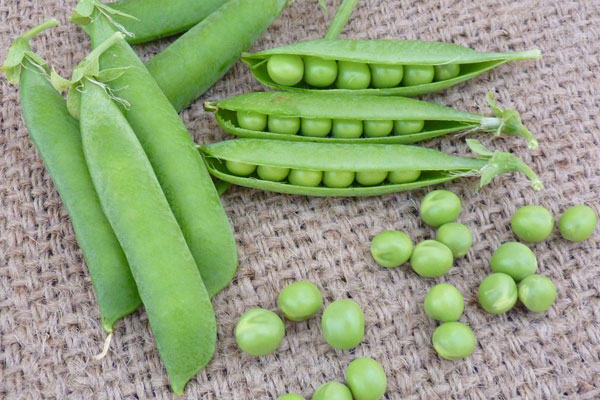
Fig. 3. Pod tip type – pointed
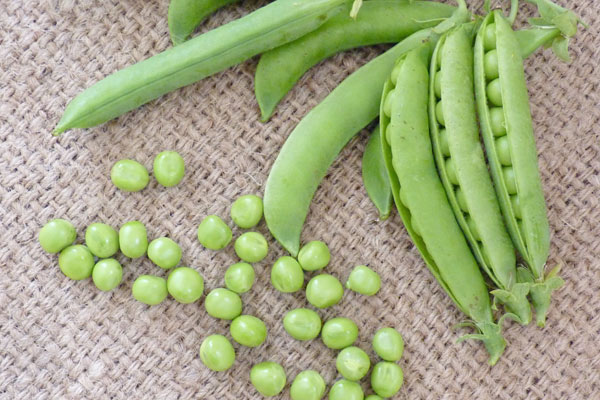
Fig. 3.1. Pod tip type – blunt
Under greenhouse conditions, pods with neoplasms – an outgrowth of callus tissue from the stomata of ripening pods – were observed in the Sovin variety (Fig. 4). These formations are due to the lack of ultraviolet light in greenhouse conditions (Teshome et al., 2016; Sari et al., 2020).
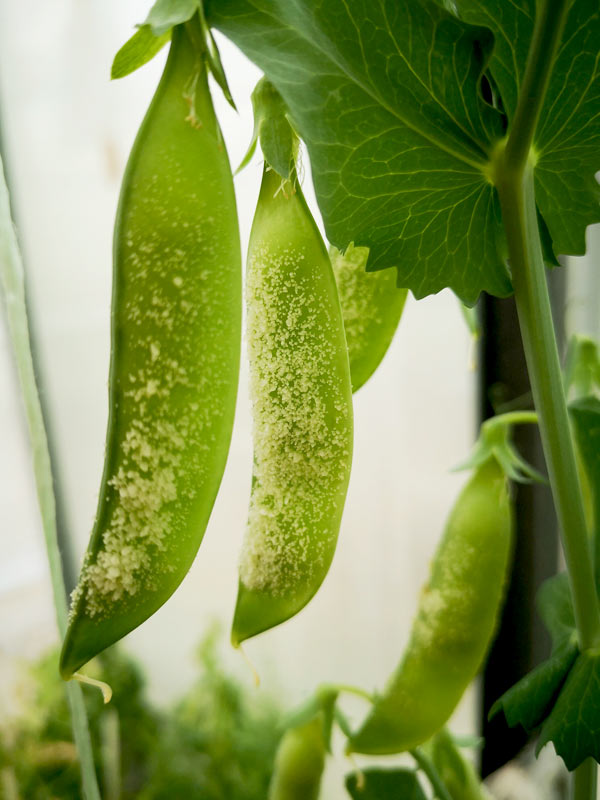
Fig. 4. Garden pea variety "Sovin" – pod with neoplasm
The color, surface, and shape of the seeds vary from wrinkled to smooth, cream, cream-grayish-green to green, round, spherical, drum-shaped to drum-angular (Fig. 5).
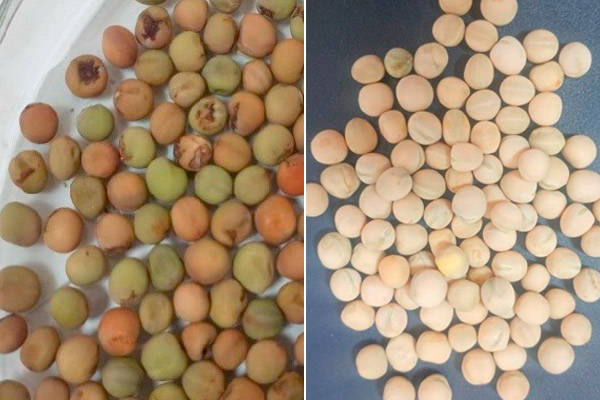
Fig. 5. Color, surface, and shape of seeds in garden pea accessions
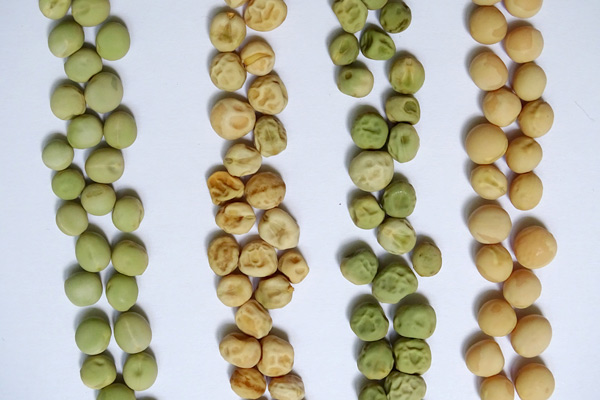
Fig. 5.1. Color, surface, and shape of seeds in garden pea accessions
BEAN
During the project period, 11 varieties and 22 breeding lines of garden beans with resistance to Bean Common Mosaic Virus (BCMV) and Bean Common Necrotic Mosaic Virus (BCMNV) were studied, presented in Table 1. The duration of the growing period from emergence to technological maturity varied across the years from 44 to 57 days. The flowers are white, cream, pale pink, pink, or violet.
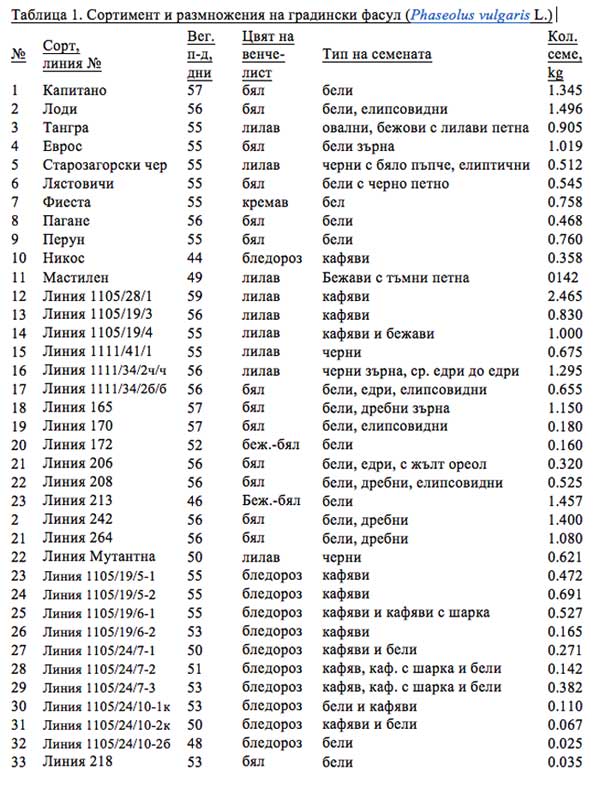
The pods are yellow or green, flat or flat-round, green with spots in Mastilen. The color and shape of the seeds vary from white, cream, brown, and black with speckling in Lyastovichi, Tangra, and Mastilen (Fig. 6). Segregation for the seed color trait occurs in lines: 1105/19/4, 1105/19/6-1, 1105/24/7-3, 1105/24/10-1k (Table 1).
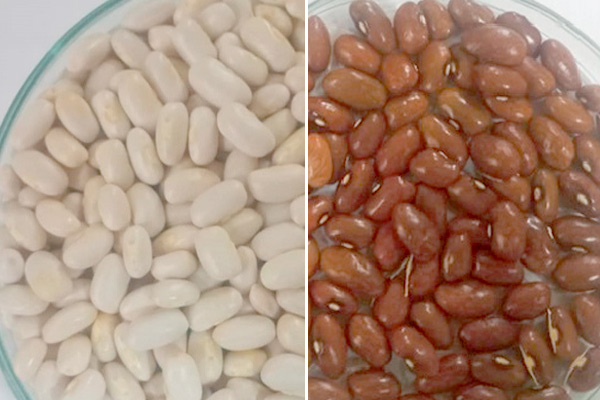
Fig. 6. Seed color in lines: 208, 1105/19/4 – segregation
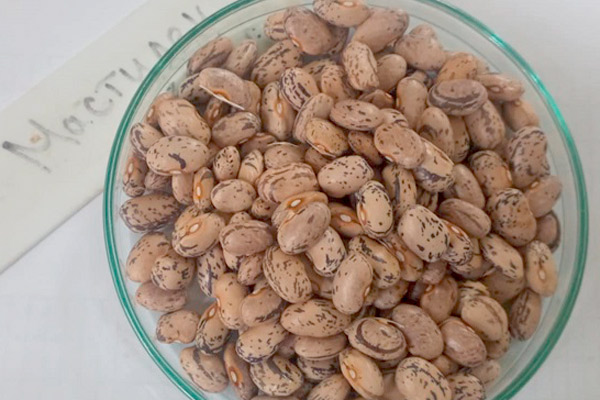
Fig. 6.1. Variety Mastilen
BROAD BEAN
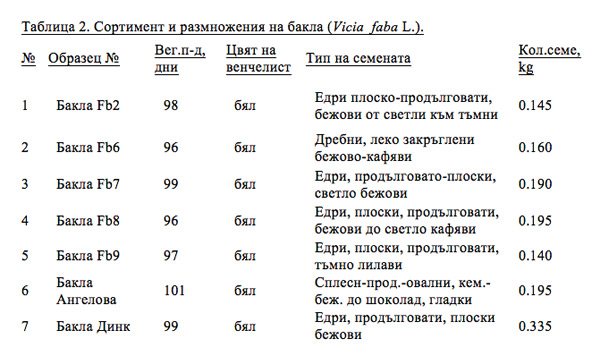
Two accessions of broad beans of local origin and five provided by IFK-Pleven were harvested. The duration of the growing period, flower and seed color, and the quantity of seeds obtained are reflected in Table 2.
The plants have an erect stem, reaching a height of up to 120 cm (Fig. 7). The flowers are white, with a characteristic dark spot on the wings. The fruit is a pod, which at technological maturity is tender and delicate. After that, it quickly becomes coarse and loses its consumptive qualities. The seeds are the largest compared to other vegetable crops. Linear dimensions, absolute weight, shape, and color vary among different genotypes.
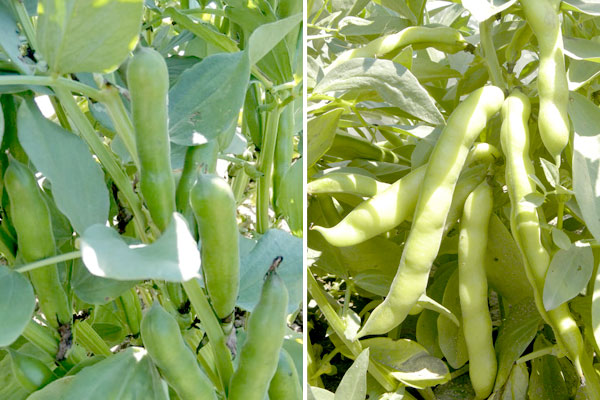
Fig. 7. Broad bean Angelova and Dink
Conclusion
During the study period, 204 accessions, lines, and varieties of garden peas (Pisum sativum L.), 52 genotypes of garden beans (Phaseolus vulgaris L.), and 9 accessions of broad beans (Vicia faba L.) were tested, multiplied, and re-multiplied, from which exceptional accessions, lines, and/or varieties with optimal functional and nutritional qualities were identified.
References:
1. Azam MG, Iqbal MS, Hossain MA, Hossain J, Hossain MF (2020) Evaluation of Field pea (Pisum sativum L.) Genotypes based on Genetic Variation and association among Yield and Yield Related Traits under High Ganges River Floodplain. Int J Plant Biol Res 8(2): 1120.
2. Santos DS et al. (2019) Iniquities in the built environment related to physical activity in public school neighborhoods in Curitiba, Paraná State, Brazil; Cad. Saúde Pública 2019; 35(5):e00110218 https://www.researchgate.net/publication/333560128_Santos_et_al_2019_Iniquities_in_the_built_environment
3. Sari, Hatice, Duygu Sari, Tuba Eker, Bilal Aydinoglu, Huseyin Canci, Cengiz Ikten, Ramazan S. Gokturk, Ahmet Zeybek, Melike Bakir, Petr Smykal, and et al. 2020. "Inheritance and Expressivity of Neoplasm Trait in Crosses between the Domestic Pea (Pisum sativum subsp. sativum) and Tall Wild Pea (Pisum sativum subsp. elatius)" Agronomy 10, no. 12: 1869. https://doi.org/10.3390/agronomy10121869
4. Teshome A, Bryngelsson T, Mendesil E, Marttila S and Geleta M (2016) Enhancing Neoplasm Expression in Field Pea (Pisum sativum) via Intercropping and Its Significance to Pea Weevil (Bruchus pisorum) Management. Front. Plant Sci. 7:654. doi: 10.3389/fpls.2016.00654