'The Future of Protein Crops in the EU: Strategies for Sustainability in the Context of Climate Change
Author(s): Растителна защита
Date: 04.05.2026
1126
![MultipartFile resource [file_data]](/assets/img/articles/протеинова-политика-ес-заглавна.jpg)
The production of protein crops in the European Union faces a strategic crossroads. On one hand, demand for plant proteins for feed and food is growing, but on the other, local production is lagging, placing Europe in a strong dependency on soybean imports. According to the latest report by the expert group of the EU CAP Network, overcoming this deficit requires not just more cultivated areas, but a comprehensive systemic change, adapted to the challenges of climate change.
The Protein Deficit of the Old Continent
The historical decline in the cultivation of protein crops in Europe is largely due to the widespread use of synthetic nitrogen fertilizers, which reduced the economic incentive for growing legumes that fix nitrogen in the soil. Indicative is the fact that in 2022, nearly 24% of grain legumes in the EU were produced under organic farming conditions (which rely on them for nitrogen fixation), although organic farming accounts for only 9.1% of total agricultural land.
Today, the production of protein crops in the EU is limited due to their weak economic competitiveness compared to other crops and cheap imports, mainly of soybeans.
To reduce this dependency, both an increase in local production through better varieties and the introduction of alternative legume crops are required, as well as a shift towards diets with more plant proteins and the extensification of livestock farming.
The report clearly states that the problem cannot be solved solely through technology. Replacing all imports with local production is unrealistic due to climatic and economic constraints. A change in the food systems themselves and consumer habits is required.
Challenges Along the Value Chain: From Seed to Market
Experts identify three main groups of barriers for farmers:
Pre-production (Seeds):
There is a lack of varieties that are well adapted to specific local conditions. Commercial breeding is focused primarily on mass crops like peas and soybeans, while less common species (lupins, grass peas) remain underdeveloped due to a lack of financial interest.
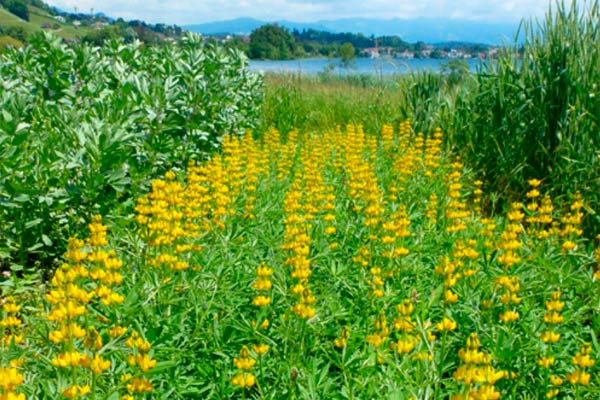
Lupins (Lupinus) are a genus of flowering plants in the legume family (Fabaceae). The genus includes over 200 species, with the greatest diversity observed in North and South America. They are also found in North Africa and the Mediterranean region. They are cultivated in many countries both for food and as ornamental plants.
Furthermore, farmers often lack access to information on key characteristics of varieties, such as resistance to lodging, ease of threshing, or the cooking time of the seeds.
.
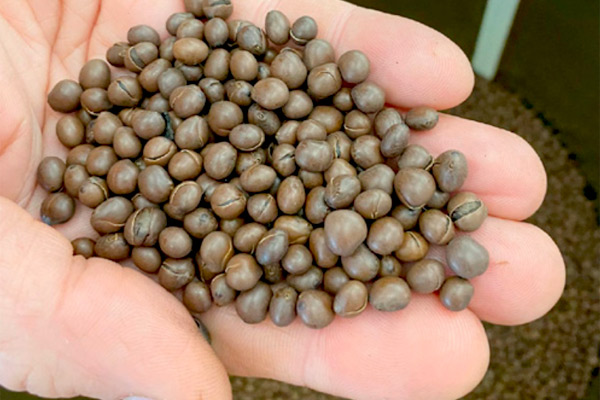
Lupin seeds. Lupin can make food both sweet and savory and flavor traditionally fermented foods, baked goods, and sauces. Lupin dishes are most common in Europe, especially in Portugal, Spain, Greece, and Italy.
At the Farm Level (Agronomy and Profitability): Growing protein crops often yields lower profits. Many farms lack the necessary specialized machinery for sowing, harvesting, and processing the crop. There is also a lack of practical knowledge regarding soil management and disease control for these crops.
Post-Harvest (Markets and Processing): Farmers receive too small a share of the added value, as processing and marketing occur off-farm. At the European level, there is a serious shortage of regional infrastructure for cleaning and processing, making direct sales difficult.
Climate Change: A Threat, but also a Catalyst for Innovation
Climate change increases pressure through droughts, heat, and pests. Nevertheless, it also creates new opportunities. The report notes that the typical zones for certain crops will shift further north. Opportunities are also opening up for growing less popular crops that require less water and are drought-resistant.
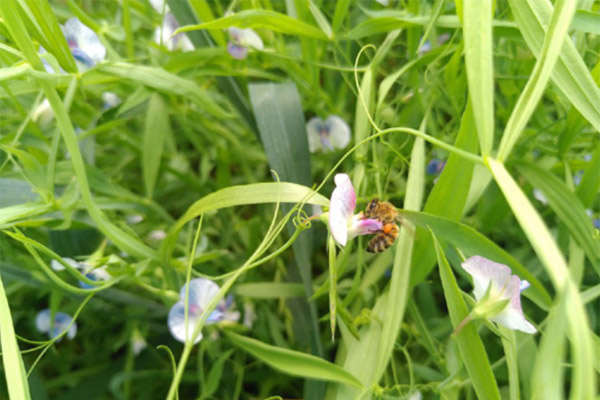
The grass pea (Lathyrus) is an annual plant in the legume family (Fabaceae). It is most commonly used for fodder.
Examples of alternative crops: Chickpea is cited as a drought-tolerant alternative to protein pea (although it carries a risk in high summer humidity). But attention is also drawn to grass pea (Lathyrus sativus) – a drought-tolerant crop that can be grown in many EU regions, but is still not commercially bred.
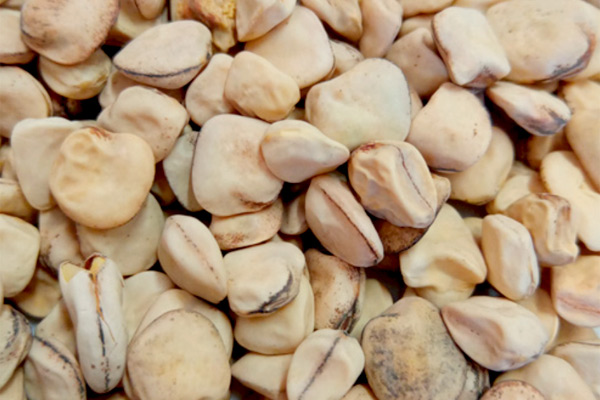
Grass pea is a protein crop and is used not only for fodder but also for human food. Flour is prepared from the mature seeds, and when added to wheat flour, it increases the nutritional value and quality of bread and pasta products.
The report presents specific solutions and real-world examples of how farmers can cope with climate change and economic barriers.
A. Seeds and Access to Information
The impact of climate change is unpredictable; therefore, variety breeding must prioritize adaptive traits such as early maturity, deep root systems, and cold tolerance.
Example: SeedLinked is a digital platform (used primarily for vegetable seeds in the USA) for collecting and sharing data from farmer-participatory variety testing, as well as for exchanging information on seed sources. The report suggests that a similar tool for protein crops could support EU farmers in selecting suitable varieties.
Legume Hub is a European, multilingual, open-access platform designed for sharing expert knowledge and best practices related to the cultivation, processing, and use of legume crops. The platform aims to support the sustainable development of food systems in Europe by providing timely, science-based, and practical information. It facilitates the connection between scientific research and practical application on farms.
B. On-Farm Processing
On-site processing (e.g., dehulling, roasting, seed cleaning) allows farmers to retain a larger share of the added value and increase their profitability and self-sufficiency. A major obstacle here is the cost of equipment, which is why joint investments by cooperatives and the use of affordable machinery are recommended.
Example: Scotston Farm (Scotland) produces almost all of its feed from protein crops on-site, and then the livestock products are sold locally. This self-sufficiency regarding protein feed contributes both to the farm's economic sustainability and its environmental stability.
C. Strengthening Regional Value Chains
Collaboration and shared regional identity are key to market access.
Example: The "Eiwitboeren van Nederland" initiative (Netherlands). The report visualizes their chain, which establishes a direct link between farmers and end buyers (through a general agreement), eliminating multiple intermediaries. This allows farmers to market new products and exercise greater control over prices.
Guidelines for the Future
The report recommends the creation of Operational Groups to solve specific problems in the field. Among the most promising ideas are the establishment of networks for testing chickpeas in Northern Europe to overcome the lack of interest from commercial breeders and the high cost of seeds.
Developing Integrated Pest Management methods in Southeastern Europe/Romania to deal with severe pest infestations (e.g., weevils), exacerbated by climate change, by testing new ecological plant protection products.
Integrating legumes into the brewing and distilling industry in Ireland and Scotland. The idea is to use the existing infrastructure of farmers with distilling or brewing capabilities to produce beer or spirits from legumes, creating high-value products for human consumption, while using the by-products for feed.
Overall Conclusion and Analysis
The main message of the report is that increasing the production of protein crops in the EU is not merely a technical or economic challenge, but requires a systemic change. Success depends on close cooperation between farmers, researchers, processors, and consumers. Without knowledge sharing, as well as the development of products that meet market demand, efforts to achieve Europe's protein independence will remain severely limited.
By implementing innovations and shortening supply chains, European farmers can transform protein crops into a sustainable and profitable pillar of their farms.
You can read and download the full report HERE