Modern Approaches for Diagnosis and Control of Vegetable Crop Diseases under Climate Change Conditions
Author(s): гл. ас. д-р Катя Василева, ИЗК "Марица" - Пловдив
Date: 03.04.2026
2582
![MultipartFile resource [file_data]](/assets/img/articles/заглавна-съвременни-подходи-зеленчуци.jpg)
Summary
Climate change is significantly altering the dynamics of vegetable crop diseases, leading to faster pathogen development, higher inoculum survival, and more frequent epidemic outbreaks. Increased temperatures, extreme rainfall, and drought periods create conditions that facilitate infections from viruses, bacteria, and fungal pathogens. Under these conditions, traditional diagnostic methods are often insufficient due to overlapping symptoms and stress-induced changes. Modern approaches include rapid immunochromatographic tests, molecular methods, hyperspectral diagnostics, drone technologies, and predictive models. Effective disease management requires an integrated approach involving resistant varieties, biofungicides, biostimulants, and optimized agronomic practices. The combination of traditional and modern diagnostic tools, supported by expert phytopathological assessment, is key to sustainable production under climate change conditions.
Plant diseases continue to be one of the most serious challenges for modern agriculture, causing significant annual losses in yield, quality, and agroecosystem resilience. According to Fang and Ramasamy (2015), losses caused by pathogens "range between 20% and 40%" and represent a key factor threatening global food security. Under conditions of climate change, intensive production systems, and globalized trade flows, the risk of epidemics, emergence of new races, and spread of invasive pathogens increases significantly (Juroszek & von Tiedemann, 2011).
Effective disease management requires two interrelated directions: precise and timely diagnosis and sustainable control strategies integrating biological, agronomic, chemical, and digital approaches. In recent decades, diagnosis has undergone a profound transformation – from visual assessment and microscopy to molecular methods, high-throughput phenotyping platforms, remote sensors, and deep learning algorithms. As noted by Balodi et al. (2017), "the science of disease diagnosis has evolved from visual inspection to highly sensitive serological and molecular techniques," significantly increasing the accuracy and speed of detection.
Parallel to this, the concept of disease control is shifting from unilateral chemical solutions to integrated, ecologically and evolutionarily sound management. He et al. (2016) emphasize that sustainable management must "create conditions favorable for plant growth and unfavorable for pathogen reproduction and evolution," combining Resistance, Avoidance, Elimination, Remediation (RAER). New trends include biocontrol, plant extracts, genetic approaches, predictive models, and digital decision support systems (Mukhtar et al., 2023).
In this context, contemporary scientific advances in two key directions are summarized:
(1) diagnosis of plant diseases, including classical, optical, and AI‑based methods;
(2) control and integrated management, considering ecological, biological, genetic, and technological approaches.
This dual focus allows tracing how advances in diagnosis support more precise, sustainable, and adaptive disease management in the context of dynamically changing agroecosystems.
Effective diagnosis is the foundation of any disease management strategy. It determines the correct decision, minimizes losses, and allows for early intervention for control. As emphasized by Balodi et al., (2017), "the science of disease diagnosis has evolved from visual inspection… to highly sensitive serological and molecular techniques." Modern approaches can be grouped into three main directions: classical laboratory methods, optical and remote technologies, and artificial intelligence.
Serological techniques such as ELISA, immunofluorescence, and rapid immunochromatographic tests remain widely used due to their specificity and applicability in field conditions. ELISA is one of the most widespread methods, where "the visual color change allows easy detection" (Fang & Ramasamy, 2015). However, sensitivity for bacterial pathogens is limited.
Molecular methods, especially PCR and its variants (nested, multiplex, real time), offer the highest accuracy. Balodi et al., (2017) note that PCR-based analyses are "specific, sensitive, efficient, rapid, and relatively economical." Real-time PCR allows for quantitative assessment and is particularly valuable for seed testing and quarantine pathogens.
Phenotyping platforms (chlorophyll fluorescence, hyperspectral and thermal imaging) provide non-destructive and repeated observation. According to Balodi et al., (2017) "these methods are non-destructive… and allow visualization of localized reactions." Hyperspectral diagnostics is particularly promising for early detection, as it captures physiological changes before visible symptoms appear.
Fang and Ramasamy (2015) emphasize that hyperspectral techniques "are widely used for identifying diseases through changes in reflectance." Thermography and fluorescence complement the analysis but are sensitive to external conditions and often require combination with other methods.
In recent years, deep learning has become a key tool for automatic disease recognition. Li et al., (2021) note that "deep learning avoids the shortcomings of manual feature selection… and makes feature extraction more objective." CNN architectures such as AlexNet, GoogLeNet, ResNet, and DenseNet achieve accuracies above 95–99% on controlled datasets. Saleem et al., (2019) show that GoogLeNet outperforms AlexNet on PlantVillage, and Demilie (2024) concludes that CNNs "are often the preferred choice… due to their ability to capture spatial hierarchies." However, real field conditions remain a challenge and require more complex models combined with remote sensors and predictive systems.
Modern control strategies are evolving from chemically dominated approaches to integrated, ecologically oriented, and evolutionarily sustainable systems. The main goal is to reduce pathogen pressure while maintaining productivity and ecological balance.
Climate change is altering disease epidemiology and requires adaptive strategies. Juroszek and von Tiedemann (2011) note that "preventive measures… may become particularly important in the future." Mukhtar et al., (2023) emphasize that IPDM is "the most suitable and relevant method under current circumstances." New trends include: plant extracts – e.g., Lantana camara, whose extracts "suppress the growth of Pyricularia oryzae and Xanthomonas spp."; genetic approaches – expression of regulators like AtMYB12, which "increases flavonoid levels and resistance to several pathogens"; pathogen-derived resistance (PDR) – transgenic strategies against viruses.
Diagnosis and AI‑based systems support management through: early detection and localization of outbreaks; reduction of unnecessary treatments; integration with predictive models; monitoring of efficacy and resistance.
As noted by Demilie (2024), Machine Learning and Deep Learning "improve the performance and speed of detection and classification," making them a key component of modern IPM systems.
The synergy between modern diagnosis and integrated management creates new opportunities for precise, effective, and ecologically sustainable agriculture. This combination allows not only for loss reduction but also for building more resilient agroecosystems capable of responding to future challenges.
Materials and Methods
The main pathogens affecting vegetable crops are viruses (TSWV, ToMV, PMMoV, PVY), bacteria (Xanthomonas, Pseudomonas, Clavibacter) and fungal pathogens such as Phytophthora, Fusarium, Verticillium, Alternaria, and Botrytis (Figure 1).
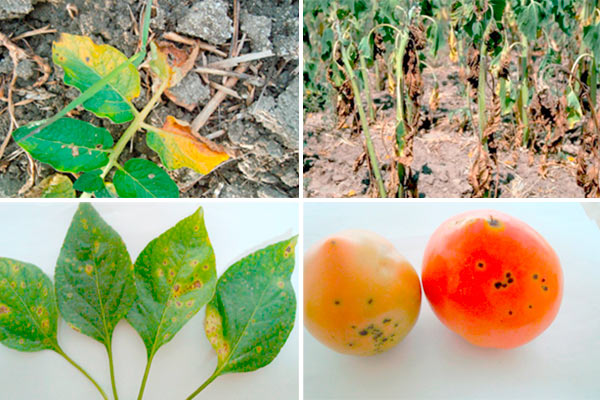
Figure 1. Symptoms of potato blight, verticillium wilt on pepper, bacterial spots on pepper, bacterial canker on tomato
Climate change leads to "increased temperatures → faster pathogen development" and "longer growing seasons → more infection cycles." For diagnostic purposes, both traditional and modern methods were used. The initial assessment was visual diagnosis, which is fast but subjective, as "symptoms can overlap between different pathogens or abiotic factors." Microscopy was applied to observe morphological structures, with specific staining used in some cases. Cultivation media were used for isolating bacteria and fungi, while viruses were diagnosed using immunochromatographic tests.
The rapid immunochromatographic tests used were: AgriStrip® (BIOREBA), Pocket Diagnostic®, and LOEWE®FAST, which allow detection of viruses, bacteria, and some fungal pathogens within 5–10 minutes and are "suitable for field and laboratory" (Figure 2).
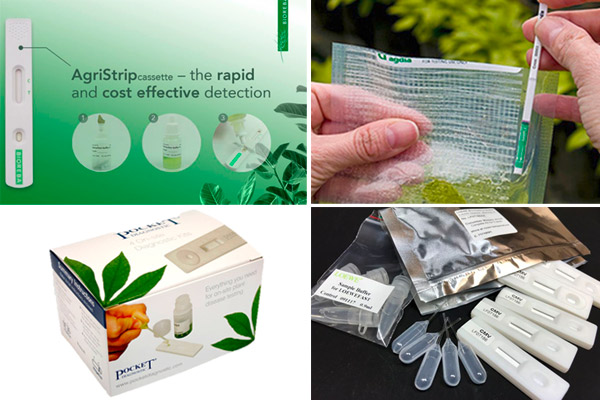
Figure 2. Rapid immunochromatographic tests: AgriStrip® (BIOREBA), Pocket Diagnostic®, and LOEWE®FAST
For confirmation of results, molecular methods (PCR, qPCR, LAMP) are recommended, distinguished by "very high sensitivity" and "high specificity," but requiring a specialized laboratory. Hyperspectral methods for early detection of infections and assessment of physiological stress are widely used, with the technology defined as "non-invasive, fast, and scalable." Drones with RGB, multispectral, hyperspectral, and thermal sensors were used for field monitoring, disease mapping, and biomass assessment. Predictive models based on temperature, humidity, rainfall, and microclimate were used to forecast infection risk and optimize treatment timing. Widely used in vegetable production are biofungicides (e.g., Bacillus subtilis, Trichoderma harzianum, Pythium oligandrum), biostimulants (amino acids, algae, humic acids) and chemical fungicides (copper-based products, Mancozeb, Azoxystrobin, Difenoconazole, etc.).
Results
The influence of climate change on pathogen dynamics and disease frequency in vegetable crops is clearly expressed. Increased temperatures accelerate the development of multiple pathogens, and warmer winters increase inoculum survival. Extreme rainfall creates favorable conditions for the development of fungal and bacterial diseases, as "high humidity > 90% accelerates sporulation," and raindrops facilitate the long-distance spread of bacteria. Drought leads to physiological stress and micro-cracks in leaves and roots, which facilitate pathogen penetration – "dry stress causes micro-cracks… entry points for bacteria." For Verticillium dahliae, it was found that microsclerotia are more easily activated after irrigation following a dry period, increasing the risk of infection.
Diagnostic methods show varying effectiveness depending on conditions and analysis goals. Rapid immunochromatographic tests demonstrate high specificity and are particularly useful for field checks, while molecular methods provide the highest accuracy and allow detection of pathogens even in the absence of symptoms. Hyperspectral diagnostics successfully distinguishes biotic from abiotic changes and allows early detection of infections. Drones and remote sensors prove to be an effective tool for monitoring large areas, identifying stress zones, and supporting precision agriculture.
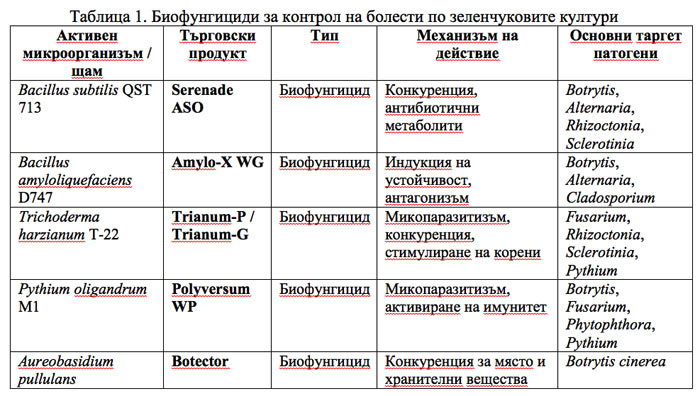
Biofungicides show the best efficacy when applied preventively, with Trichoderma harzianum and Pythium oligandrum demonstrating strong antagonism against Fusarium, Rhizoctonia, and Phytophthora (Table 1).
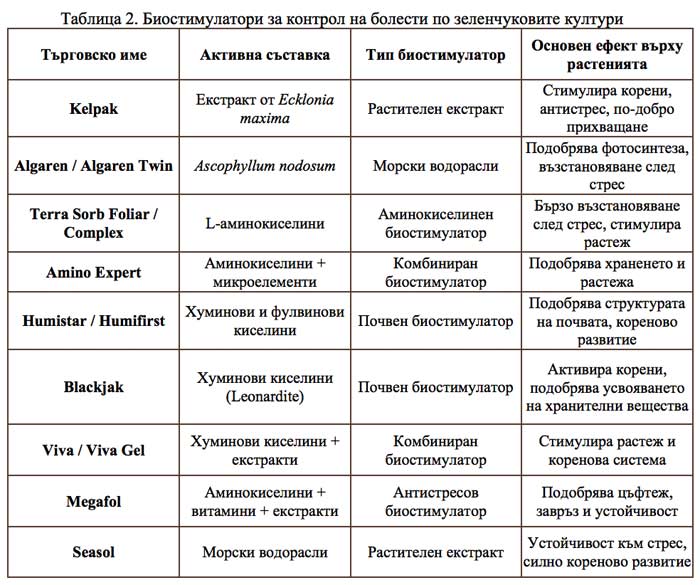
Biostimulants improve stress resistance and support plant recovery after adverse conditions (Table 2).
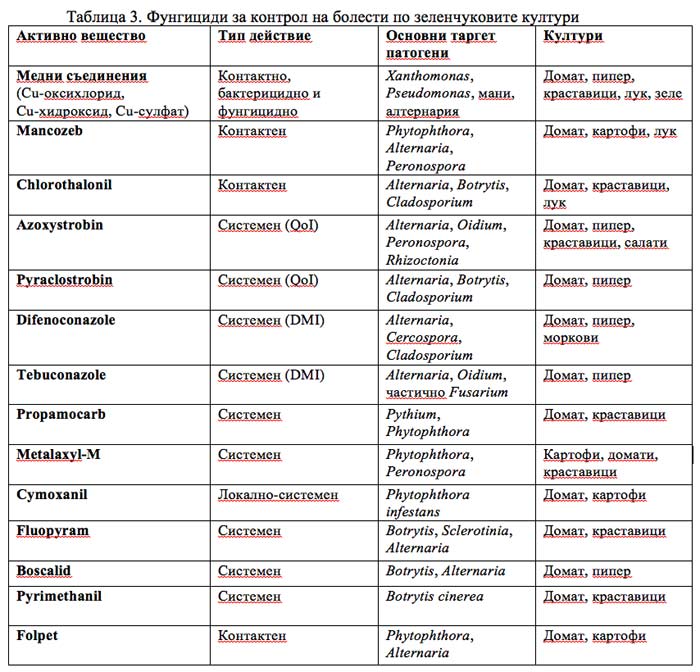
Chemical fungicides remain an important element of control, with copper-based products being most effective against bacterial diseases, and systemic fungicides like Azoxystrobin and Difenoconazole showing high efficacy against Alternaria, Oidium, and Peronospora (Table 3).
The integrated approach (IPM) leads to the best results, especially when monitoring, biological agents, fungicides, and resistant varieties are combined.
The most effective strategy involves combining monitoring, predictive models, rapid diagnosis, biological and chemical agents, as well as the use of resistant varieties. Only through the integration of these elements can production stability, loss reduction, and increased resilience of agroecosystems to future climate challenges be guaranteed.
Literature Sources
- Balodi, R., Bisht, S., Ghatak, A., & Rao, K. H. (2017). Plant disease diagnosis: Technological advancements and challenges. Indian Phytopathology, 70(3), 275–281.
- Demilie, W. B. (2024). Plant disease detection and classification techniques: A comparative study of the performances. Journal of Big Data, 11, 5.
- Fang, Y., & Ramasamy, R. P. (2015). Current and prospective methods for plant disease detection. Biosensors, 5, 537–561.
- He, D., Zhan, J., & Xie, L. (2016). Problems, challenges and future of plant disease management: From an ecological point of view. Journal of Integrative Agriculture, 15(4), 705–715.
- J